

The Milano Cortina 2026 Winter Olympics and Paralympics told a story about adaptive reuse at extreme scale. These Winter Games spread across northern Italy, anchored by Milan and Cortina d'Ampezzo, with ceremonies staged in existing, culturally significant architecture rather than one-off Olympic venues. Over 90 percent of the venues were existing or temporary facilities, with some updated sites dating back to the 1956 Cortina d’Ampezzo Games. The architectural challenge became less about designing from scratch and more about making cities and their existing buildings perform under Olympic standards.
Both the Opening Ceremony at San Siro Stadium in Milan and the Closing Ceremony at the Arena di Verona underscored that decision: the Games chose recognizable civic landmarks over newly built ceremonial arenas. The following projects highlight Milano Cortina's sustainable approach to Olympic infrastructure: a new arena designed as permanent civic space, an ancient monument upgraded for accessibility without compromising its architectural integrity, and an adaptive housing project built for two futures.
Arena Milano by David Chipperfield Architects
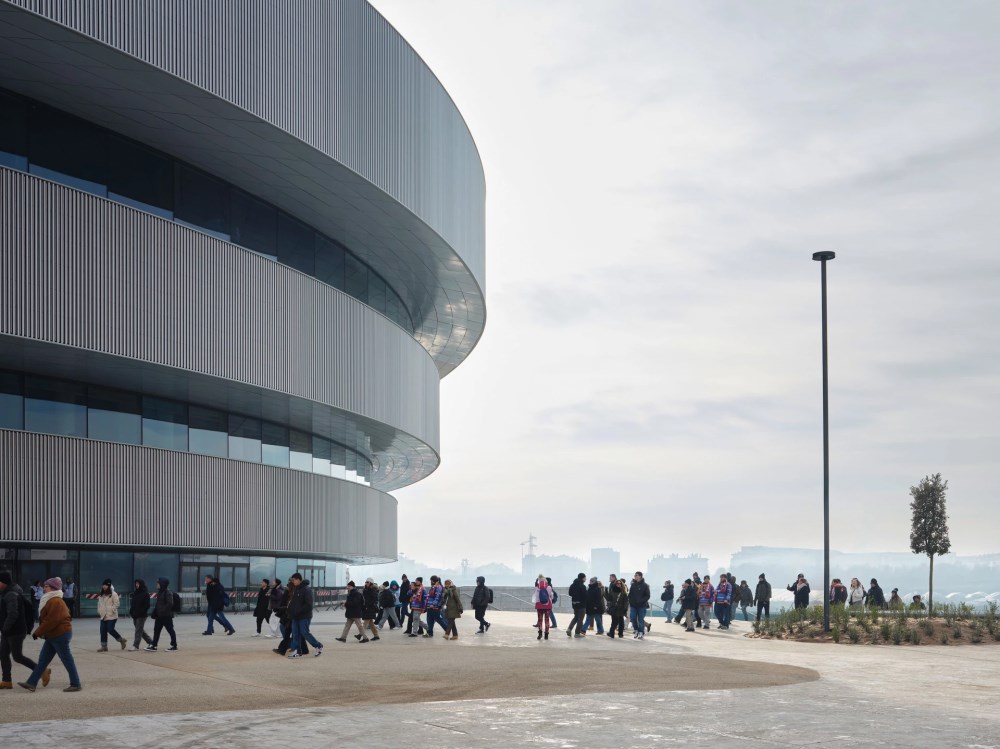
Image Credit: Noshe
Arena Milano was one of the few new venues developed for Milano Cortina. The arena sits in Milano Santa Giulia, a new urban district taking shape in southeast Milan, close to the city centre and connected to both high-speed rail and motorway networks. This isn't Olympic infrastructure dropped into a void. The building anchors a neighbourhood designed to keep functioning long after the Games.
David Chipperfield Architects and Arup collaborated on the project, with CTS EVENTIM as long-term operator. That ownership structure matters because it treats post-Olympic use as the primary brief, not an afterthought. The arena hosted ice hockey during the Olympic Games and para ice hockey during the Paralympics, before transitioning fully to concerts, live events, and professional sports.
The design references Milan's former Roman amphitheatre through its elliptical form and reimagines it through contemporary materials. Arriving visitors approach from the west and climb a wide flight of steps onto a raised podium that spans almost the entire site. At the top, a 10,000-square-metre piazza functions as an outdoor event space or public gathering area depending on the day.
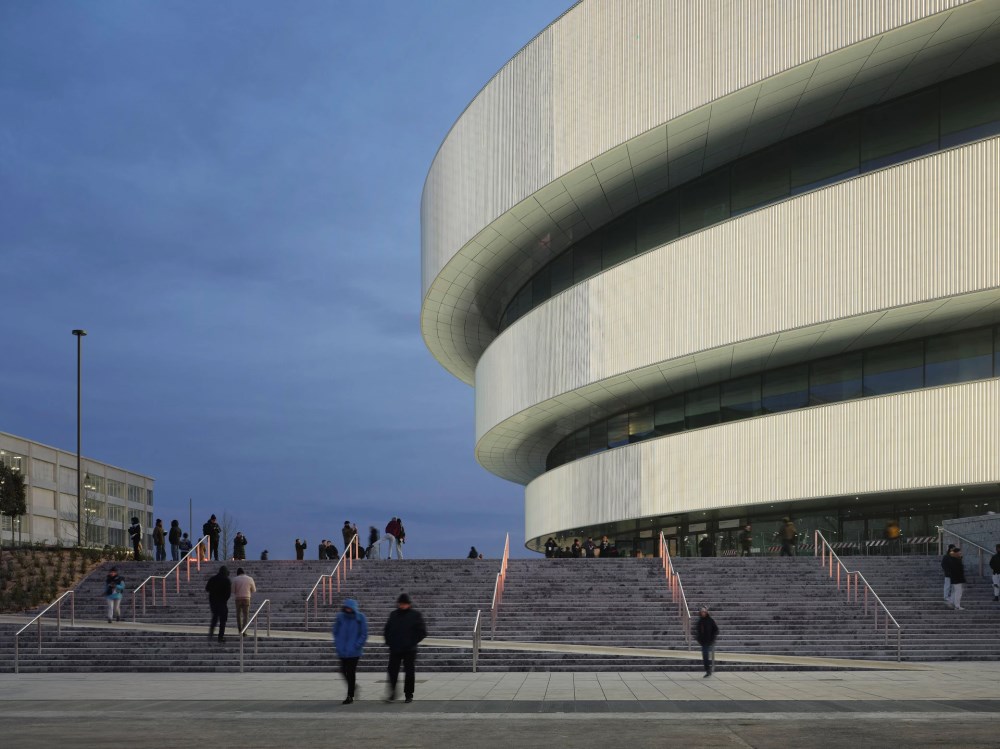
Image Credit: Noshe
Three stacked rings rise above this monolithic base, each one slightly taller than the last, wrapping the building in layers that appear to float. The façade uses shimmering aluminum tubes by day and integrated LED strips that activate at night, creating a media surface that shifts between opacity and transparency. The system had to work for both Olympic broadcasts and weekend concerts, which means the material performs across wildly different lighting conditions and crowd scales. This dual performance requirement shaped the envelope from the beginning, aligning architectural expression with broadcast infrastructure and long-term event programming.
Inside, two tiers rise above the parterre level, with an upper level containing lounges and sky boxes. Spacious lobbies at every level connect all seats to catering and service facilities. The arena accommodates up to 16,000 spectators and transitioned to multi-purpose use after the Games for concerts, sports, and festivals.
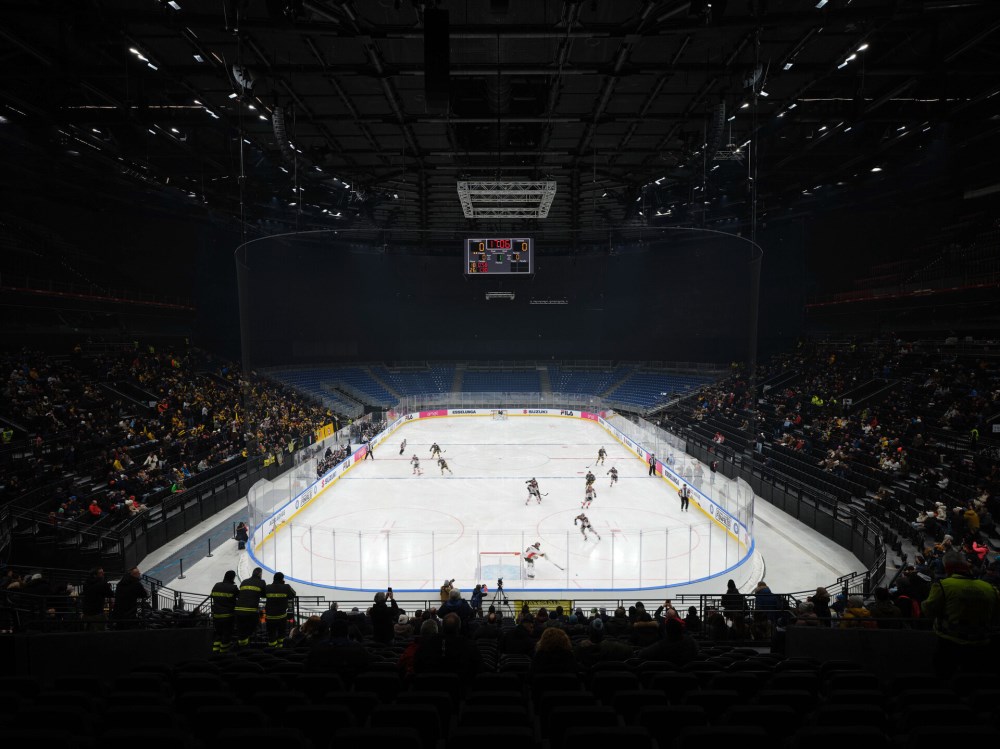
Image Credit: Noshe
The sustainability strategy goes beyond the typical Olympic checklist. Photovoltaic systems on the roof largely cover the building's energy needs on-site. Circular design principles have been embedded throughout the project, including a multi-storey car park designed with floor-to-floor heights that allow future conversion to other uses. Even the podium's parking infrastructure anticipates a second life.
Material decisions here calibrate for decades, not weeks. The aluminum façade, the podium's adaptable structure, even the floor heights in the parking garage all reflect a design approach where every specification accounts for what comes after the Olympics. This is legacy planning through material intelligence.
Arena di Verona (Verona Olympic Arena)
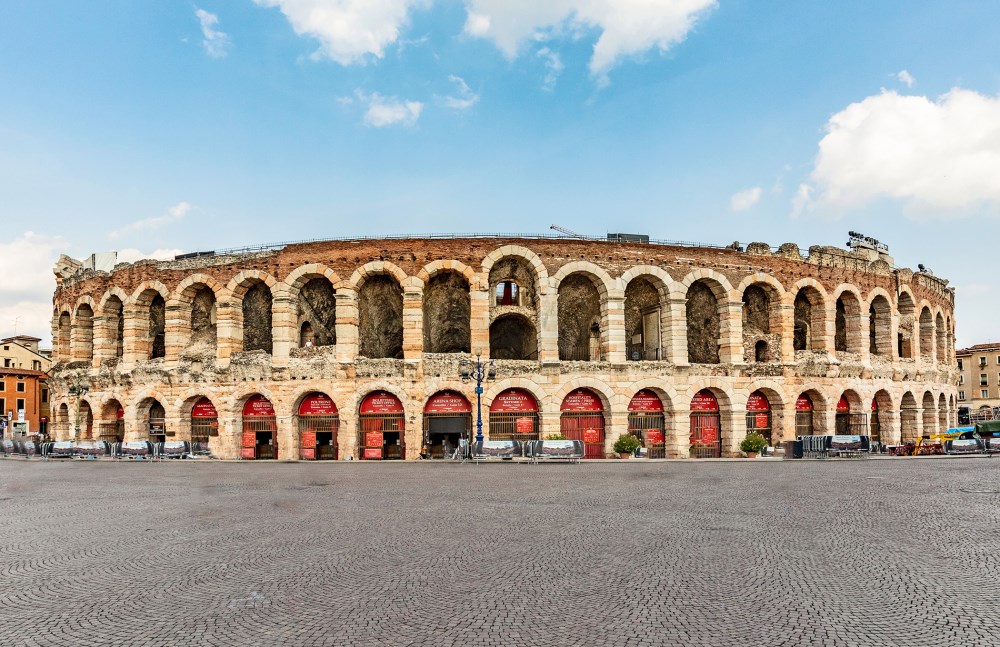
Image Credit: Adobe Stock
The Winter Olympics closing ceremony took place inside the Arena di Verona on February 22, followed by the Paralympic opening ceremony on March 6. The Arena is a first-century Roman amphitheatre that predates the Colosseum. This isn't a new build or even a modern retrofit. The challenge here was updating a 2,000-year-old monument to meet contemporary accessibility and safety standards while preserving its historic architectural character. The project, part of an approximately €18 million plan overseen by SIMICO, required coordination with cultural heritage authorities to ensure changes harmonize with the ancient monument’s material and structural composition.
The renovation focused primarily on accessibility. A wheelchair-accessible ramp now runs inside the arena, clad in pre-rusted steel and local Prun stone chosen specifically to harmonize with the original building materials. New railings, handrails at varied heights, and renovated bathrooms brought the venue up to modern accessibility codes. Some elements were designed to be removable but hoped to remain as a lasting legacy.
In this case, Olympic intervention operated as a catalyst for long-overdue universal access improvements rather than architectural transformation.
Milano Olympic Village by Skidmore, Owings & Merrill
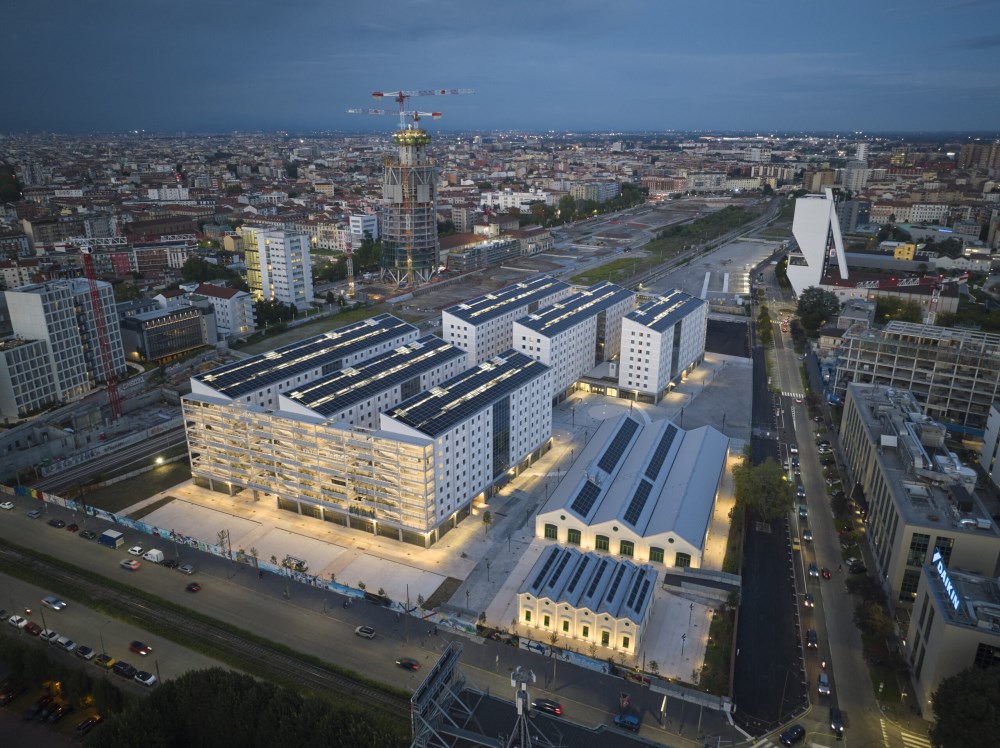
Image Credit: Dave Burk
The Milano Cortina Olympic Village by Skidmore, Owings & Merrill is located on the former Porta Romana rail yard in the heart of Milan's dynamic Porta Romana district. The program includes six new residential buildings, two restored historic structures, and a network of public green spaces. After the Olympics, the athletes' homes convert into student housing, while buildings near the railway side become affordable housing. The Olympic Village Plaza will transform into a neighbourhood square, with street-level shops, bars, restaurants, and cafes, plus outdoor space for farmers' markets and community events.
The site sits where a rail yard once operated, and the design adopts the rhythm of the area's existing streetscape. This approach creates a porous urban block, threaded with new public pathways that tie into the broader master plan. Rather than creating a sealed campus, the village is structured as part of Milan’s everyday urban grid.
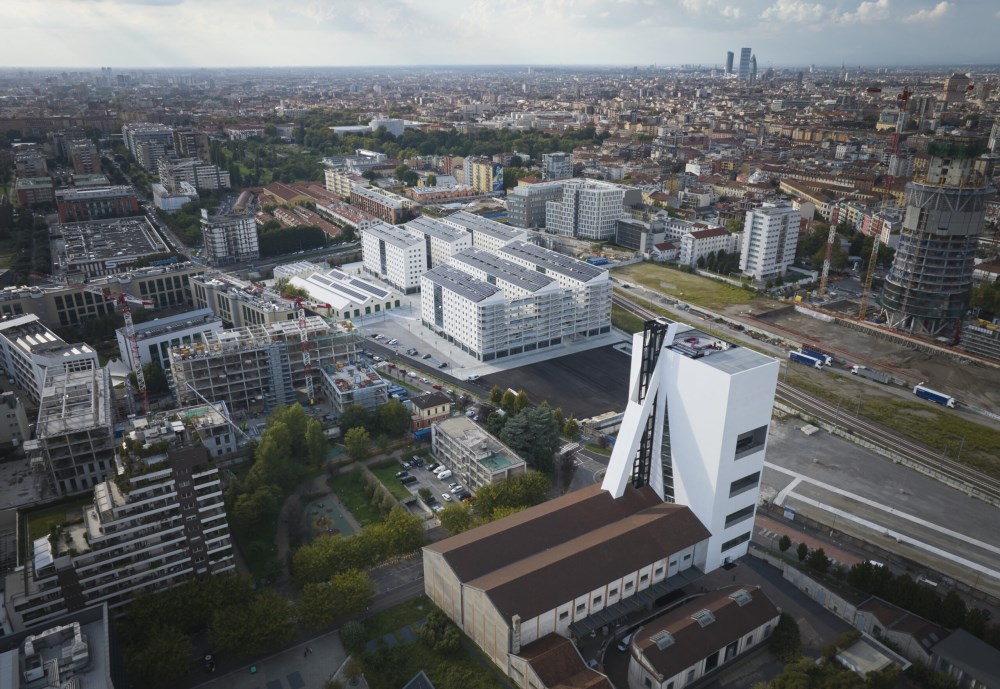
Image Credit: Dave Burk
Ground-floor spaces throughout the village house cultural and economic anchors serving both residents and visitors, extending Milan's tradition of varied street-level activity. The new buildings take formal and material cues from Milan's historic architecture, defined by restraint and clarity of expression and supported by contemporary low-carbon construction methods. The project also used modular construction, prefabricated panels, and an efficient build sequence to lower embodied carbon.
At ground level, commercial and community spaces were designed with the flexibility to accommodate varied uses over time, following the logic of historic Italian palazzi that have adapted across centuries. Above, dramatic terraces shaded by vertical plantings serve as bridges between buildings. These become signature gathering spaces and outdoor study rooms for students, bringing energy and life to every level. Integrated plantings and garden courtyards provide restorative outdoor spaces while contributing to the neighbourhood's climate resilience.
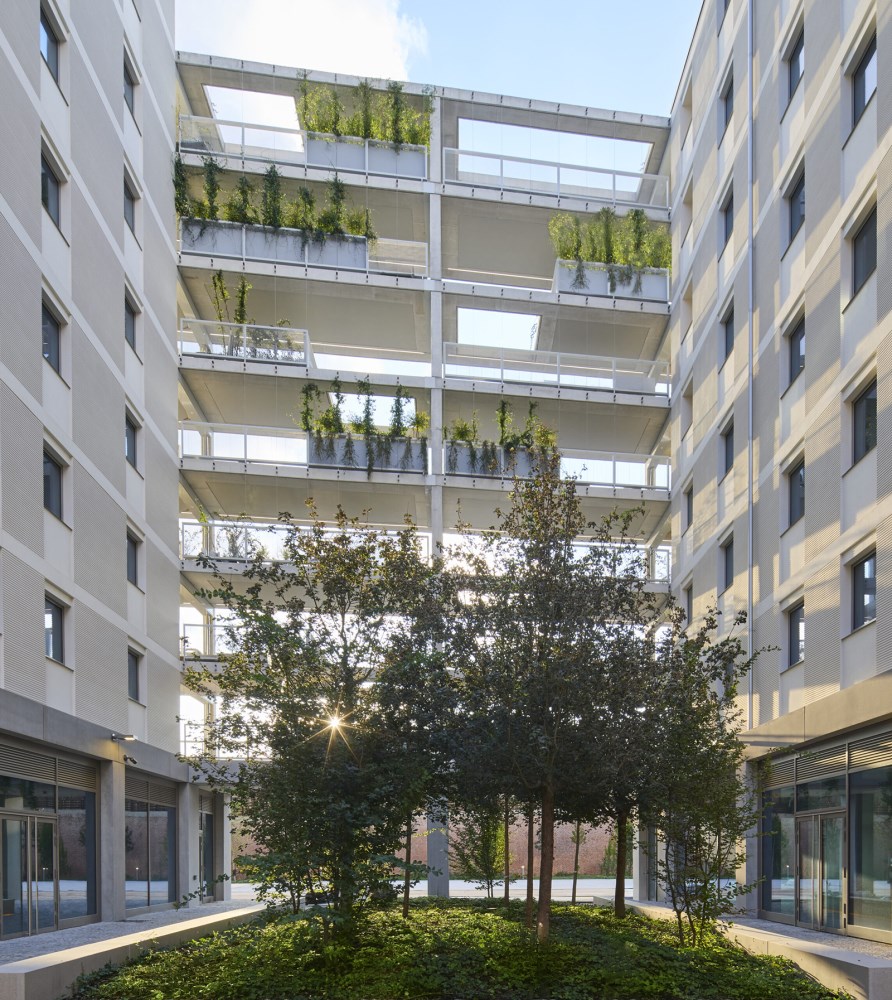
Image Credit: Dave Burk
Beyond the Closing Ceremony
What feels different about Milano Cortina is how little of it is designed to feel temporary. The prevailing mindset is continuity with every major intervention structured around adaptability and long-term use. Arena Milano had to perform just as confidently during a winter hockey final as during a summer concert tour. The Olympic Village was conceived with its post-Games residents in mind, transitioning from athlete housing to student life without visible strain. Even a two-thousand-year-old amphitheatre gained renewed relevance, not through spectacle, but through universal access that expands who can experience it.
When the crowds left and the security perimeters disappeared, these buildings didn’t need reinvention. They shift into their next use almost seamlessly, because that next use was part of the brief from the beginning.
--
 BIMsmith is the leading free cloud platform for architects, designers, and building professionals to research, select, and download building product data. Search, discover, compare, and download free Revit families on BIMsmith Market, or build complete, data-rich Revit wall, floor, ceiling, and roof systems faster with the BIMsmith Forge Revit configurator.



Comments