


Steel with decades of structural capacity left gets scrapped because the program changed. Cladding systems in perfect condition get torn off because the aesthetic shifted. The United States sends 600 million tons of this material to landfills every year, not because it failed but because no one planned for what comes next.
Circular design corrects this by evaluating buildings for what they might become, not just what they are today. Materials get selected with recovery pathways already mapped, connections get detailed for disassembly, and records get kept so the next team knows exactly what's there and how it comes apart. Buildings become material systems that evolve rather than structures that terminate.
Design Strategies for Circular Buildings
Circularity in architecture has been shaped by a few landmark frameworks that moved the conversation from theory to practice. Among the most influential is Cradle to Cradle, introduced in the 2002 book Cradle to Cradle: Remaking the Way We Make Things by architect William McDonough and chemist Michael Braungart. Their framework grew from three principles derived from nature: everything is a resource for something else, energy should come from clean and renewable sources, and diversity of place and system should be celebrated. Instead of minimizing harm, Cradle to Cradle reframes design as a regenerative force. It challenges architects and manufacturers to see every material as either a biological nutrient that can return safely to the earth, or a technical nutrient that can reenter industrial cycles without contamination. In 2005, the Cradle to Cradle Certified™ Products Program was established to recognize products aligned with this vision.
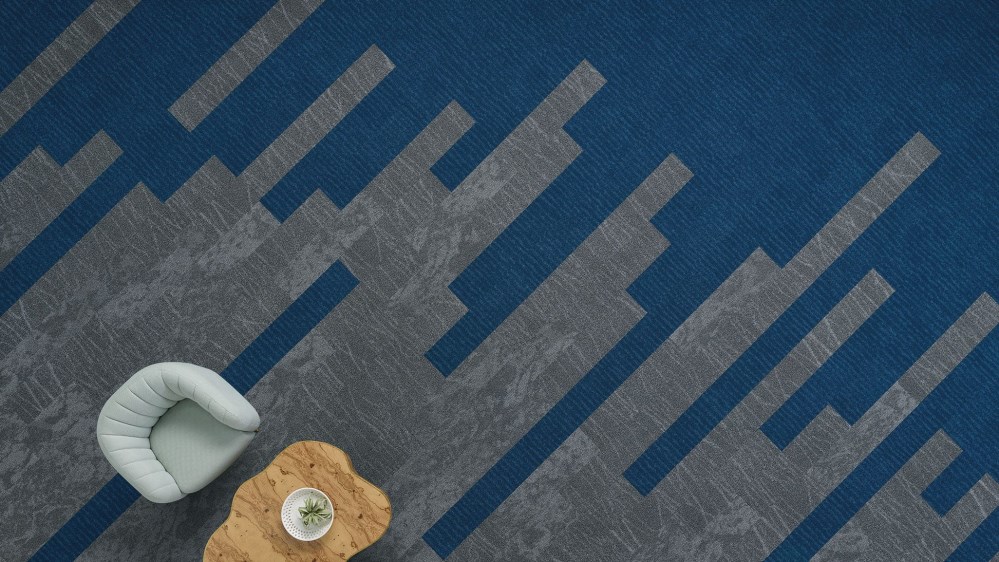 Shaw Contract Group translated Cradle to Cradle theory into PVC-free carpet tiles designed for separation, recovery, and reuse - Image Credit: www.shawcontract.com
The Ellen MacArthur Foundation has been equally pivotal, focusing on embedding circularity into business and industry at scale. Its framework aims to eliminate waste and pollution, keep materials in use, and regenerate natural systems. For architects, this translates into tangible practices, such as:
- Material passports that document every component for future recovery
- Design solutions that extend building life through adaptability and flexibility
- Exclusion of harmful substances from the specification process entirely
Adaptive reuse is one of the most impactful strategies for circular design. Instead of discarding outdated or underused structures, architects give them new purpose. This reduces demand for raw materials and preserves the embodied carbon already locked into existing buildings. Adaptive reuse projects often layer modern needs onto historic or industrial shells, producing architecture that is both resourceful and culturally rich. They prove that quality, integrity, and specificity in design are foundational to long-term sustainability. A building designed and built well the first time becomes a stronger candidate for adaptation decades later.
Circular design is not an add-on at the end of a project. When embedded early, it informs decisions at every stage: from the way briefs are written, to the specifications placed in contracts, to the documentation passed on to future building managers. Architects who approach design through these frameworks are joining a movement that treats materials as valuable resources and buildings as evolving systems rather than static endpoints.
Putting Circular Principles to Work
Circular design frameworks only gain traction when they translate into methods teams can actually use. In recent years, that translation has begun to take shape through tools and systems that help architects plan for adaptability, reuse, and long-term material value from the outset.
One example is Arup’s ADPT circular building system, a modular approach developed alongside the firm’s Circular Buildings Toolkit. Rather than treating circularity as a project-specific ambition, ADPT explores how buildings can be designed as assemblies of components with defined lifespans, reuse pathways, and digital material records. Structure, services, and façade elements are intentionally separated, allowing parts to be repaired, replaced, or reconfigured as needs change.
Systems like ADPT sit between theory and construction. They show how ideas such as design for disassembly, material passports, and adaptability can move from abstract principles into repeatable practice. The built projects that follow demonstrate how those ideas are already being applied in real-world settings.
Impact Hub Berlin by LXSY Architekten
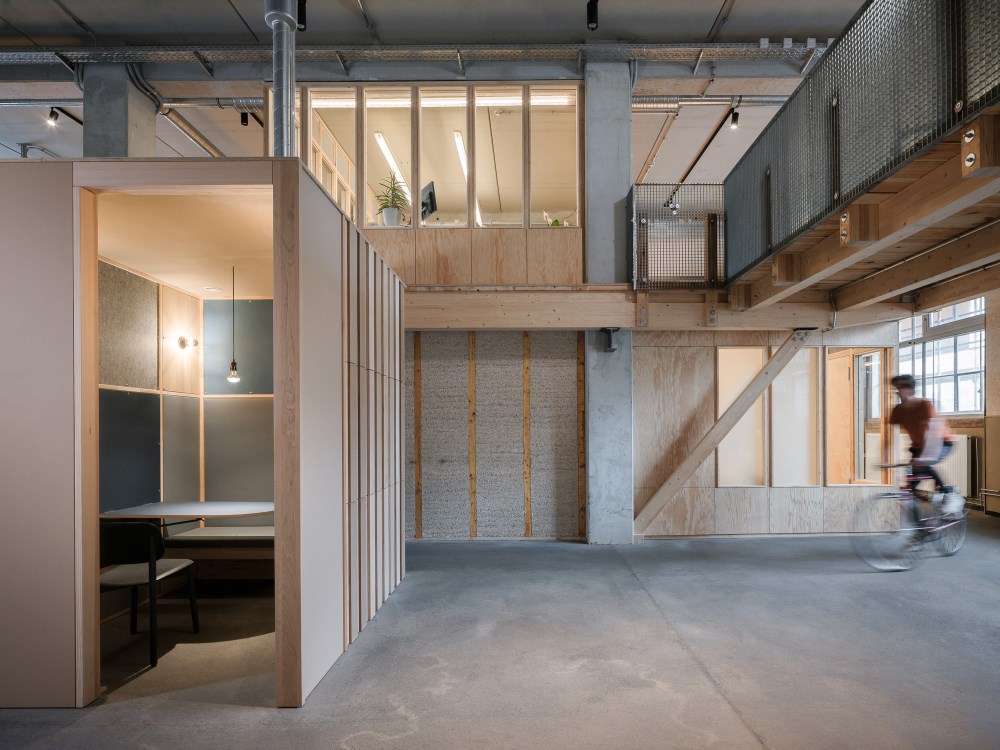 Impact Hub Berlin in Berlin, Germany - Image Credit: Studio Bowie
On the site of a former brewery, Impact Hub Berlin gives new life to an old industrial hall. LXSY Architekten designed the interiors with circular construction at the center. About 70 percent of the materials come from recycled or sustainable sources. Sliding doors were salvaged from the old Impact Hub, MDF panels came from a Berlin nightclub, and local workshops supplied offcuts of wood.
The design uses material passports to track components, making them easier to reuse in the future. Hemp walls and straw panels improve acoustics and indoor climate, while vintage furniture mixes with second-hand fittings. A timber gallery divides the warehouse into two levels, creating a mix of team spaces, studios, and open areas without losing the character of the brewery.
Impact Hub Berlin shows how circular methods can shape both space and community. It proves that reused materials can create a place that feels bright, generous, and contemporary.
Villa Welpeloo by Superuse Studios
 Villa Welpeloo in Enschede, the Netherlands - Image Credit: www.superuse-studios.com
In Enschede's Roombeek district, Villa Welpeloo started with a material inventory instead of a material list. Superuse Studios mapped nearby industrial surplus, then designed a house around what could be harvested locally. The premise was to let available materials lead the architecture.
Steel girders from a paternoster elevator that once served the regional textile industry became the load-bearing frame. Redundant cable reels from a local factory supplied timber for the façade cladding. Inside, umbrella ribs became art lighting. The design responds directly to what the region discarded.
The project achieved significant salvaged material content and documented substantial reductions in embodied CO2. Villa Welpeloo shows how circular design can be architectural, rigorous, and specific to place.
Newlab at Brooklyn Navy Yard by Marvel Architects
 Newlab at Brooklyn Navy Yard in Brooklyn, NY, USA - Image Credit: https://marveldesigns.com
Building 128 at the Brooklyn Navy Yard assembled naval engines starting in 1899. Today, it houses robotics labs, life sciences prototyping, and advanced manufacturing startups. Newlab transformed the former shipbuilding machine shop into an 84,000-square-foot hub without erasing what came before.
The design team preserved the original steel frame, trusses, and clerestory daylighting, then stripped the exterior back to its historic skeleton. Modern insulated panels and windows replaced the old shell to meet current performance standards. Inside, flexible workspaces, studios, and fabrication labs accommodate users and technologies as they evolve. The interior references the original machine shop logic while supporting modern collaborative needs.
Newlab maximized the embodied value already locked in the building instead of consuming new materials to start over. Adaptive reuse at this scale extends the useful life of a major industrial asset while anchoring sustainable urban regeneration.
Supporting Circular Architecture
Built projects demonstrate what circular design can achieve, but they rely on a wider ecosystem to function over time. Frameworks, certification bodies, reuse networks, and material-tracking platforms provide the infrastructure that allows materials to stay in circulation long after construction ends. Here are a few programs that are shifting circularity from isolated ambition to industry standard.
- Cradle to Cradle Products Innovation Institute - The Institute translates Cradle to Cradle theory into a practical certification system architects can specify against. Products are evaluated for material health, reuse potential, renewable energy use, water stewardship, and social fairness. By verifying whether materials can safely return to biological or technical cycles, the program helps designers avoid contamination that would block future reuse.
- Interface's ReEntry™ program - Interface has spent decades redefining manufacturer responsibility through take-back programs, recycled content, and closed-loop production models. By remaining accountable for materials beyond the point of sale, the company demonstrates how products can stay in use across multiple life cycles instead of becoming waste at the end of a single project.
- Madaster - Madaster provides material passports that document the components, quantities, and potential value embedded in a building. The platform supports long-term stewardship by making reuse and recovery viable at the end of each building phase. While European in origin, it has become a global reference point for circular documentation.
- Second Life Samples™ by Swatchbox - Second Life Samples™ focuses on one of the industry's most routine yet overlooked waste streams: material samples. Swatchbox accepts complete, undamaged samples regardless of origin, inspects and grades them, and redistributes those suitable for reuse back to designers. More than ninety percent of collected samples remain usable, while others are routed to education or responsible recycling. By treating samples as circulating resources rather than disposable tools, the program embeds circular thinking directly into everyday design workflows.
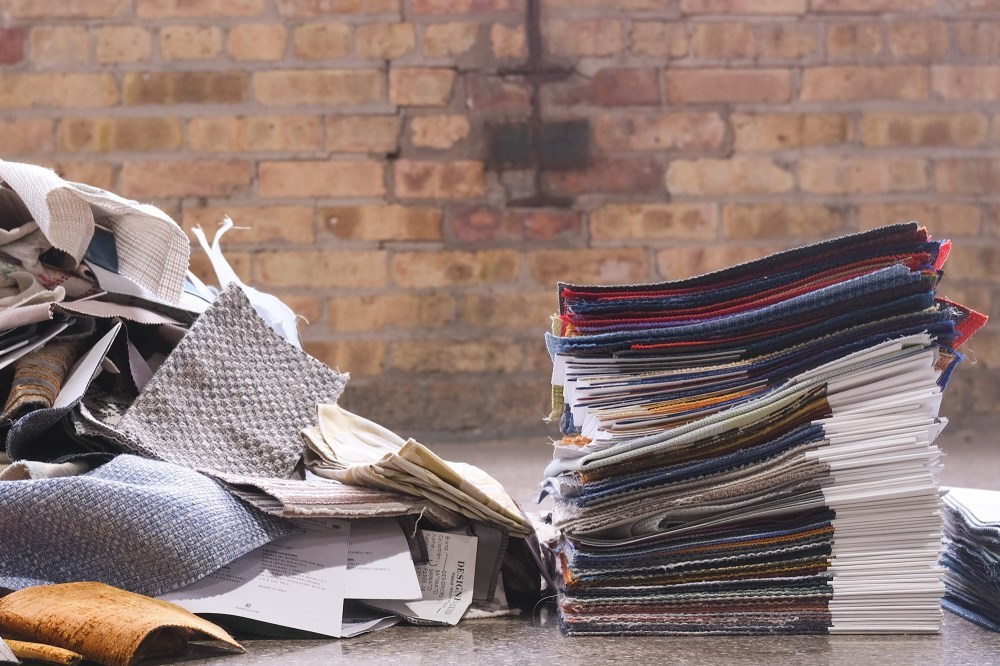 Image Credit: www.swatchbox.com
Making Circular Design Part of the Process
Circular design finds its footing in the earliest stages of a project. A brief that sets clear goals for reuse or recovery keeps those priorities present as the work unfolds. During conceptual design and schematic phases, BIM platforms like BIMsmith allow architects to search for Revit families of Cradle to Cradle certified products directly within their project workflow, making circular material selection seamless rather than supplemental. Design choices then follow with care, from selecting connections that can be taken apart to recording how pieces fit together so that a future team can work in reverse.
Every material has a life before and after a project, and documenting that story helps it stay valuable for decades. Collaboration widens the circle. Salvage partners, reuse networks, and service providers make sure materials continue on rather than slip into waste. When the project is complete, tracking the savings in carbon, resources, and landfill space makes the results tangible. Those numbers tell a story that encourages clients and teams to keep building in the same direction.
Material intelligence is becoming standard practice. The buildings that last will be the ones designed for it.
--
 BIMsmith is the leading free cloud platform for architects, designers, and building professionals to research, select, and download building product data. Search, discover, compare, and download free Revit families on BIMsmith Market, or build complete, data-rich Revit wall, floor, ceiling, and roof systems faster with the BIMsmith Forge Revit configurator.

Comments