

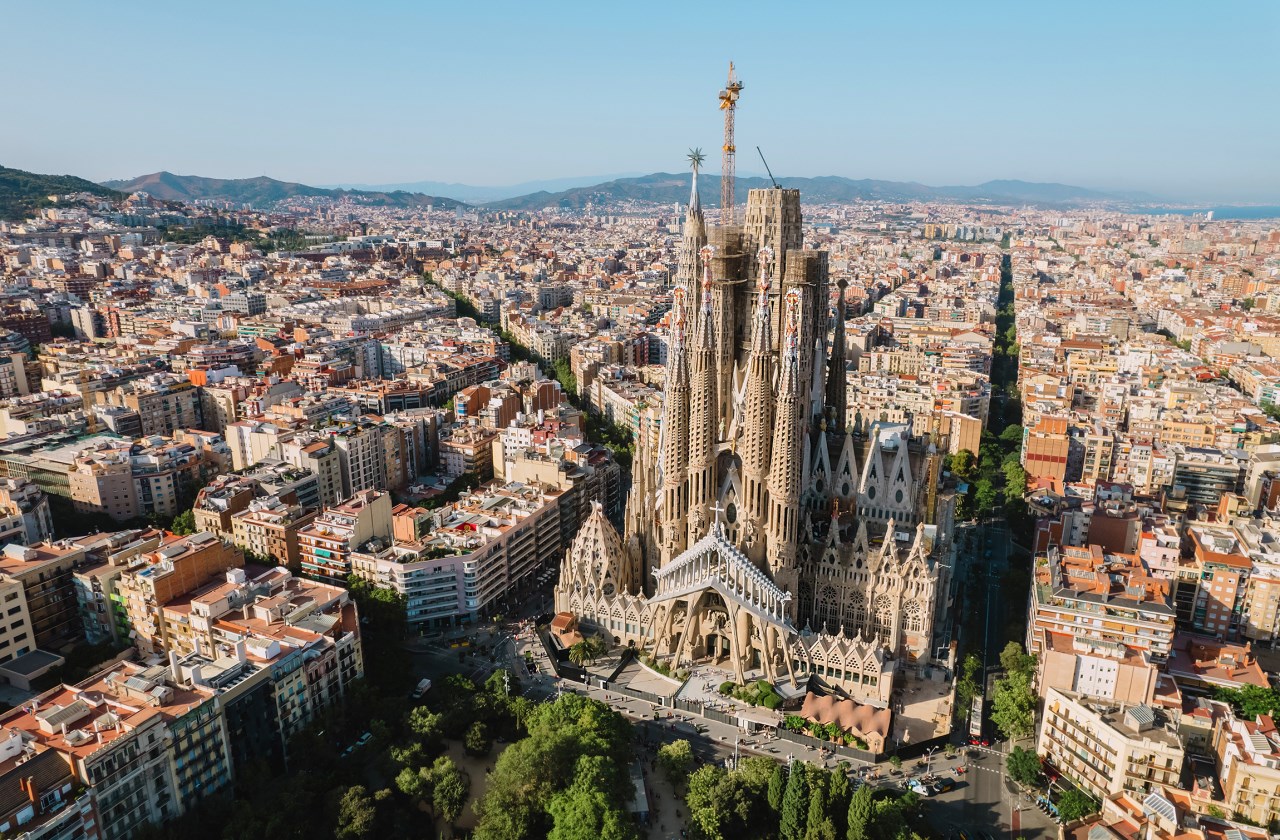
After 143 years, the world's tallest church has finally reached its full planned height. Here is what the architect behind it can still teach us.
A Century in the Making
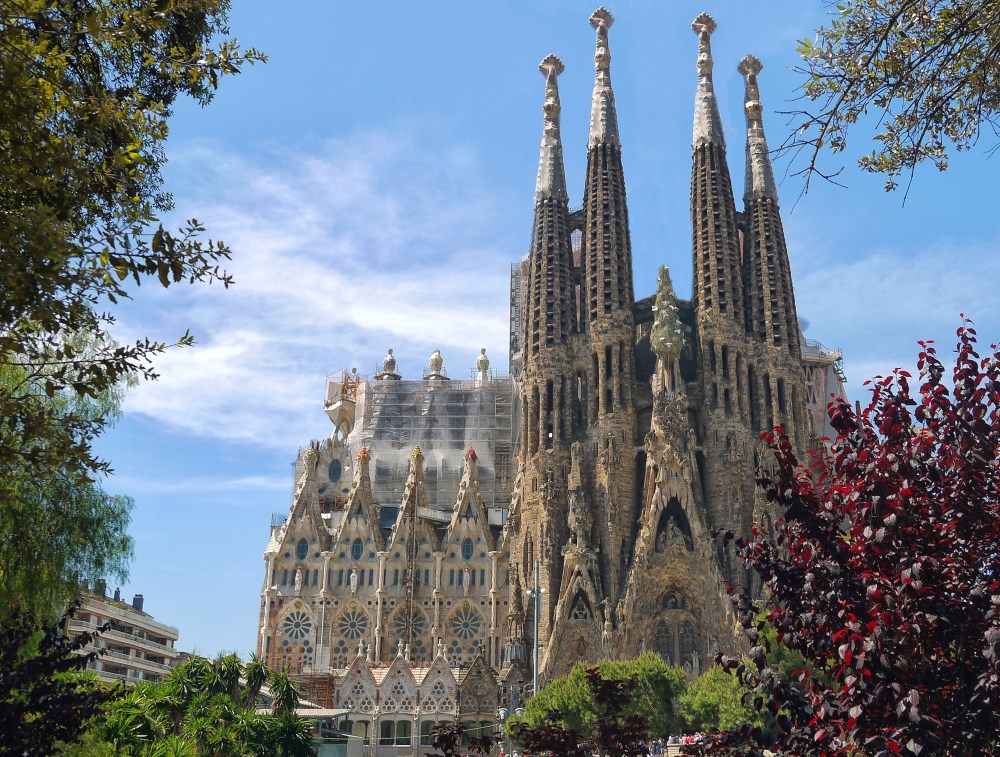
In late February of this year, workers placed a cross atop the central tower of the Sagrada Família in Barcelona. After 143 years of construction, the basilica's central tower has finally been completed.
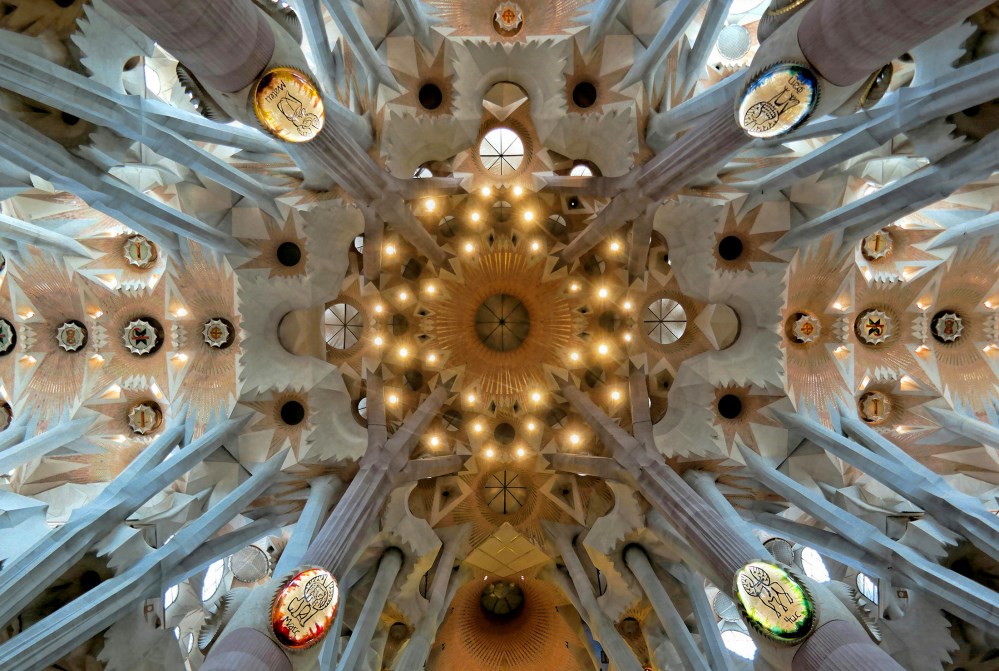
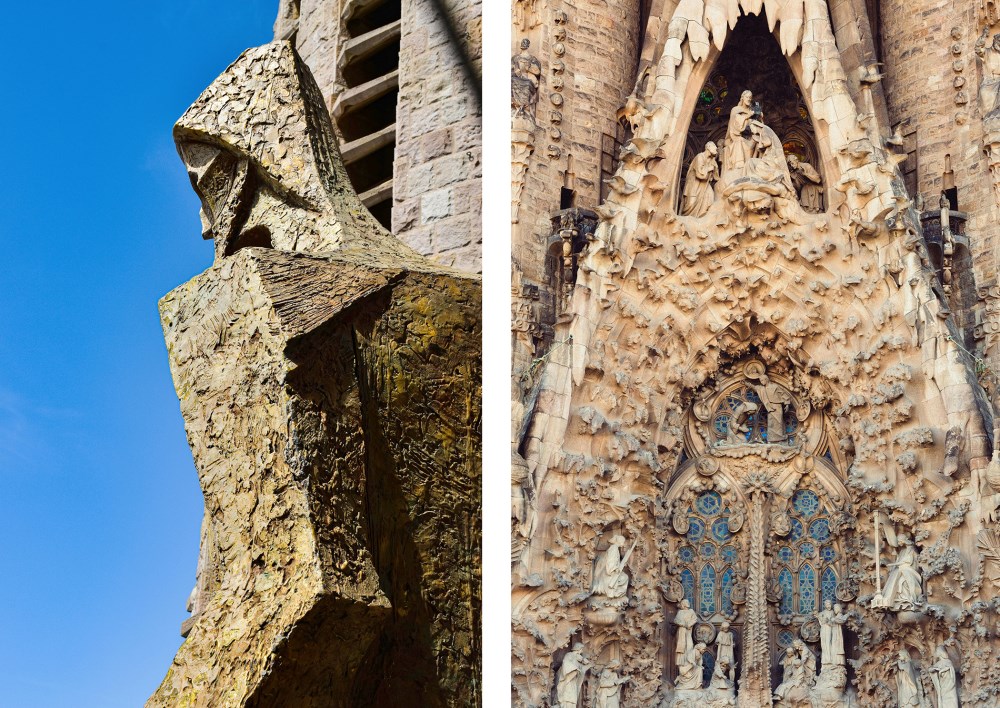
Construction began in 1882, overseen first by the diocesan architect Francisco de Paula del Villar. Antoni Gaudí took over in 1883 and redesigned the project in his own image. His vision added elements that had never been seen before, such as branching stone columns that rise like a forest canopy, façades covered in turtles and angels and cascading carved foliage, and towers that taper toward heaven in forms borrowed from stalactites and seed pods.
Building something this geometrically intricate meant that speed was never really an option. When asked about the slow pace of the Sagrada Família’s construction, Gaudí reportedly replied:
"My client is not in a hurry."
When Gaudí died in 1926, the church stood only partially complete. Ten years later, anarchists set fire to his workshop at the start of the Spanish Civil War and destroyed much of his archive, including the drawings, models, and plaster casts that encoded his intentions. Architects in the decades that followed rebuilt what they could from photographs and fragments, using modern equipment and tools like BIM software to reconstruct and extend Gaudí's geometrically complex designs with unprecedented precision. It is finally nearing completion now.
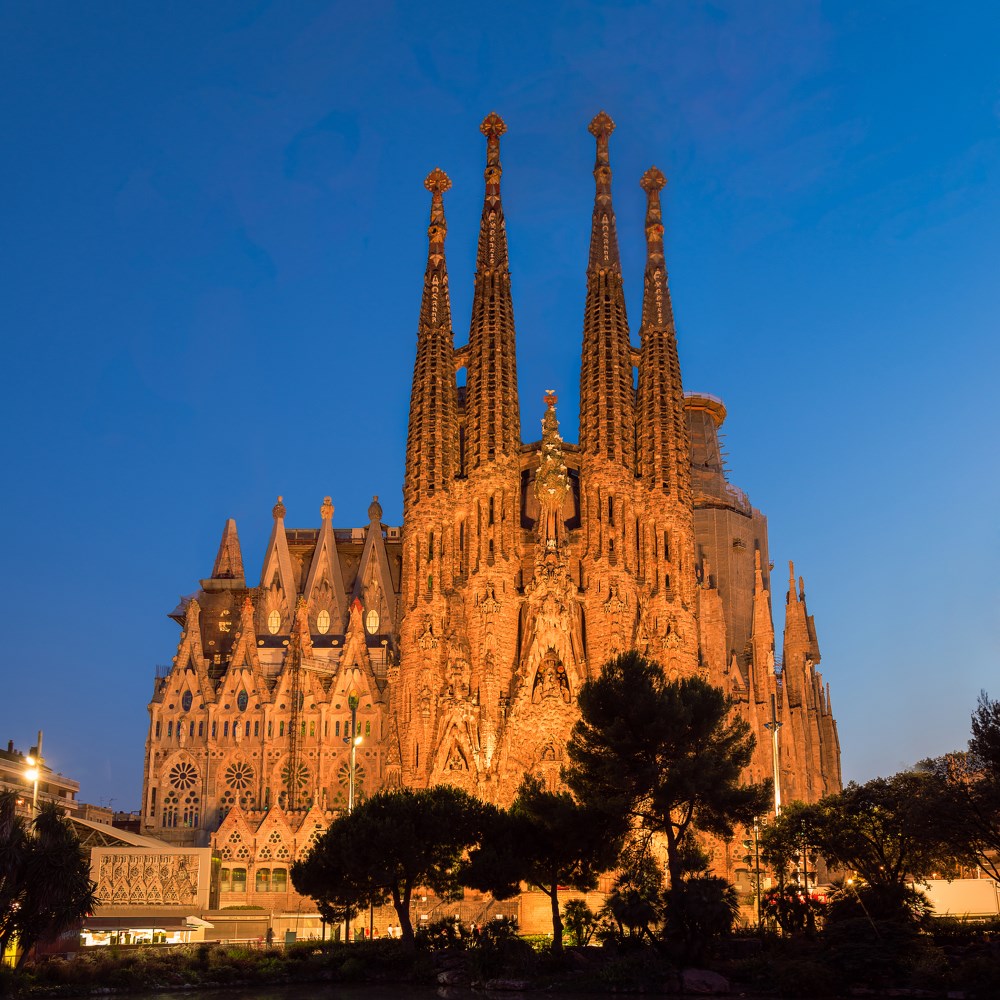
A Building Unlike Any Other
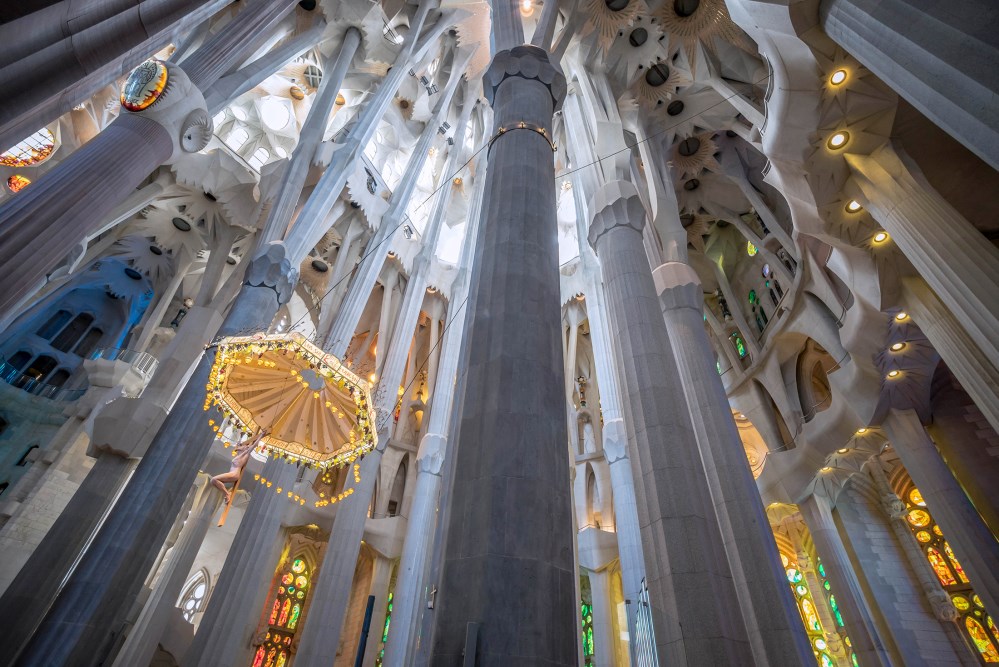
Gaudí drew every structural decision from nature. The branching interior columns follow the same logic as a tree distributing load from trunk to canopy, keeping stone in compression all the way up. Spiraling staircases, tapering spires, soaring vaulted ceilings: each borrows a form that nature had already refined across millions of years. He understood the underlying geometry well enough to rebuild it in sandstone, at scale, without a single computer.
His solution to the structural problem of those complex arches was to build the whole thing upside down. Hanging chains and weighted bags, each scaled to represent the actual load a column would carry, traced the precise curves under gravity. Flip the photograph and the sagging model becomes the building.
He spent a decade refining it before he was satisfied, and what came out the other side was one of the most structurally ambitious buildings ever attempted, designed with string and patience and the pull of the earth.
The Sagrada Família is not merely an object lesson in architecture. It is also a reminder that the most enduring work tends to come from people who were more interested in getting it right than getting it done.
What Gaudí's Process Can Teach Us
None of this happened because Gaudí set out to invent a style. He followed a process rooted in deep observation of nature, a commitment to geometric logic, and a refusal to take shortcuts. Originality, in his case, was a byproduct of that process, not its goal.
Lesson 1: Change Your Perspective
Gaudí designed the Sagrada Família's structure by flipping it upside down. That inversion revealed where gravity was actually directing load, and where support was truly needed. The same principle applies in our own work. Flip your design. Print the document. Step away and return with fresh eyes. Problems that have been normalized become visible again the moment you stop looking at them the same way.
Lesson 2: Love First, Technique Second
Gaudí once said: "To do things well, you need first love and second technique." If you care about the work and care about doing it right, the technical knowledge follows. The mastery comes after the commitment, not before it.
Lesson 3: Discover, Don't Create
"Man does not create, he discovers."
- Antoni Gaudí
Gaudí treated creativity less as pure invention than as attentive observation. He studied branching trees, bone structures, honeycombs, erosion patterns, and the distribution of weight in natural forms. His originality came partly from noticing structural solutions nature had already arrived at. He did not invent those patterns so much as recognize and adapt them.
When a blank page feels paralyzing, that distinction matters. The task is not to conjure something from nothing, but to look carefully at what is already there.
Gaudí did not produce singular work by trying to be singular. He produced it by following curiosity wherever it led, refusing the first or second solution, and treating constraints as an invitation rather than a limitation. What endured was a deliberate way of working: observant, patient, and focused on the problem itself.
--
 BIMsmith is the leading free cloud platform for architects, designers, and building professionals to research, select, and download building product data. Search, discover, compare, and download free Revit families on BIMsmith Market, or build complete, data-rich Revit wall, floor, ceiling, and roof systems faster with the BIMsmith Forge Revit configurator.


Comments