

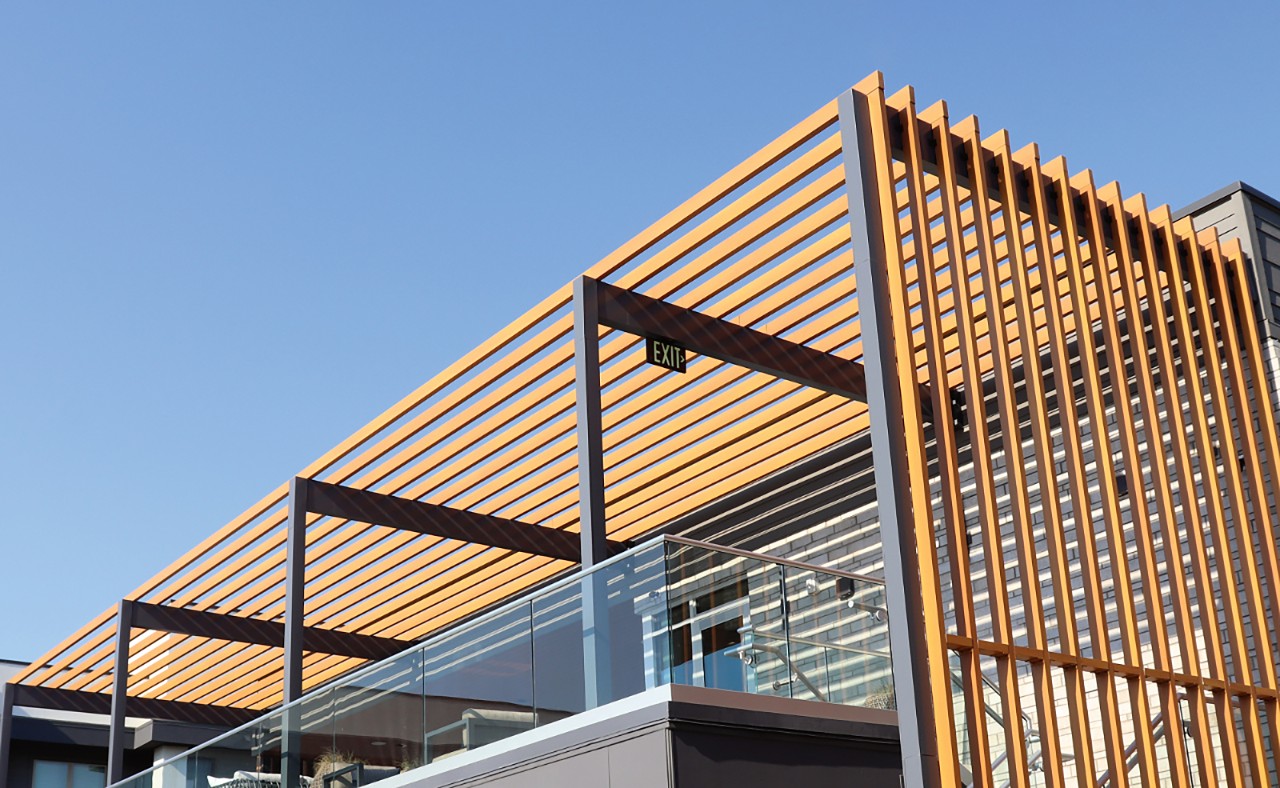
Note: This article was written in collaboration between BIMsmith and Alumination, a manufacturer of innovative aluminium wall, batten, and soffit systems for commercial construction.
When a project calls for battens, the specification decision usually comes down to two materials: real timber or aluminum. Both can achieve a similar aesthetic at the time of installation. After that, the two materials take very different paths.
Maintenance and Total Cost of Ownership
Timber battens require a maintenance commitment that begins almost immediately. To prevent fading, checking, and rot, wood needs to be sanded, stained, or resealed every two to five years. On a smaller project that is a manageable inconvenience. On a larger installation, it becomes a recurring cost that compounds over the life of the building.
Aluminum asks considerably less of the people maintaining it. Alumination's EcoFlex Batten System requires little beyond an occasional wash with mild soap and water. The two-piece snap-together system uses hidden fasteners and decorative end caps to produce a seamless, monolithic finish that holds its appearance without the maintenance schedule timber demands. Over its lifespan, the total cost of ownership favors aluminum by a significant margin.
Moisture, Warping, and Long-Term Geometry
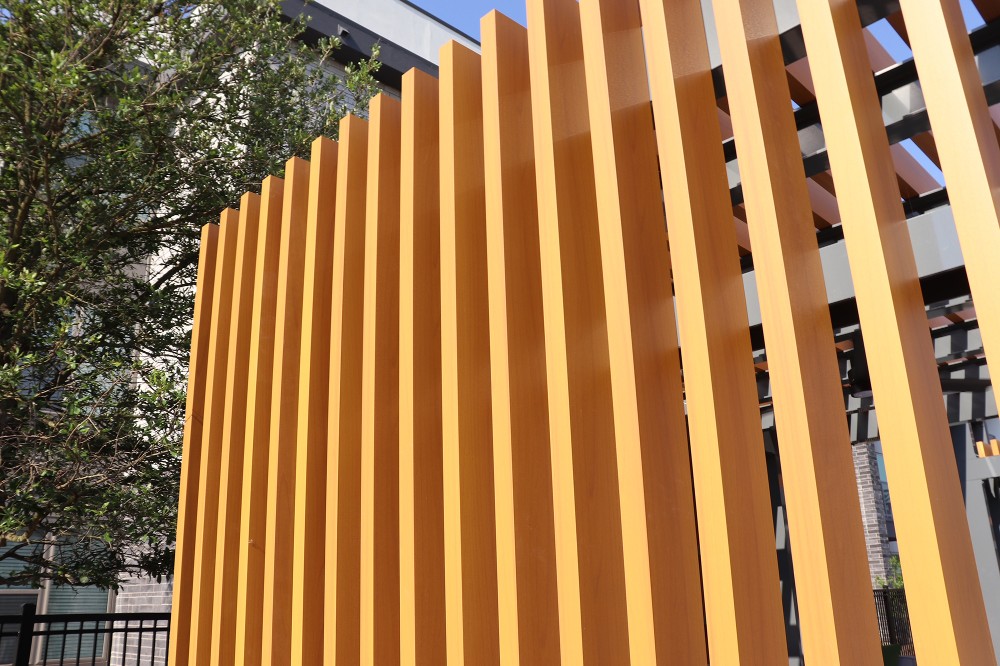
Timber absorbs water, and water moves through wood unevenly. Over time, that means warping, twisting, splitting, and outrigh rot in humid or coastal environments. The clean lines that defined the original installation begin to read differently within a few years of sustained exposure.
Aluminum does not absorb moisture. It holds its dimension regardless of humidity or rainfall, which means the geometry of the original installation stays intact over decades. Designs that depend on precise, even geometry need a material that doesn't change shape.
Fire Resistance and Code Compliance
Timber is combustible, and fire-retardant treatments applied at the time of manufacturing degrade over time. In commercial construction and projects in or near Wildland-Urban Interface zones, that degradation can create code compliance issues that were not anticipated at the specification stage.
Aluminum is non-combustible. It typically carries a Class A Fire Rating, and in certain building types and jurisdictions that rating moves it from a preference to a requirement.
Pest and Biological Resistance
Termites, carpenter ants, and powderpost beetles have no interest in aluminum. Wood provides food and habitat for all three, along with conditions that support mold and mildew growth. In warm or humid climates, that biological vulnerability accelerates the deterioration timeline, and the treatments required to manage it introduce their own ongoing costs.
Aesthetics and UV Performance
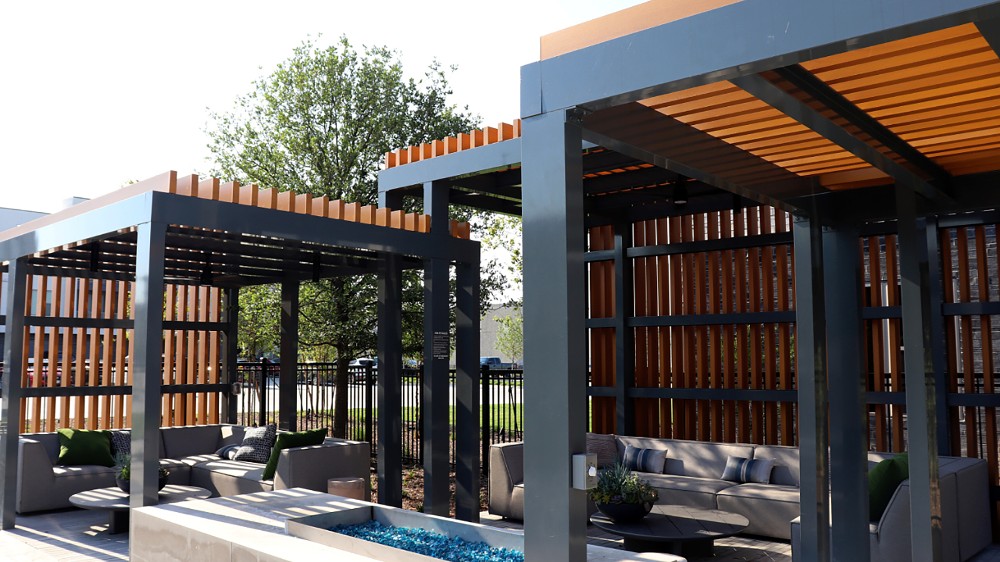
The most consistent objection to aluminum battens is that the material cannot match the warmth of real timber. However, advances in powder-coating and sublimation technology over the last decade have made the gap considerably smaller.
The EcoFlex Batten System achieves a wood-grain finish that reads convincingly at close range, with coatings certified to AAMA 2604 or 2605 standards for UV resistance. Real timber fades unevenly, with shaded sections aging differently from those in direct sun. The powder-coated finish on aluminum holds its color and gloss uniformly across the entire installation. It achieves the aesthetic of timber while shedding everything that makes timber a liability in a long-term specification.
Weight and Installation
Dense hardwoods like Ipe or Cedar add meaningful dead load to a structure, requiring heavier framing and more labor-intensive installation. Aluminum's high strength-to-weight ratio reduces those structural demands. Installation is faster, and requires fewer crew members on site, lowering initial labor costs.
Sustainability
Timber from a certified sustainable forest is a considered choice on environmental grounds. The fire and pest treatments applied over the building's life, however, can offset that advantage. Aluminum is 100% recyclable without any degradation of its physical properties, and most architectural aluminum profiles contain a significant percentage of recycled content.
For projects pursuing LEED certification, aluminum can contribute points in the Materials and Resources category. Alumination builds the EcoFlex Batten System around that material profile, making recyclability a specification credential from the start.
The Specification Decision
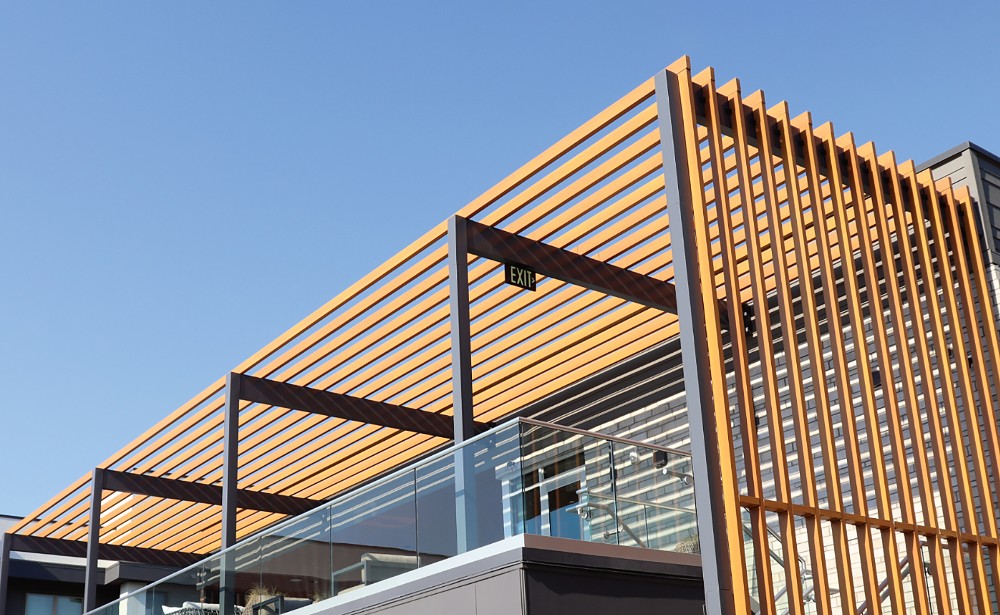
Real timber offers a material authenticity, and for some projects that distinction carries weight. But for installations where long-term performance is part of the brief, aluminum has a very strong case: lower maintenance, better fire and moisture resistance, pest immunity, dimensional stability, and a recyclability profile that most treated timber cannot match.
To explore Alumination's EcoFlex Batten System, visit alumination-ap.com. Revit files for the EcoFlex Batten System are available to download on BIMsmith.
--
 BIMsmith is the leading free cloud platform for architects, designers, and building professionals to research, select, and download building product data. Search, discover, compare, and download free Revit families on BIMsmith Market, or build complete, data-rich Revit wall, floor, ceiling, and roof systems faster with the BIMsmith Forge Revit configurator.
This is a great comparison of wood and aluminum battens, especially from a long-term performance and maintenance perspective. One aspect I would also consider during the specification stage is how the selected batten system is represented in the BIM model, including accurate material properties, dimensions, finishes, and manufacturer data. Having reliable BIM content available early can make coordination and specification much more efficient for architects and contractors. Great insights!