

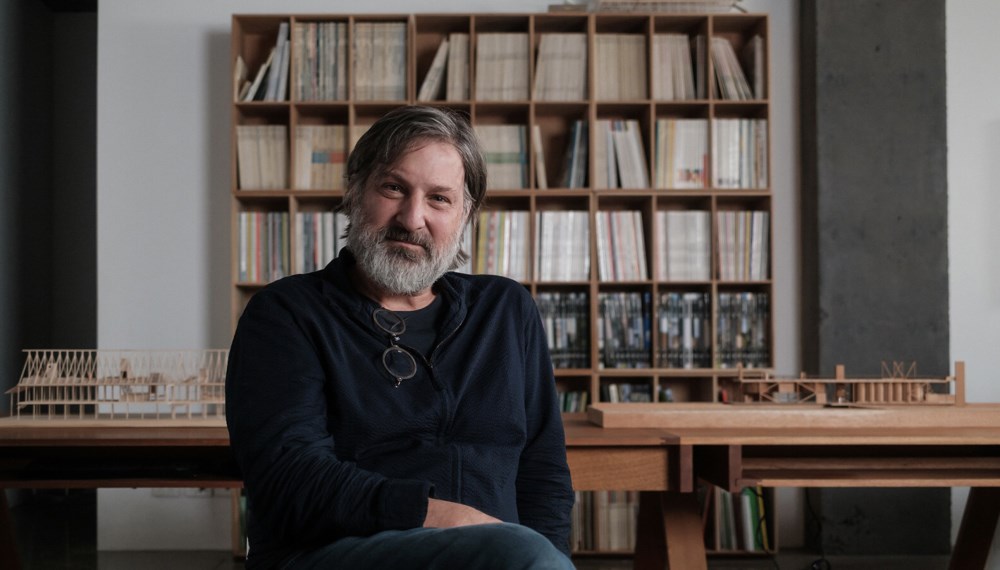
The 55th Laureate of the Pritzker Architecture Prize is Smiljan Radić Clarke of Santiago, Chile. His architecture can be hard to categorize. No two Radić buildings look the same, and that is deliberate. He approaches each project as its own problem, with site, context, and human use driving the decisions from the beginning. Radić puts it this way:
"Architecture exists between large, massive, and enduring forms, structures that stand under the sun for centuries, waiting for our visit, and smaller, fragile constructions, fleeting as the life of a fly, often without a clear destiny under conventional light. Within this tension of disparate times, we strive to create experiences that carry emotional presence, encouraging people to pause and reconsider a world that so often passes them by with indifference."
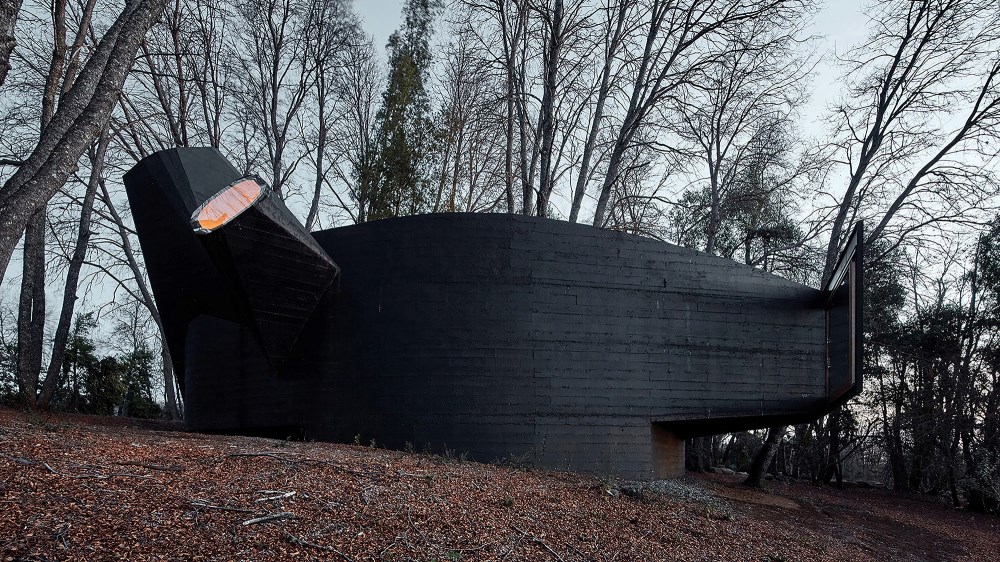
House for the Poem of the Right Angle in Vilches, Chile
A Multicultural Background
Radić was born in Santiago to an immigrant family, his father's parents from Brač, Croatia, and his mother's from the United Kingdom. Growing up between cultures gave him an early awareness of what it means to belong somewhere, and what it means to construct that belonging yourself.
He came to architecture gradually, studying at the Pontificia Universidad Católica de Chile before a failed final examination pushed him toward history studies in Venice and a period of extensive travel he regards as his most formative education. Philosophy, art, and literary references found their way into his thinking alongside more conventional architectural influences.
During his university years he met sculptor Marcela Correa, who would later become his client and his wife. Together they built her first house by hand in the Andes Mountains, a 24-square-metre structure that set the tone for much of what followed. He established his practice in Santiago in 1995 and has kept it intentionally small ever since.

Marcela Correa and Smiljan Radić Clarke - Image Credit: www.pritzkerprize.com
In 2017, Radić set up the Fundación de Arquitectura Frágil inside his home studio in Santiago. Part public platform, part working archive, the foundation brings together experimental works, studies, and references from architects across disciplines, forming a body of research that feeds directly back into his own projects.
Working with the Land
Radić treats every site as a set of conditions to respond to, not a blank canvas to build on. His buildings are shaped by wind direction, topography, and the weight of what already exists there. Growing up in Chile, where earthquakes are a fact of life, permanence and domination over a landscape never made much sense to him. Instead, he focused on the idea of coexistence.
Pite House (2005) is a good example of this. The house is oriented precisely to protect its occupants from harsh coastal winds and direct Pacific light. The geometry is designed around climate and landscape rather than aesthetic preference alone. It reads as placed rather than built, sitting on the land without trying to own it. The restraint here is a position, not just a style choice.
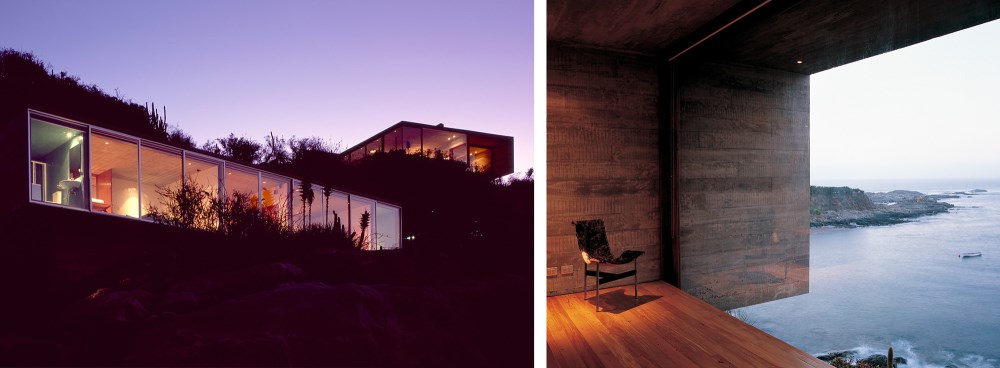
Pite House in Papudo, Chile - Image Credit: Erieta Attali and Cristobal Palma
Restaurant Mestizo (2006) takes a different approach to the same question. Rather than sitting on top of the ground, the building partially sinks into it, so the boundary between what was excavated and what was constructed becomes genuinely hard to identify. Massive boulders are positioned almost like columns, holding the roof structure aloft from below. They were not brought in as decoration. They are doing structural work, carrying the building's weight in the most direct way possible. It is the kind of move that feels obvious in retrospect but requires real confidence to commit to, using the heaviest, most ancient-looking material available and making it the thing everything else depends on.
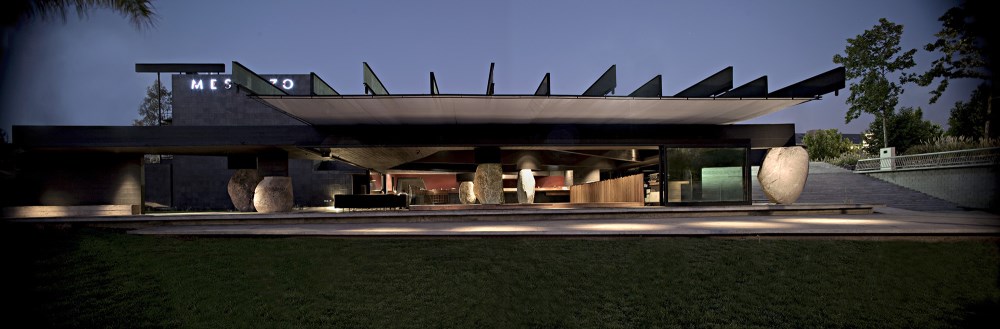
Restaurant Mestizo in Santiago, Chile - Image Credit: Gonzalo Puga
He would return to this idea of using found boulders as structure in later projects too, most notably at the 14th Serpentine Gallery Pavilion (2014). Large stones sourced from a Yorkshire quarry form the base, with steel columns hidden inside them so the boulders appear to be carrying the whole structure on their own. A thin cylindrical fiberglass shell sits perched on top, conceived as a folly that looks like it has been slowly worn down by centuries of weather. Light filters through the semi-transparent walls and the centre opens to the sky, giving the feeling of being sheltered without ever losing the sense of being outside.
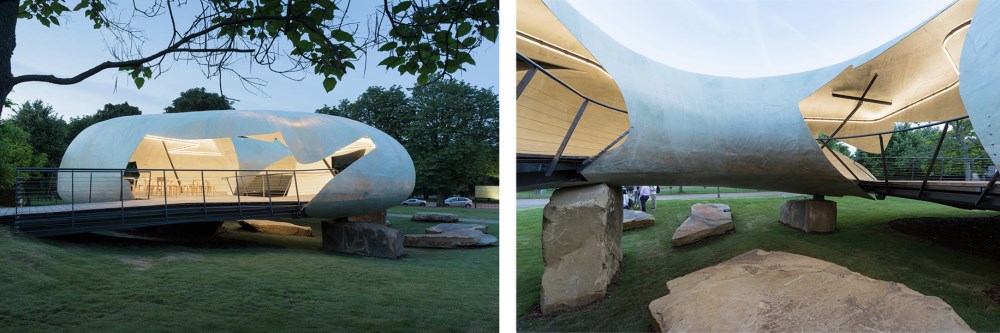
14th Serpentine Gallery Pavilion in London, UK - Image Credit: Iwan Baan
When Radić works with existing buildings, he treats what is already there as material to work with, not an obstacle. Adaptation, in his hands, is a form of respect. Chile Antes de Chile, the extension of the Chilean Museum of Pre-Columbian Art (2013), demonstrates this at civic scale. New volumes are added in careful relation to the existing structure, extending the building's capacity without overwriting its history. Every decision takes its cue from what came before.
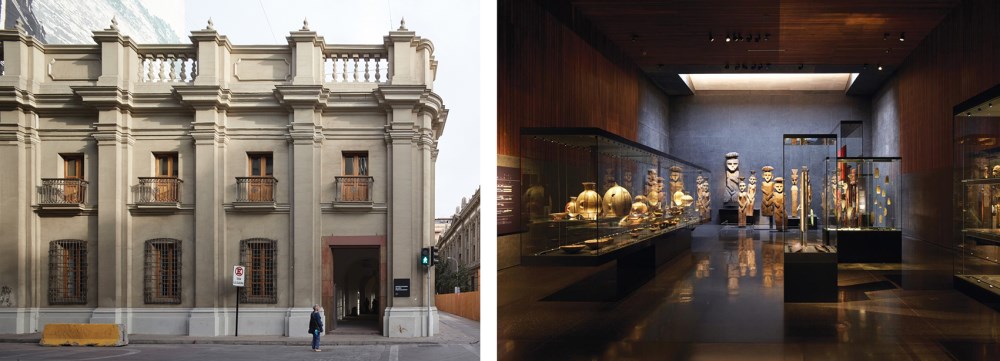
Chile Antes de Chile in Santiago, Chile - Image Credit: Cristobal Palma
NAVE (2015) tells a more complex story. A fire in 2006 and the 2010 earthquake gutted an early-twentieth-century residential block in Santiago's Yungay neighbourhood, leaving only parts of the façade standing. The site was completely cleared, and the original façade was carefully restored. New volumes for performance, rehearsal, and workshop use were added, with few structural elements touching the ground on the first floor. Through the façade's original openings, the surrounding neighbourhood becomes part of the backdrop for performances inside. A suspended public walkway leads up through the building to a rooftop terrace designed specifically to hold a circus tent. Every layer of the building's history stays visible, and that visibility is the point.
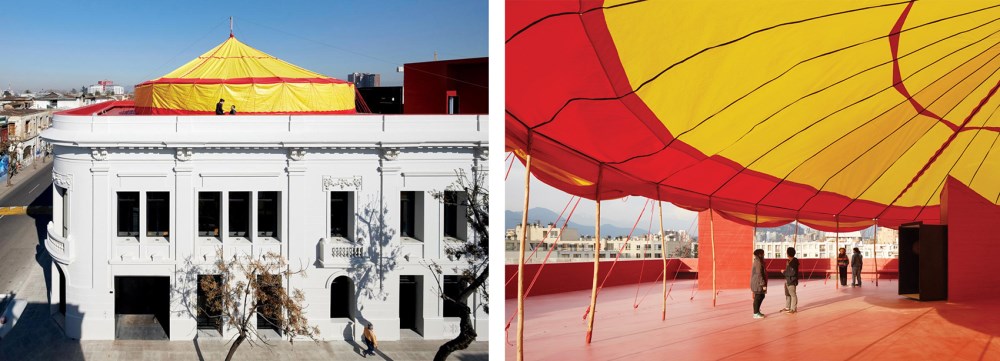
NAVE in Santiago, Chile - Image Credit: Cristobal Palma
The same restraint carries through to larger commissions. At Teatro Regional del Biobío (2018), a semi-translucent envelope wraps the theater, doing two jobs at once: managing how light enters the building and supporting its acoustic performance. At dusk, the membrane glows with a warm, inviting presence that reads clearly as a civic building without trying to dominate the city around it. Engineering and architectural expression are working as one system here.

Teatro Regional del Biobío in Concepción, Chile - Image Credit: Cristobal Palma
Guatero (2023), designed for the XXII Chilean Architecture Biennial, sits at the other end of the spectrum. A monumental inflatable pavilion, it is big, colourful, and unashamedly temporary. The same material intelligence is there, just applied to something that makes no claim to permanence whatsoever. It is a reminder that Radić's architecture has always been as much about atmosphere and experience as it is about construction.
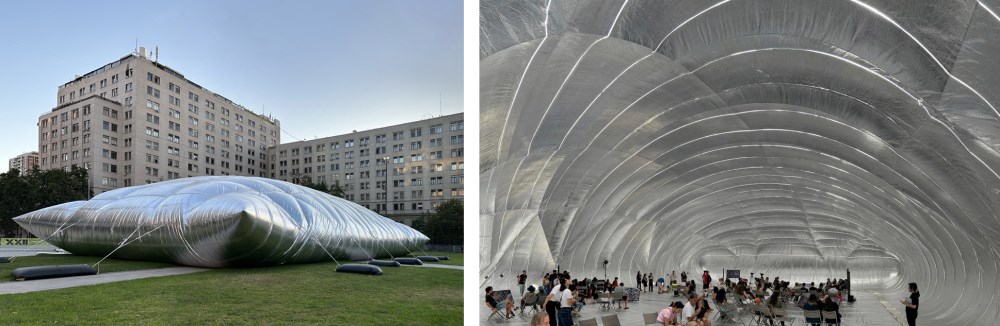
Guatero in Santiago, Chile - Image Credit: Smiljan Radić
The 2026 Jury, chaired by 2016 Pritzker Prize Laureate Alejandro Aravena, recognized Radić for a body of work operating at the crossroads of material experimentation, cultural memory, and spatial experience. The Jury Citation describes buildings that "may appear temporary, unstable, or deliberately unfinished, almost on the point of disappearance, yet they provide a structured, optimistic and quietly joyful shelter, embracing vulnerability as an intrinsic condition of lived experience."
--
 BIMsmith is the leading free cloud platform for architects, designers, and building professionals to research, select, and download building product data. Search, discover, compare, and download free Revit families on BIMsmith Market, or build complete, data-rich Revit wall, floor, ceiling, and roof systems faster with the BIMsmith Forge Revit configurator.



Comments