

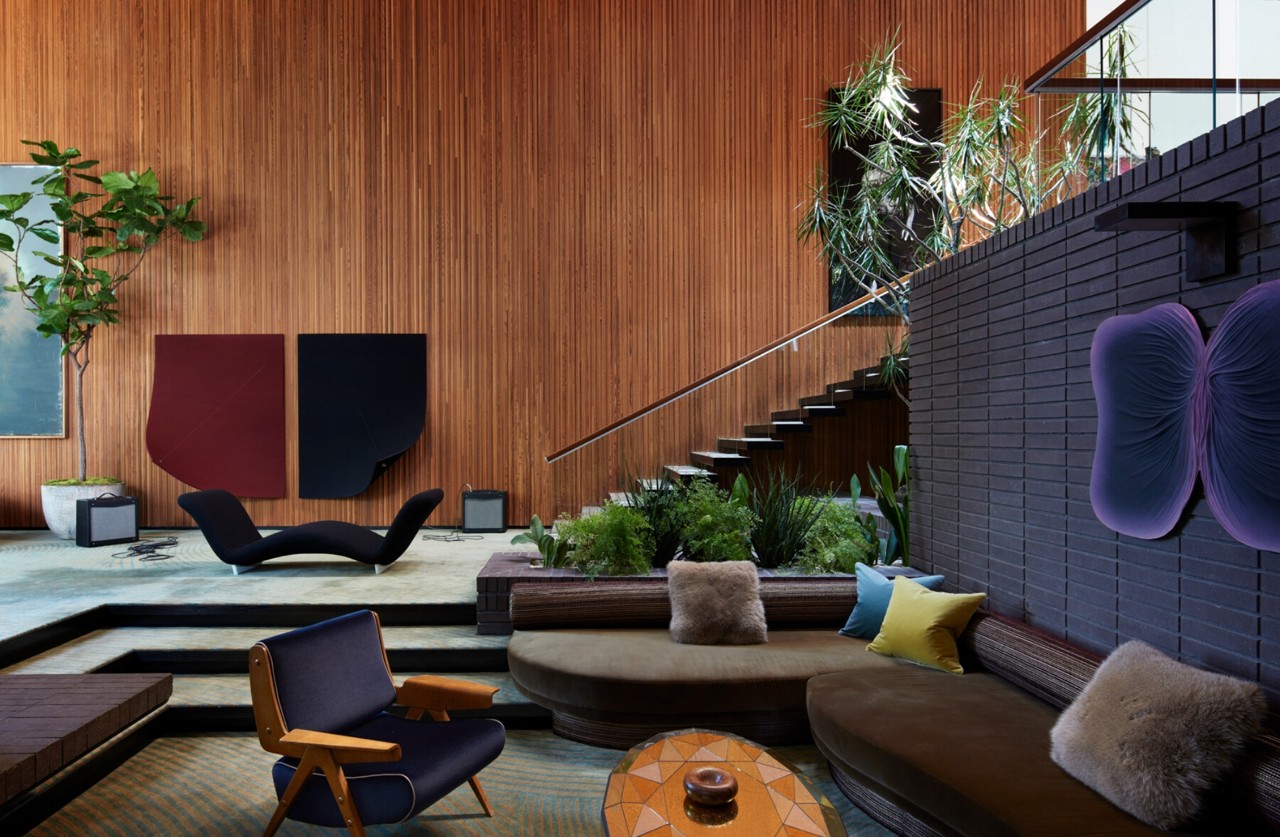
Most design movements have a natural lifespan, arriving with conviction and eventually receding into the era that produced them. Mid-century modern has never worked that way. The low-slung furniture, the warm timber, and the instinct for bringing light and nature into a room have proven to be timeless. A warm, considered room that's easy to spend time in tops plenty of client wish lists, and mid-century modern has been meeting that brief for the better part of eight decades.
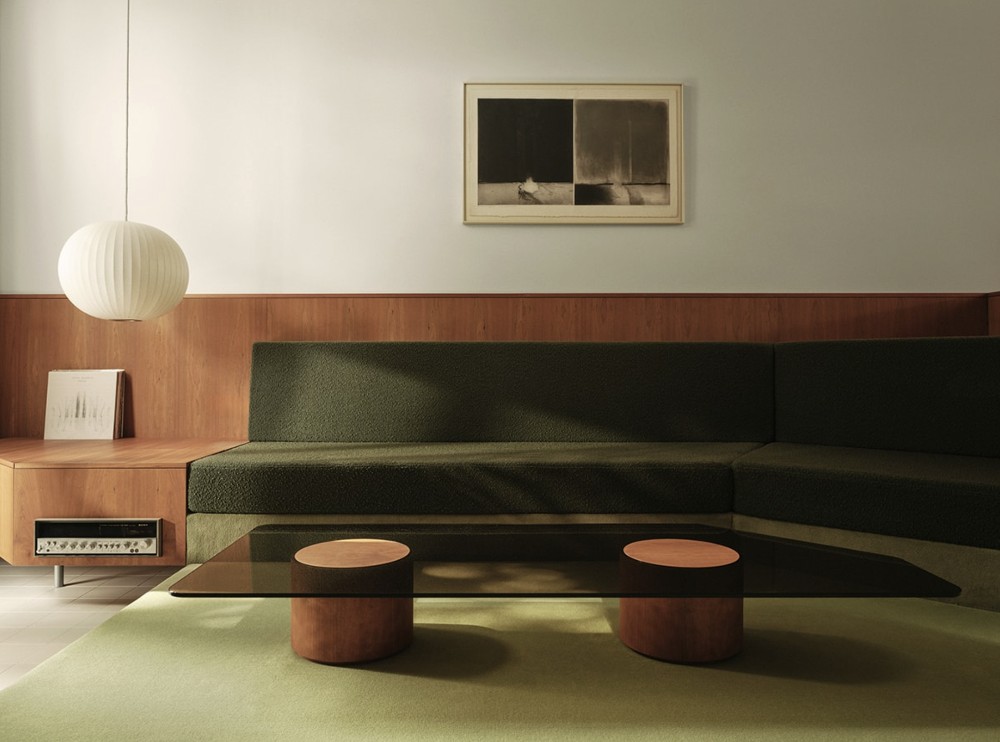
Pine Heath by Studio Hagen Hall - Image Credit: Felix Speller
UK-based interior designer Naomi Wheeler works with the aesthetic regularly. "It offers a warm, homely feeling," she says. "There's a members' club quality to it. Not in an exclusive way, but in the way that the space just feels considered." She has observed that people want homes that feel deliberate, and mid-century modern does that particularly well.
Why It Endures
Part of mid-century modern's staying power lies in what it asks of a room. It does not demand a particular architecture or a specific location. What it requires is a commitment to a certain set of principles: warmth over coolness, function over ornament, materials that earn their place rather than simply decorating it.
The designers who shaped the movement were not primarily interested in style. They were interested in how people actually lived, and in making the objects and spaces around them work better. Style followed from that process rather than preceding it, which is part of why the aesthetic has proven adaptable across so many different kinds of homes. It fits a Victorian terrace as naturally as a modernist apartment because it is about what goes inside a building and why, not the building itself.
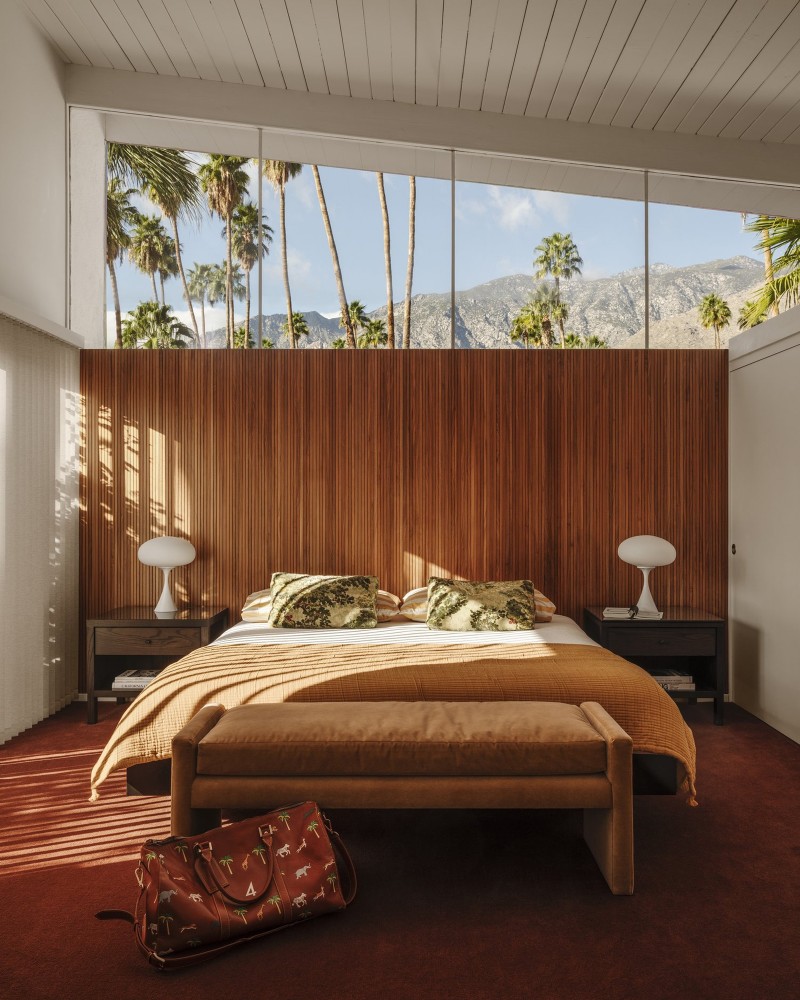
Palm Springs Residence by Proem Studio - Image Credit: Lance Gerber
For residential clients today, mid-century modern also offers something that many contemporary interiors struggle to provide: genuine warmth. "A few years ago, a lot of spaces were going for really cold materials that felt quite stark," Naomi observes. "Mid-century modern is the opposite of that." The natural materials, the layered textures, the low furniture that makes a room feel inhabited rather than displayed, all of it adds up to something that is simply easy to spend time in.
The Material Palette
If there is a single anchor material in mid-century modern, it is warm timber. Teak and walnut sit at the heart of the aesthetic and have done since its origins, both carrying a depth of tone that reads differently depending on the light falling across them. Teak darkens and richens with age. Walnut has a natural warmth that makes a room feel settled in a way that lighter timbers rarely manage.
"Warm timbers are non-negotiable," Naomi says, "and lots of layers of natural materials alongside them." That layering is where the richness comes from. Mid-century modern achieves its depth through the accumulation of materials that belong together.
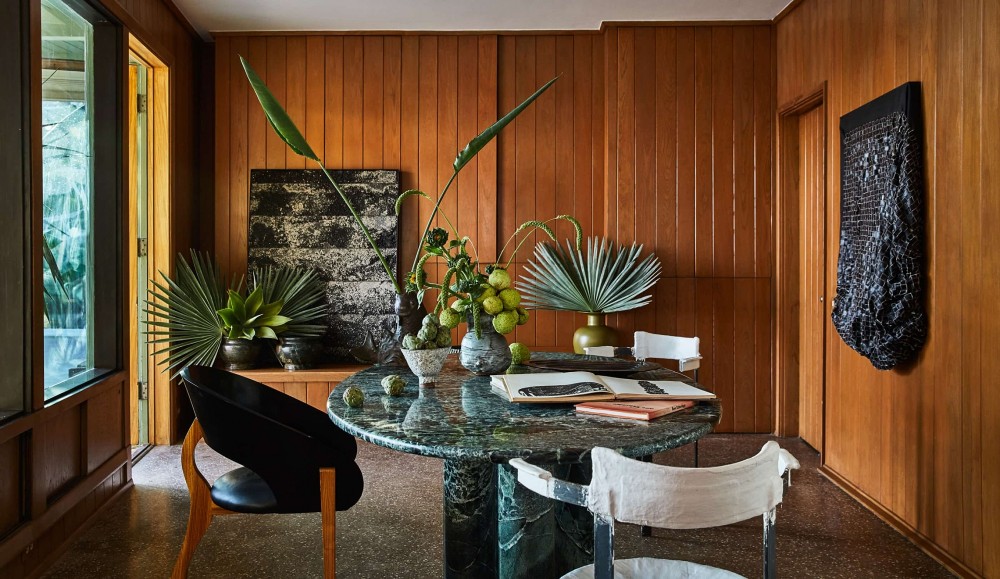
Broad Beach Residence by Kelly Wearstler - Image Credit: www.kellywearstler.com
Stone works particularly well in residential mid-century modern interiors, and honed rather than polished finishes tend to be the right call, sitting closer to the material's natural character and avoiding the kind of surface that bounces light rather than absorbing it. Travertine has become almost synonymous with the aesthetic in its current residential incarnation, its warm tones and quiet variation sitting comfortably alongside walnut and teak without pulling focus. Slate and limestone offer cooler alternatives for spaces that need something to counterbalance a predominantly warm palette.
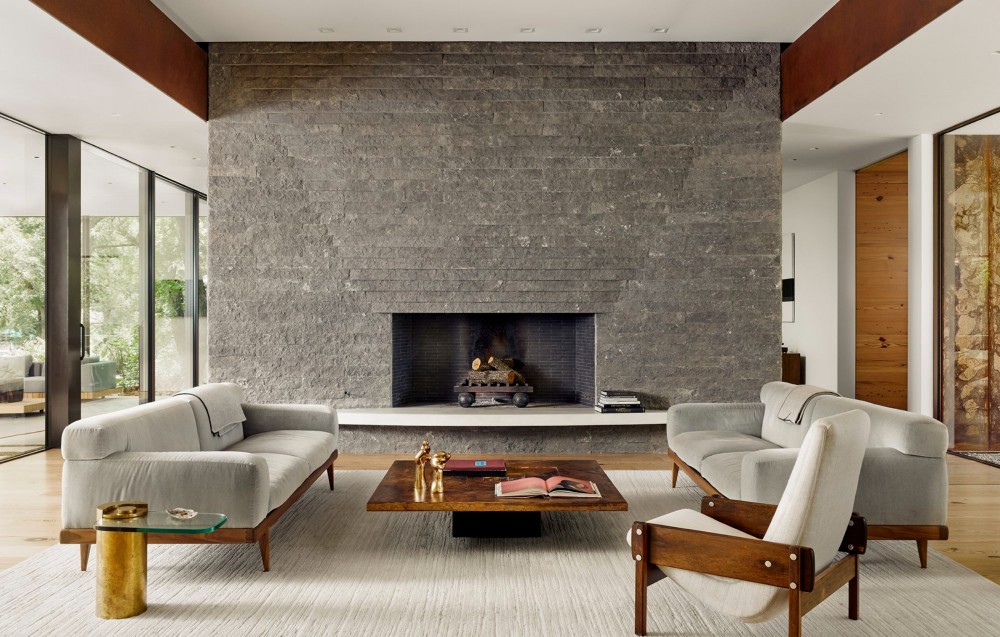
River Hills Residence by Miro Rivera Architects - Image Credit: Casey Dunn, Paul Finkel
Cork is worth reconsidering in this context too. One of the original mid-century modern materials, it brings warmth and texture, performs well acoustically, and has an honesty to it that suits an aesthetic built on material authenticity. From there, the soft furnishings carry the layering further. Leather is one of the most authentic and practical upholstery choices in a mid-century modern interior, developing its own character over time in ways that only improve with age.
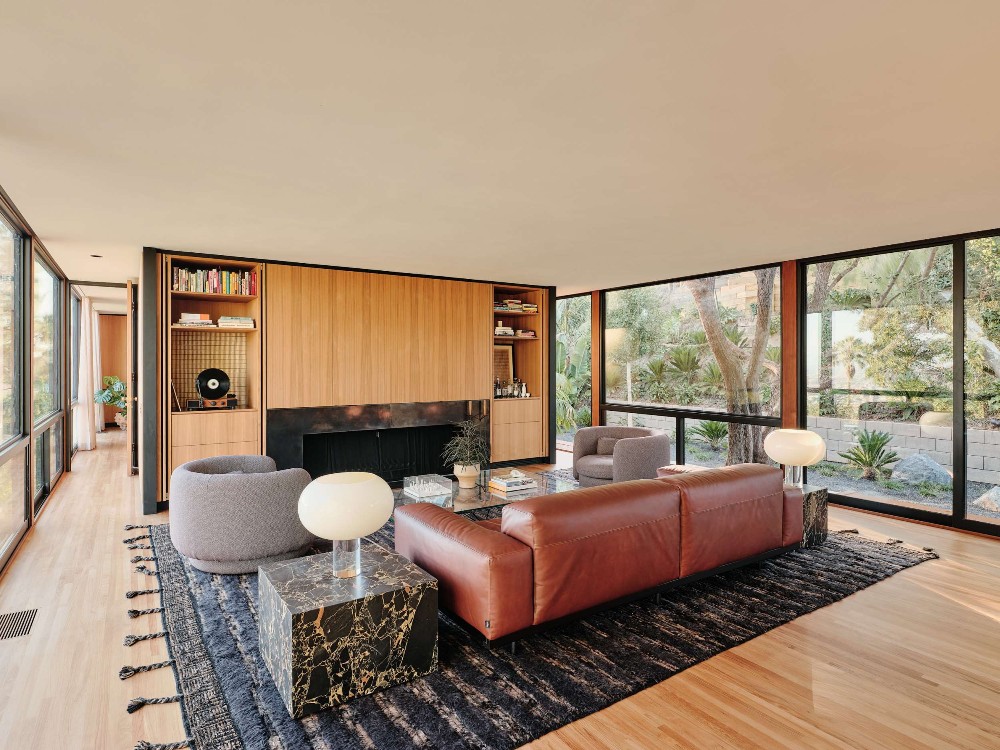
Moore House by Woods + Dangaran - Image Credit: Joe Fletcher
Linen, boucle, and wool sit naturally alongside it, each adding a different kind of softness: boucle on an accent chair, linen on cushions, wool in a rug that anchors the whole room. The combination of leather for the main pieces and softer textiles for the details gives a space the kind of depth that makes mid-century modern feel layered and lived-in rather than just styled that way.
Brass and bronze bring a different kind of warmth to the palette. Handles, light fittings, the occasional decorative object: metal details in a mid-century modern interior earn their place through restraint, adding warmth without visual weight and developing a patina over time that suits the style perfectly.
Furniture and Form
One of the things that makes mid-century modern particularly well suited to residential interiors is the quality of its furniture. The best pieces from the period, and from contemporary designers working in its tradition, were designed to be lived in rather than looked at.
Seat height is one of the defining characteristics of the style, and one that is easy to underestimate. Low-slung sofas and lounge chairs change the feeling of a room considerably, making it feel more relaxed and less formal. A sofa that sits close to the ground changes how people behave in the space too, encouraging them to settle in rather than perch.
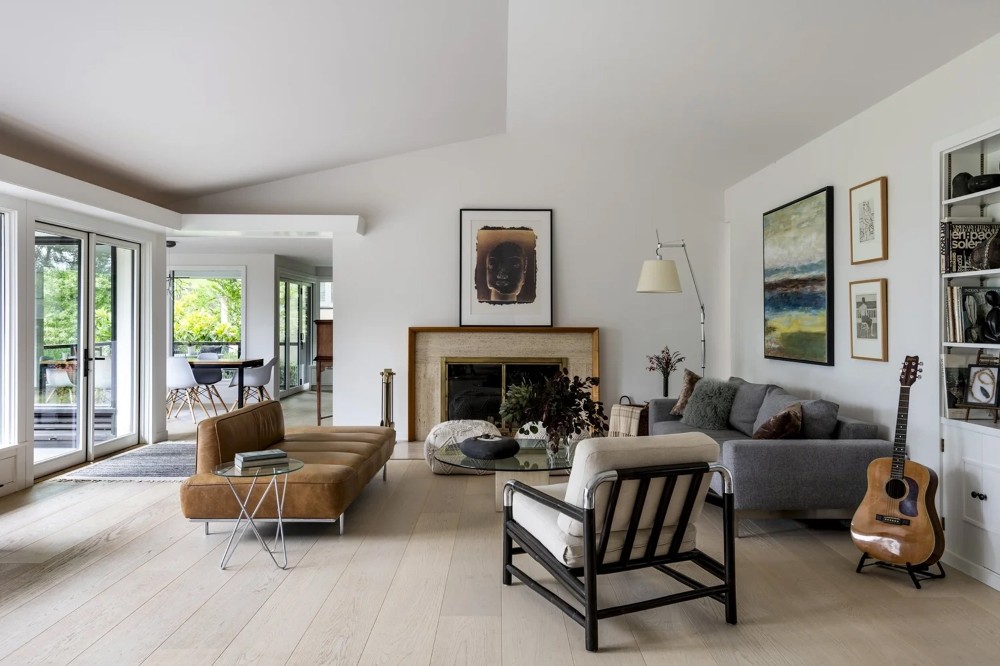
Windermere Midcentury Renovation by CAST Architecture - Image Credit: Andrew Giammarco
The temptation when working with the aesthetic is to pursue period authenticity at the expense of everything else. Naomi's instinct runs the other way: mix mid-century pieces with furniture and objects from other periods rather than trying to recreate a particular decade. A genuine Eames chair alongside a contemporary sofa and a piece of antique furniture will feel more alive and more personal than a room furnished entirely from one era. The mid-century pieces tend to anchor the space while the other elements give it character.
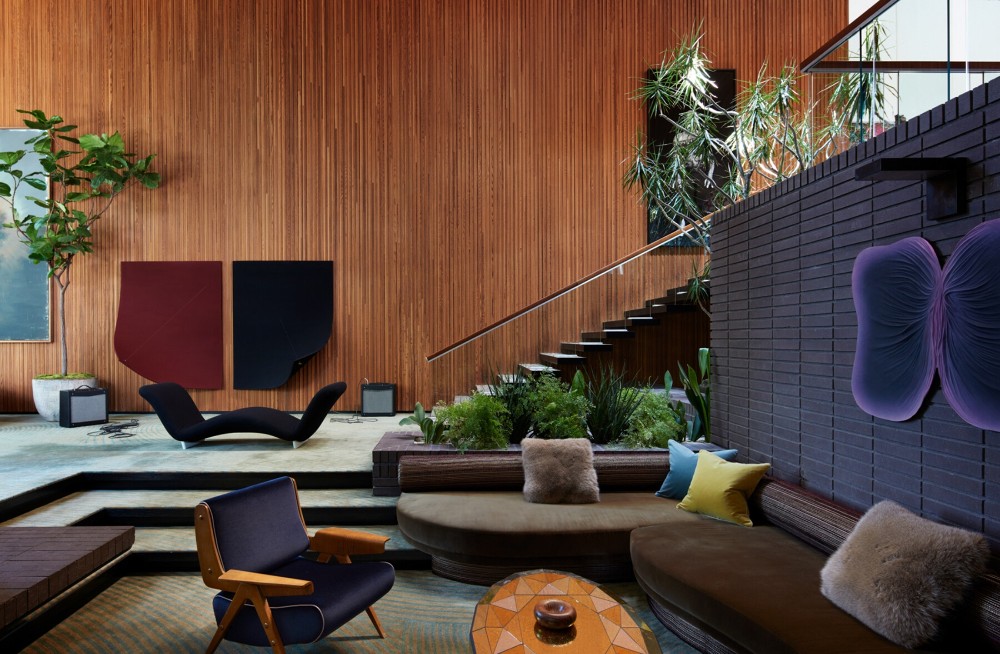
Brooklawn by Shamshiri - Image Credit: https://studioshamshiri.com
Light and Atmosphere
Lighting deserves the same deliberate thinking as material specification. The warm tones of walnut and teak read completely differently under warm, low light than they do under cool overhead sources. Brass hardware glows in the right conditions and disappears in the wrong ones.
The aesthetic has always understood that a room is not just what you see but how it makes you feel. Low-level lighting, table lamps positioned to create pools of light rather than an evenly lit room, and floor lamps that draw the eye to specific corners all reinforce the intimacy that mid-century modern does so well. "I love it when you go into a space and there's really low lighting," Naomi says. "You don't feel like the whole room is just illuminated. There's something really nice about that."

Residência PP by BC Arquitetos - Image Credit: www.bcarch.com.br
Natural light matters too. The movement's original instinct for connecting interior and exterior remains one of its most compelling qualities in residential design. Where architecture allows, large windows and generous glazing that blur the boundary between inside and outside are as much a part of the aesthetic as any piece of furniture. The connection to the outside world, to light, views, and the texture of what lies beyond the glass, was central to mid-century modern from the beginning.
The amount and direction of that light also shape many of the decisions that come before it. A room with soft, indirect daylight can carry deeper timbers and richer leather without feeling heavy, while a space that floods with direct sun for most of the day often calls for lighter woods and cooler stone to keep the palette in balance. The same logic carries through to furniture placement and electric lighting, since where daylight falls in a room affects where a low sofa feels most at home and how much supplemental light is needed once that daylight fades.
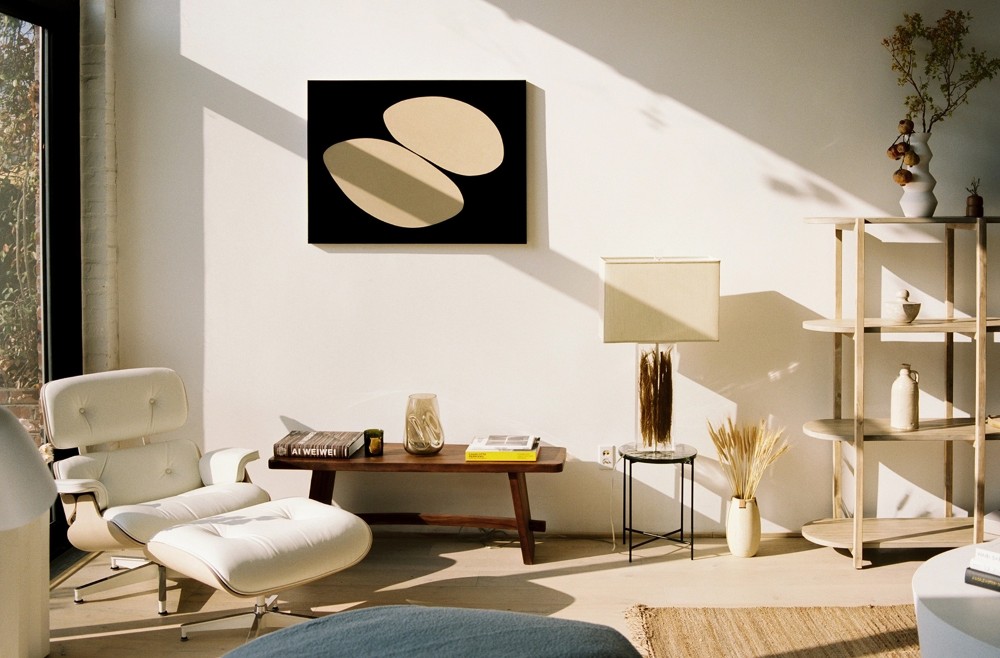
Biscuit Loft by OWIU Studio - Image Credit: www.owiu-design.com
Where to Begin
For anyone bringing mid-century modern into a home for the first time, furniture is the most practical starting point. A single well-chosen piece, a walnut credenza, an Eames-inspired lounge chair, a low sofa in warm leather or boucle, can shift the feeling of a room without requiring any structural change. From there, the material palette tends to build naturally. Warm timber leads to warm textiles, which lead to the right lighting, and somewhere along that process the room stops feeling like a project and starts feeling like somewhere you want to be.
--
 Swatchbox is a premier sample fulfillment service for building product manufacturers. With proprietary software designed by insiders of the design community, Swatchbox helps manufacturers improve product sales and brand affinity by delivering material samples to the design community with speed, intelligence, and style. Learn more and join Swatchbox at www.swatchbox.com.


Comments