

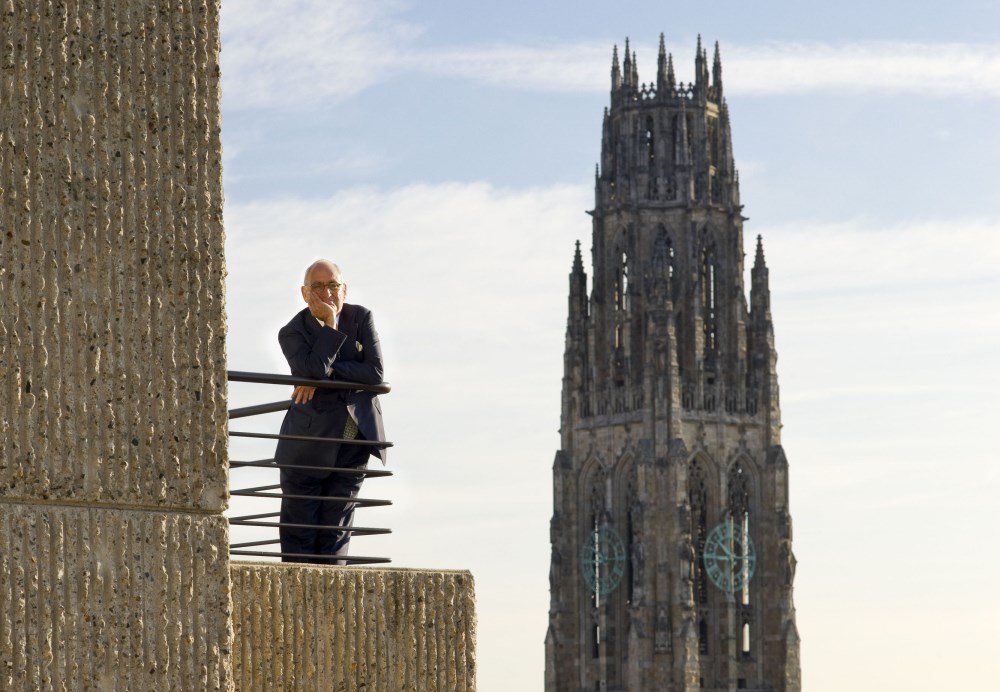
With Robert A.M. Stern's passing on November 27, 2025, architects and designers around the world paused to reflect on a career that reshaped skylines and reintroduced traditional forms to contemporary architecture. Over the course of more than five decades, he demonstrated that memory and innovation can exist together. His buildings, books and teaching continue to influence how architects design and think about the built environment.
A Storied Career
Stern's path to the profession began with a history degree from Columbia University in 1960 and continued at the Yale School of Architecture, where he studied with prominent modernists. He established his own practice in 1969, and he helped lead the “Grays” faction in the 1973 Five on Five debate, advocating for architecture that draws on context and precedent. By the 1990s his office had grown to become one of the most recognized firms in the world.
Notable recognition awarded throughout his career include the Richard H. Driehaus Prize in 2011, the Vincent Scully Prize in 2008 and the AIA/ACSA Topaz Medallion in 2017. Stern designed buildings that bridged tradition and modernity, demonstrating that historical precedent could inform contemporary design without compromising function or relevance. His work ranged from luxury residences to educational institutions and resort destinations, each project reflecting his deep understanding of architectural history and context. He also wrote numerous books on American architecture and a multi‑volume history of New York.
His teaching career proved equally influential, beginning in 1970 and spanning both his alma maters. At Columbia University, he served as the first director of the Temple Hoyne Buell Center for the Study of American Architecture in 1984, later becoming director of the M. Arch. Advanced Studio in 1990 and director of the Historic Preservation Program in 1991. His appointment as Dean of Yale School of Architecture from 1998 to 2016 sparked controversy.
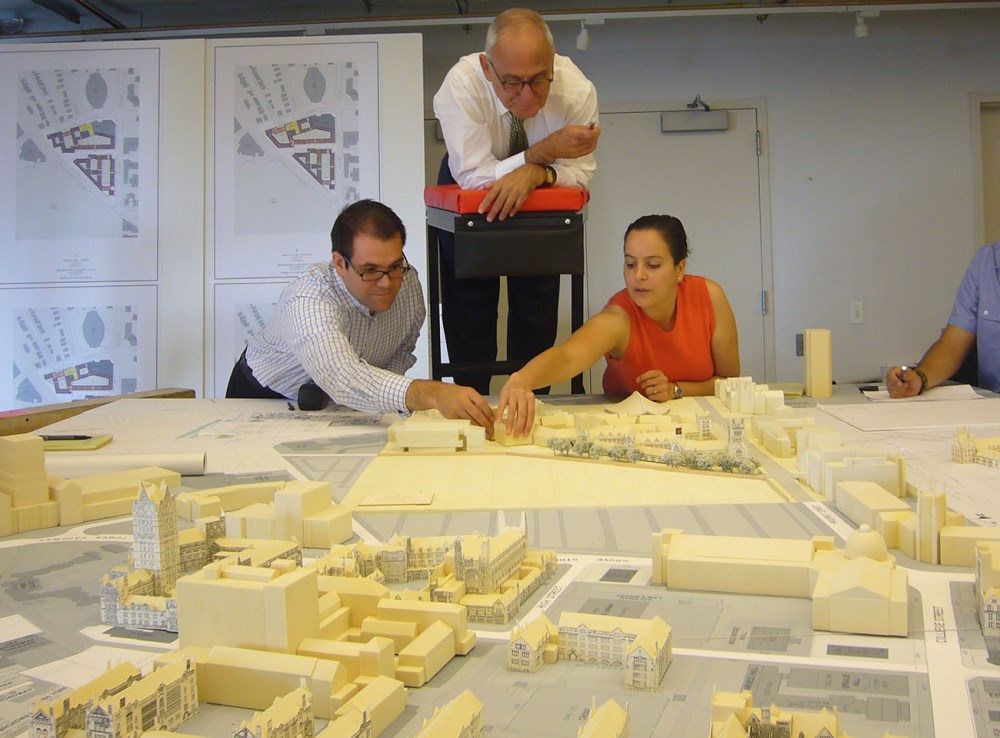 Image Credit: www.ramsa.com
Critics worried he'd create an incubator for classicists. Instead, Stern invited figures like Zaha Hadid, Frank Gehry, Peter Eisenman, and Bjarke Ingels, creating what he called a wide-open arena for discussion. He commuted between New Haven and Manhattan throughout his tenure, remaining hands-on in his firm's practice. In his final years, he donated countless artifacts and records to the Yale Archives to benefit future generations of students and researchers.
“Generations of architecture students and young architects have benefited from [Stern’s] uncanny ability to gauge architecture’s pulse at any given moment and his commitment to opening up the conversation to all capable voices.”
- Frank Gehry
Robert A.M. Stern designed hundreds of buildings across six decades. The following projects demonstrate his range, influence, and the debates his work ignited.
15 Central Park West
New York City
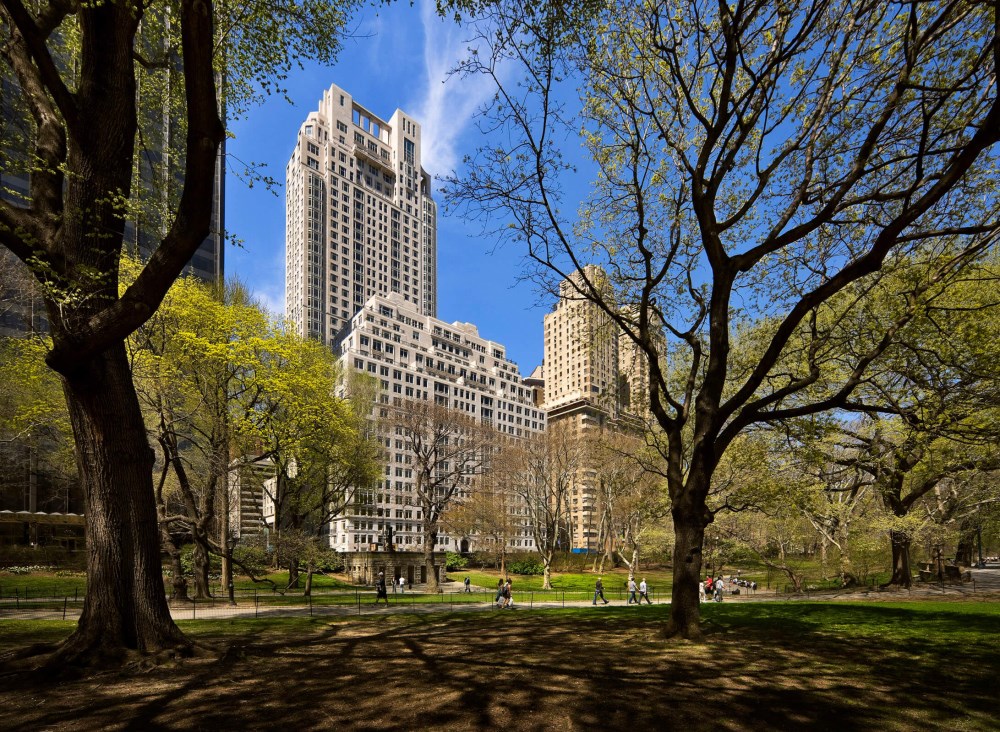 Image Credit: www.ramsa.com
Stern’s residential landmark at 15 Central Park West shows how classical materials can elevate modern living. Completed in 2008, the development comprises two towers: a nineteen‑story “House” and a thirty‑five‑story “Tower”, joined by a landscaped motor court. Both buildings are clad entirely in limestone, a material he chose to complement the palisade of pre‑war apartment houses along Central Park West.
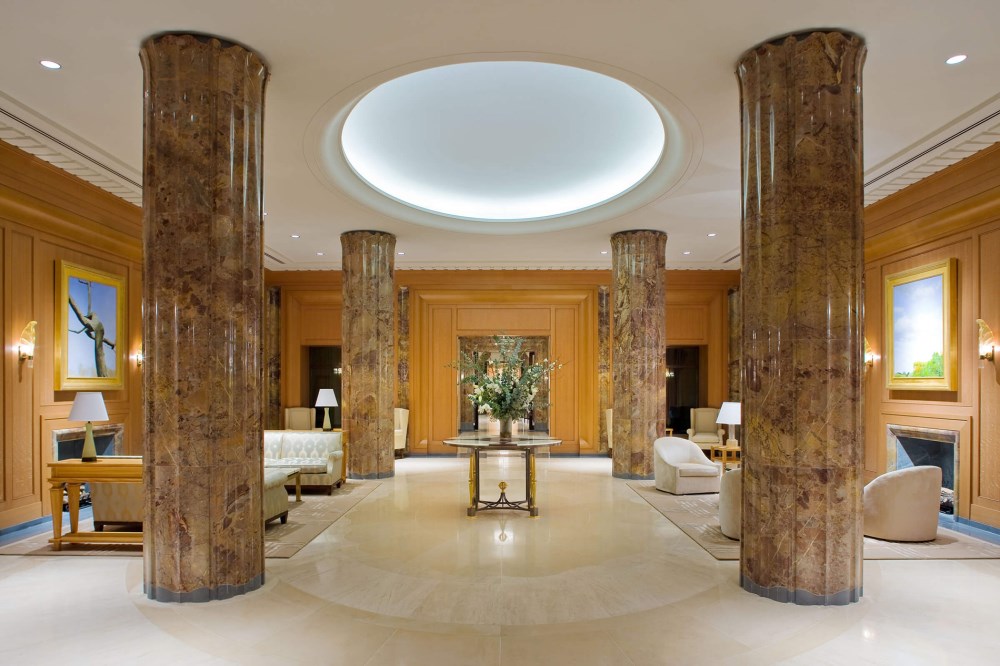 Image Credit: www.ramsa.com
A bronze-canopied entrance leads to a grand lobby with fireplaces, while paired elevators open to private vestibules serving one or two apartments on each floor. Gracious bays and deep terraces at the setbacks frame views of the park and city. Amenities like a private driveway, underground lap pool lit by a reflecting pool and a luxury rooftop pavilion transform the residence into a vertical entertainment destination. The building’s success affirmed that there is demand for traditional elegance in twenty‑first‑century Manhattan.
Comcast Center
Philadelphia
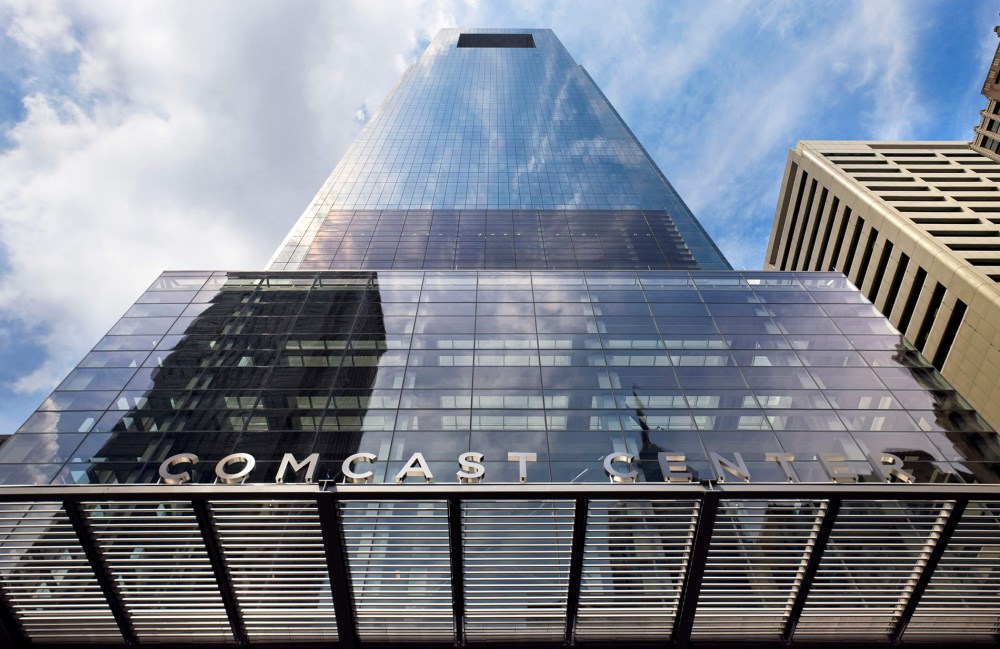 Image Credit: www.ramsa.com
Philadelphia's skyline gained a new centerpiece when the Comcast Center opened in 2008. The 58‑story, 975‑foot tower is clad in faceted high‑performance glass that evokes a slender obelisk and illustrates Stern’s ability to work in glass and steel while maintaining a sense of civic presence. The corners and crown of the building feature ultra-clear, low-iron glass for an appearance that catches the light. Beneath the tower, a 120-foot-high winter garden links the lobby to a half-acre south-facing plaza and to the Suburban Station commuter rail concourse below.
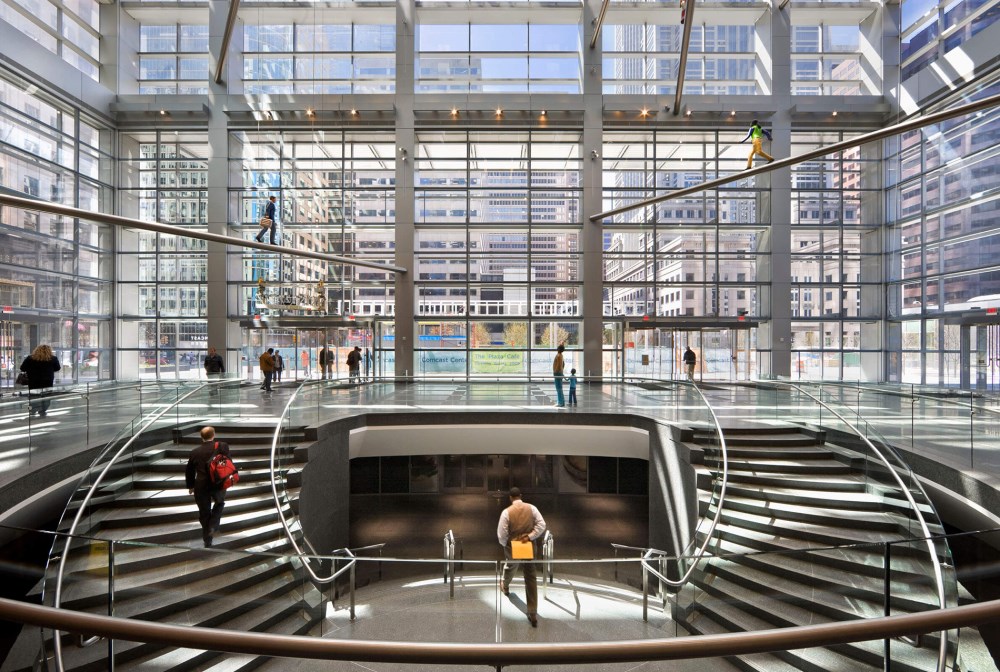 Image Credit: www.ramsa.com
A double-skin glass curtain wall incorporates sunscreens and louvers to moderate daylight and seasonal thermal performance while maximizing views. At the time of its displacement ventilation make the public space more energy efficient. Inside the tower, sky atria on the south face extend the public presence at multiple levels of the building. The skyscraper demonstrates how a modern glass tower can embrace innovative engineering and environmental goals while achieving LEED Gold certification, which made it one of the tallest LEED-certified buildings in the United States at the time of its completion.
Museum of the American Revolution
Philadelphia
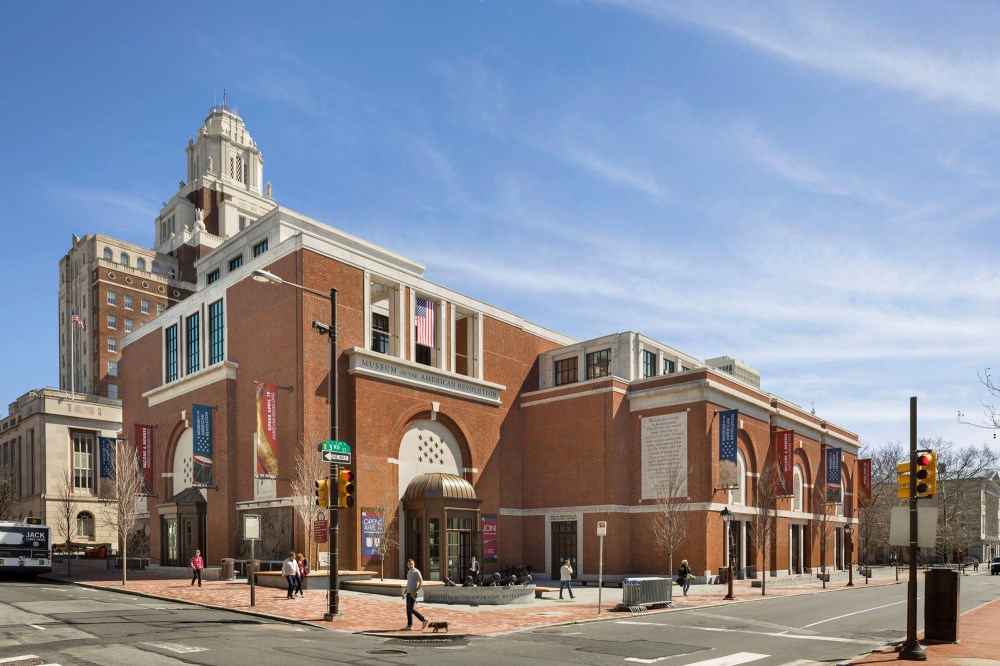 Image Credit: www.ramsa.com
Opening on in 2017, the Museum of the American Revolution anchors the eastern end of Independence National Historical Park. The 118,000-square-foot museum occupies three above-ground levels.
Here, Stern confronted one of architecture's most challenging questions: how to design a contemporary building in a historic district without resorting to mimicry or breaking with context entirely. His solution demonstrates the "modern traditionalism" he championed throughout his career. The building speaks the architectural language of eighteenth-century Philadelphia while serving twenty-first-century needs.
Red brick masonry panels with restrained Georgian-inspired detailing complement the historic district's eighteenth-century buildings. At the corner of 3rd and Chestnut Streets, a broad plaza and bronze-painted domed entrance welcome visitors. Bas-relief panels flanking a bay window depict historic paintings, connecting past and present.
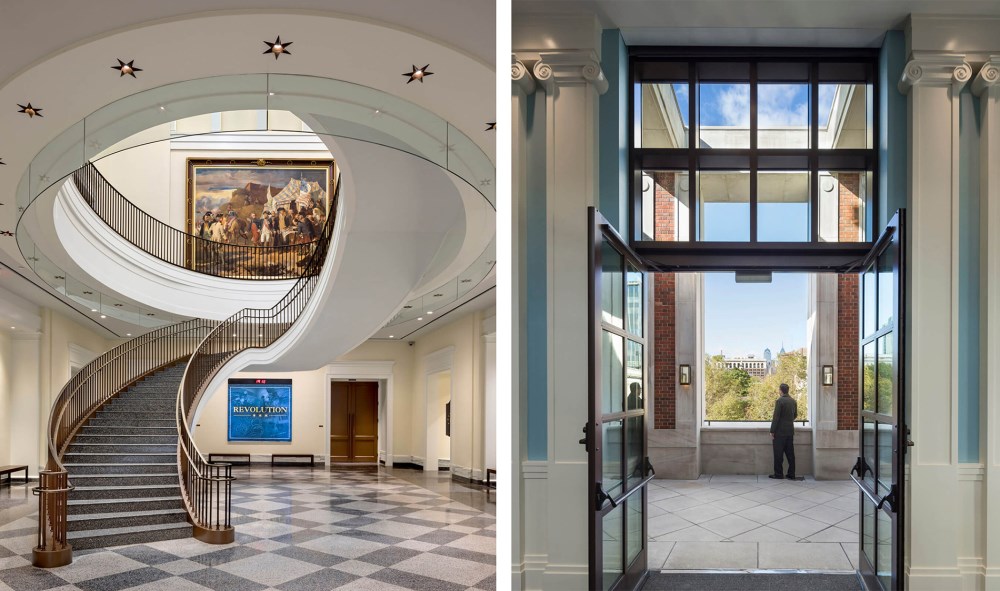 Image Credit: www.ramsa.com
Inside, a skylit atrium features an elliptical grand stair ascending to galleries and a theater housing George Washington's war tent, one of the museum's prize artifacts. A clerestory monitor rendered in Alabama limestone floods spaces with natural light and broad terraces overlook the First Bank of the United States, Independence Hall and the Philadelphia skyline.
The building achieved LEED Gold certification while respecting its sensitive historic context. Critics praised how the design honored the neighborhood's architectural heritage while serving contemporary exhibition needs. The project exemplifies Stern's belief that new buildings in historic settings carry responsibility to their surroundings, that architectural continuity strengthens rather than weakens urban fabric.
A Legacy of Balance
Robert A.M. Stern championed architecture that honors context while embracing new materials and technologies. His projects reveal a consistent commitment to place, proportion and craftsmanship.
In his memoir Between Memory and Invention: My Journey in Architecture, Stern wrote:
"I pride myself in sticking to principles. I have no regrets over staying true to my conviction that architecture cannot flourish so long as architects believe they stand before a tabula rasa."
That conviction defined his career. Architecture must engage with history, context, and culture rather than starting from zero. Whether one agrees with his aesthetic choices, Stern's impact remains undeniable. He made traditional architecture commercially viable in an era dominated by glass boxes. He proved that contextual design could achieve LEED certification. He demonstrated that "modern traditionalism" offered a viable path forward. As architects continue to seek balance between tradition and innovation, Stern's legacy remains a guiding example.
--
 BIMsmith is the leading free cloud platform for architects, designers, and building professionals to research, select, and download building product data. Search, discover, compare, and download free Revit families on BIMsmith Market, or build complete, data-rich Revit wall, floor, ceiling, and roof systems faster with the BIMsmith Forge Revit configurator.

Comments