

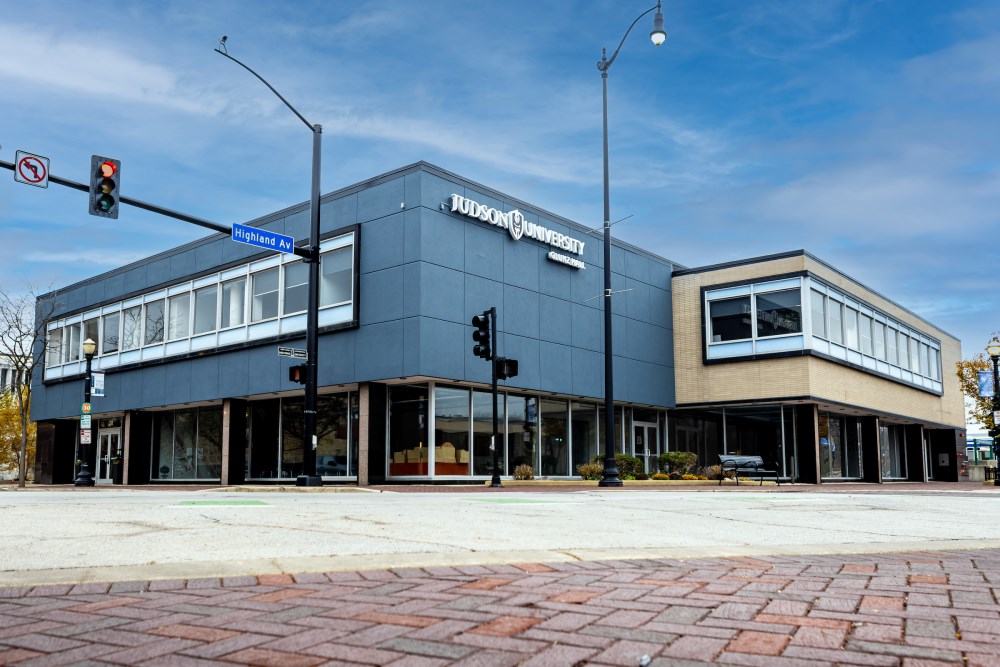
Studio Vertex completed Glunz Hall in October 2025, transforming a vacant 1960s bank headquarters into housing and studio space for Judson University’s Master of Architecture students in downtown Elgin, Illinois. The building supports an immersive educational model where design work, material study, and daily life operate within a single environment. Studio Vertex led the project in collaboration with the Future Architect Fund, working closely with Judson University, material manufacturers, and community partners.
The Building
The location matters as much as the structure. Located at 28 N. Grove Avenue in downtown Elgin, Glunz Hall sits along the Fox River with direct access to commuter rail and bus transit. Students can walk to downtown businesses, public services, and civic institutions. Instead of separating academic life from urban context, the project connects the two. The original building also offered strong fundamentals, with great proportions, generous windows and a sound structure. Studio Vertex retained these qualities, keeping the building’s mid-century identity while reorganizing interior spaces to support the demands of graduate-level study.
By opting for an adaptive reuse approach, the project avoids the carbon-intensive footprint of new construction and a long-vacant structure becomes active again. Windows that once looked into empty space now frame student life. The building’s renewed presence supports local businesses and contributes to downtown vitality.
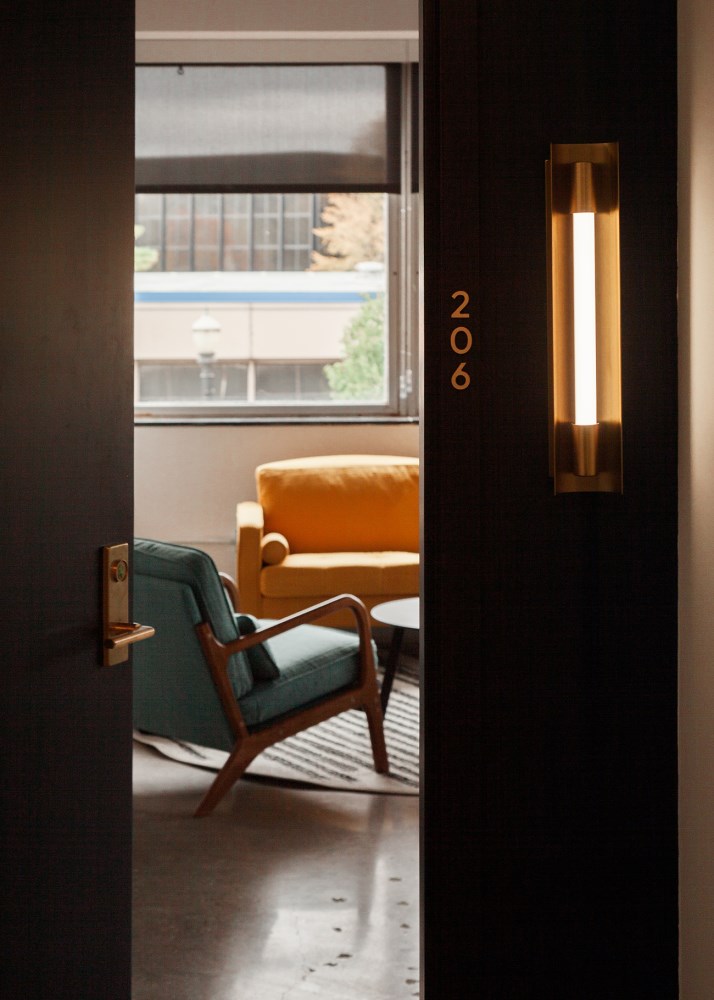
The upper level includes thirteen apartments: five studios and eight one-bedroom units. Each residence receives natural light from preserved window bays, maintaining the clarity and rhythm of the building’s original façade.
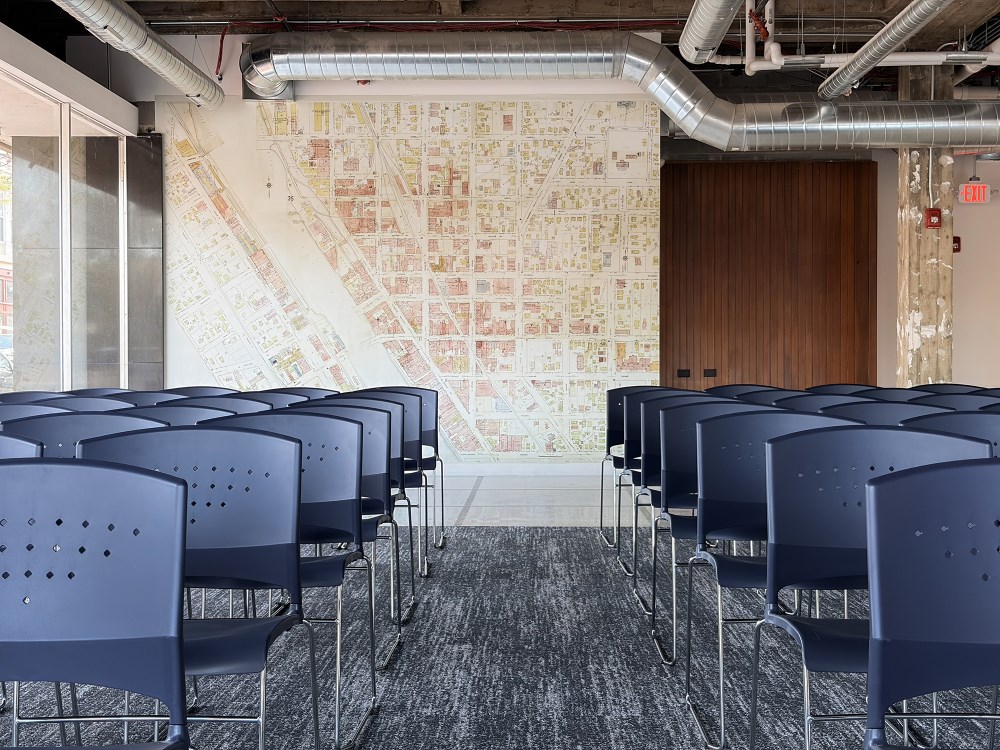
The ground floor functions as the Glunz Studio for Architecture and Urbanism. Movable furniture supports shifting project needs, and a dedicated conference room provides space for critiques and reviews. Original glazing continues to anchor the space, offering daylight and direct visual connection to the street.
Materials That Teach
The materials inside Glunz Hall are not passive selections. They form an active, continuous teaching environment for the architecture students.
Homasote acoustic panels illustrate sound control in a mixed-use educational setting, showing how material density, placement, and surface texture influence acoustical comfort. FreeAxez raised access flooring demonstrates how adaptive systems can be threaded through existing structures, revealing possibilities for flexible wiring, ventilation, and retrofits without invasive demolition. Trim-Tex drywall accessories offer a firsthand lesson in how edge conditions, reveals, and finishing strategies shape spatial perception.
In the apartments, products from Corian, Delta, Kräus, Visual Comfort, and Behr create residential environments that support daily use while offering long-term insight into wear patterns, maintenance requirements, and material longevity. Students experience the difference between specification decisions made in theory and the realities of living with those decisions every day.
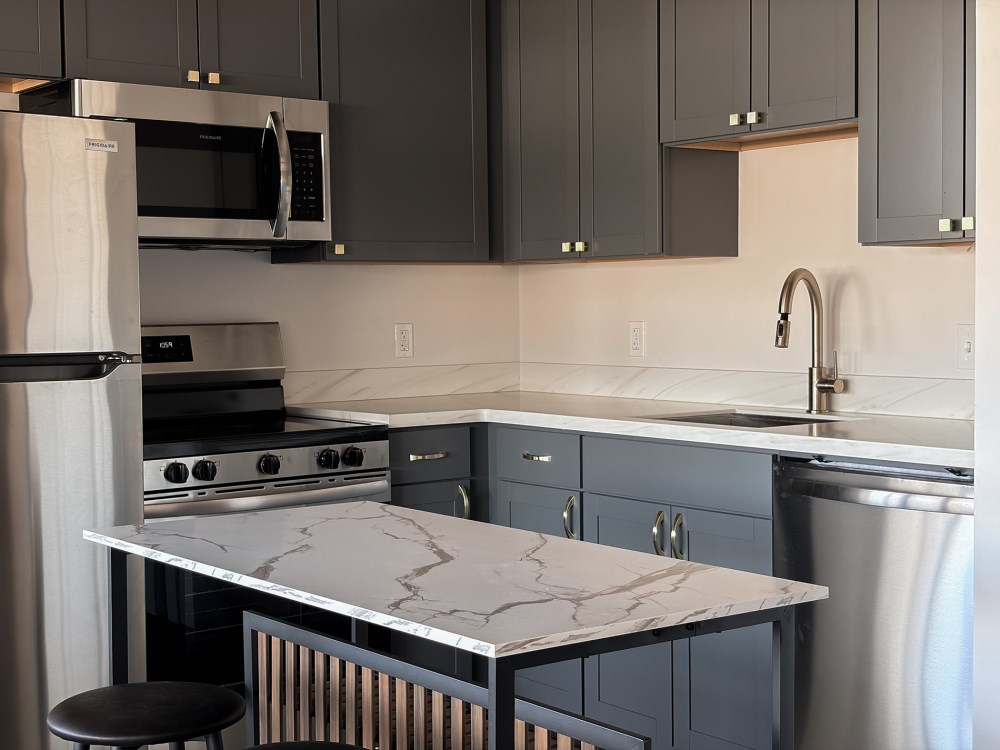
These installations become an evolving curriculum. Because building product manufacturers donated the materials, each product represents a partnership between education and industry. Manufacturers plan to host workshops on site, giving students direct exposure to fabrication methods, testing processes, and ongoing technological advancements. Instead of learning materials from textbooks, students learn through repeated interaction like observing how surfaces reflect light, how fixtures age, and how acoustic interventions shape concentration.
Integrating Living and Learning
Graduate architecture students spend long hours on design work. Glunz Hall eliminates the typical separation between home and studio. Students live where they work, enabling long, uninterrupted stretches of design exploration and immediate transitions between rest and production. Informal collaboration becomes effortless. Shared meals, late-night critique sessions, and spontaneous group problem-solving all unfold naturally within the building. Glunz hall supports Judson University’s Master of Architecture model by specifically serving the final two graduate years - a period when students benefit most from extended studio access and material immersion.
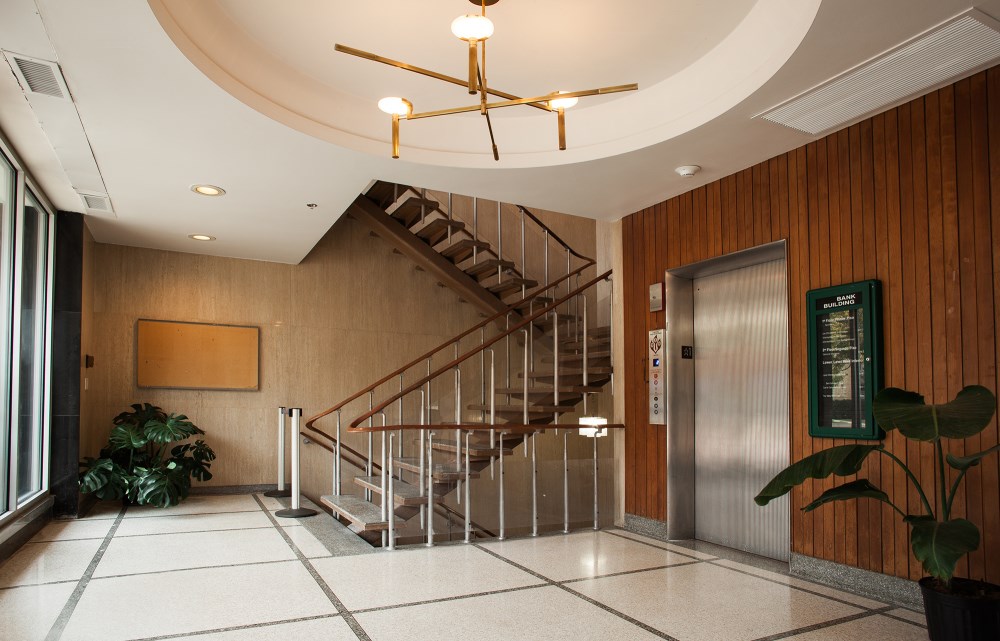
Glunz Hall reframes how architecture students learn by situating education inside a revitalized urban structure. Every material, room, and circulation path contributes to the academic experience. The project shows how adaptive reuse can enrich a curriculum while reducing environmental impact and strengthening ties between a university program and its city.



Comments