

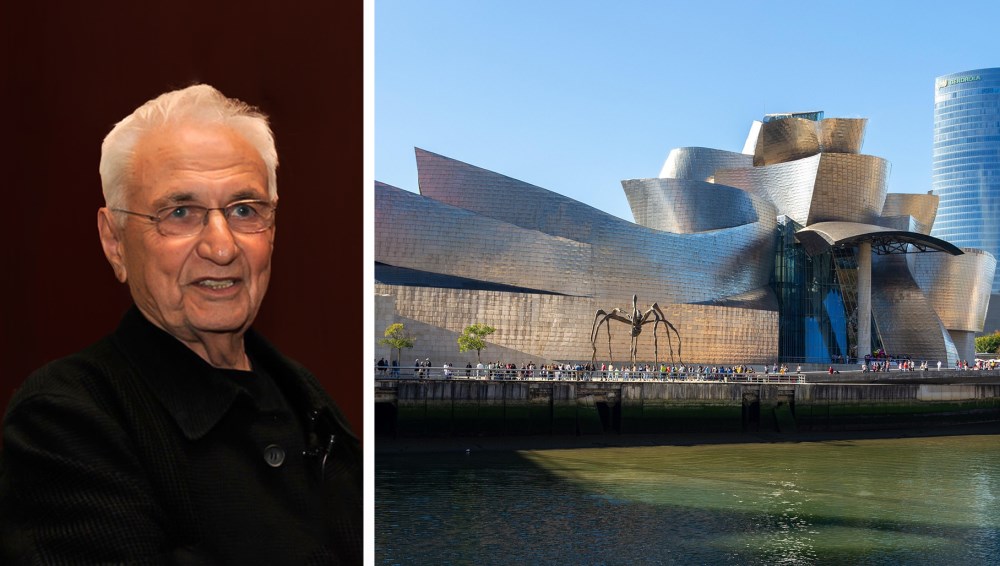
Frank Gehry died December 5, 2025, at 96, leaving behind work that transformed how architects approached form, material, and urban intervention. For seven decades, his buildings challenged the modernist box and proved that sculptural expression could coexist with functional performance. His influence extends from the revitalization of post-industrial cities to the widespread adoption of digital design tools in architectural practice.
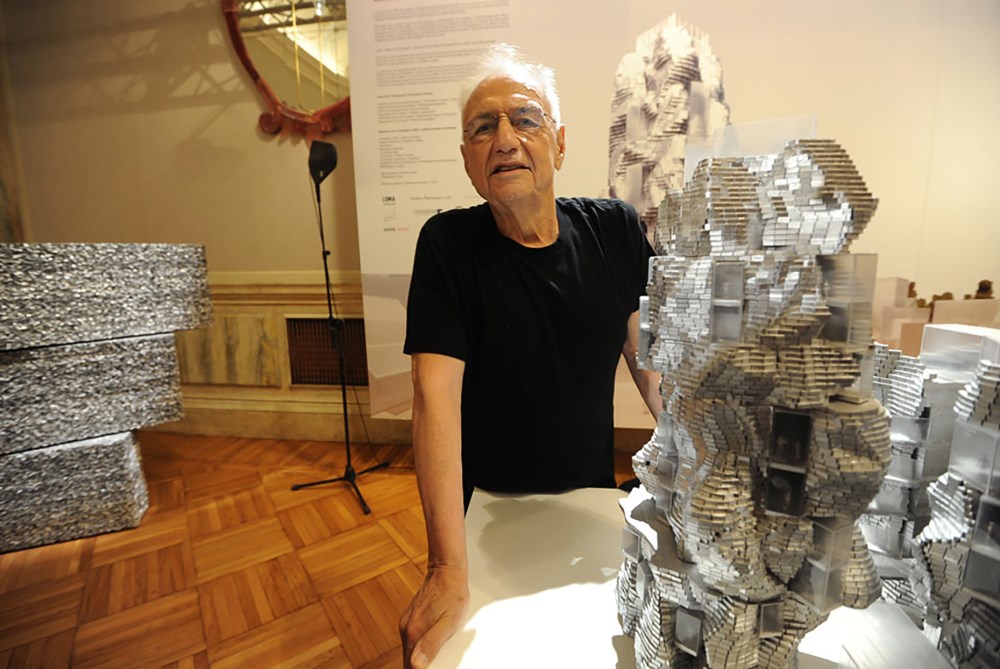
A Career Built on Experimentation
Born in Toronto on February 28, 1929, Gehry moved with his family to Los Angeles in 1947. He studied architecture at the University of Southern California. After briefly attending Harvard's Graduate School of Design for urban planning studies, he returned to Los Angeles and worked for Victor Gruen and William Pereira before establishing his own practice in 1962, which became Frank Gehry and Associates in 1967, and later Gehry Partners in 2001. His early work signaled a departure from conventional practice. The Easy Edges furniture series explored corrugated cardboard as a structural material, demonstrating his interest in challenging material hierarchies.
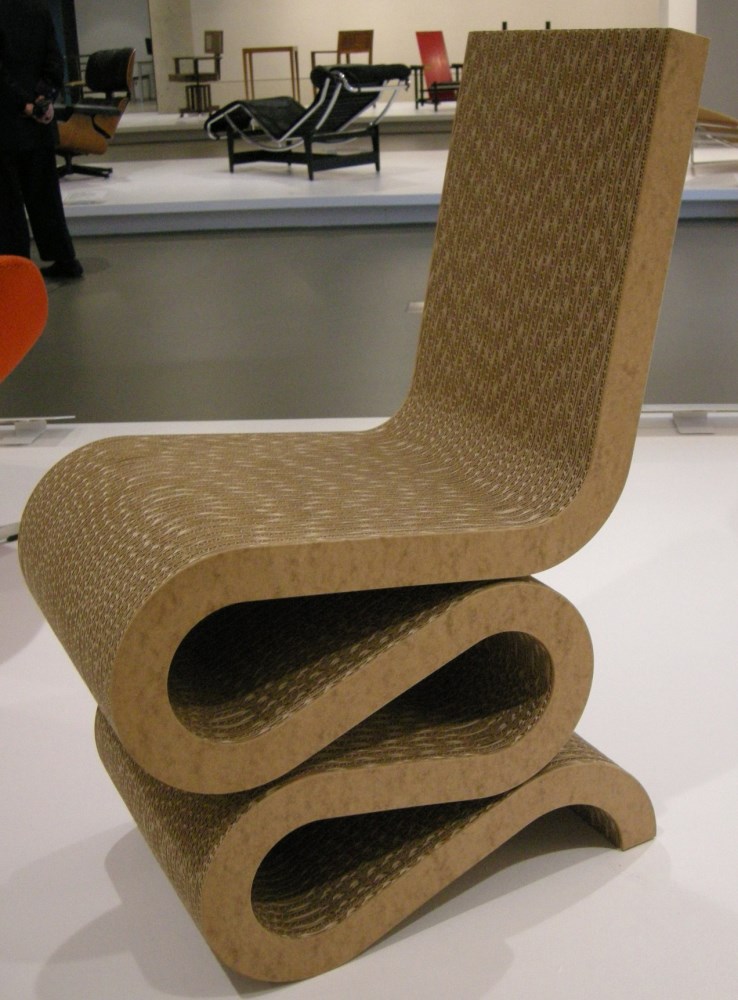
Easy Edges side chair designed by Gehry in 1972 - Image Credit: sailko
His renovation of his own Santa Monica residence, completed in 1988, became a manifesto in built form. He wrapped the existing bungalow with chain-link fencing, corrugated metal, and exposed plywood, creating interlocking volumes that questioned the boundaries between finished and unfinished construction. While neighbors objected and critics dismissed it as "cheapskate architecture", the project established Gehry's reputation as a radical voice in American architecture.
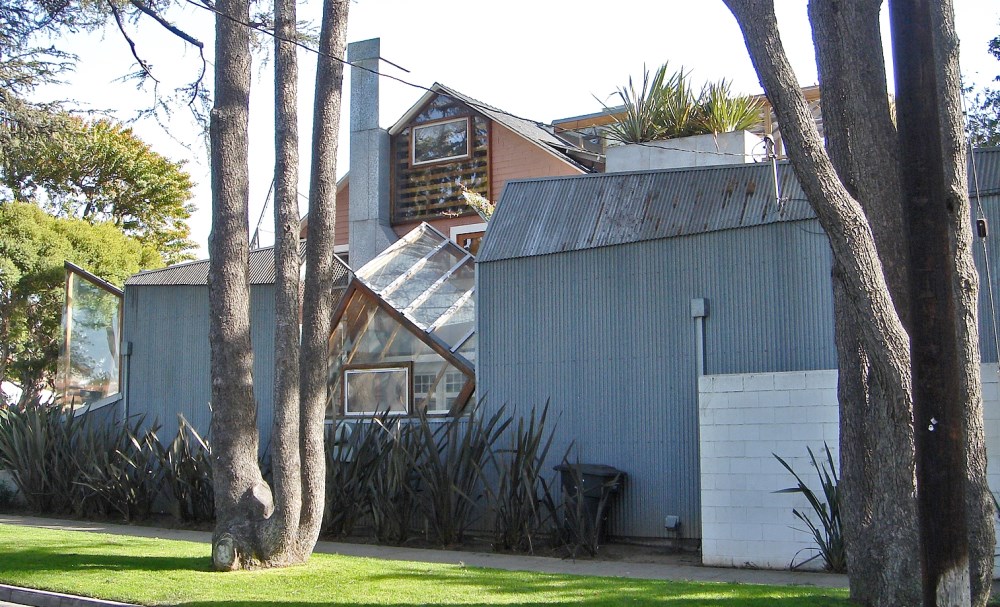 Gehry House in Santa Monica
Gehry drew inspiration from sculptors like Constantin Brancusi and the postwar Los Angeles art scene, stating repeatedly that "architecture is art". This conviction led him to adopt computer modeling software originally developed for aerospace engineering, allowing him to realize increasingly complex curvilinear forms. The technology became essential to translating his sculptural sketches into constructible buildings.
His contributions earned recognition across the profession. The Pritzker Prize in 1989, the Praemium Imperiale in 1992, and both the AIA Gold Medal and RIBA Royal Gold Medal by 2000 acknowledged his impact. He even received the Presidential Medal of Freedom in 2016. His teaching career at Harvard, Yale, and USC influenced generations of architects, encouraging experimentation while respecting programmatic and contextual requirements. Throughout his teaching career, he offered students this guiding principle:
"Architecture should speak of its time and place, but yearn for timelessness."
Gehry designed dozens of significant buildings. The following projects demonstrate his transformation of architectural thinking and his lasting impact on the profession.
Guggenheim Museum Bilbao
Bilbao, Spain
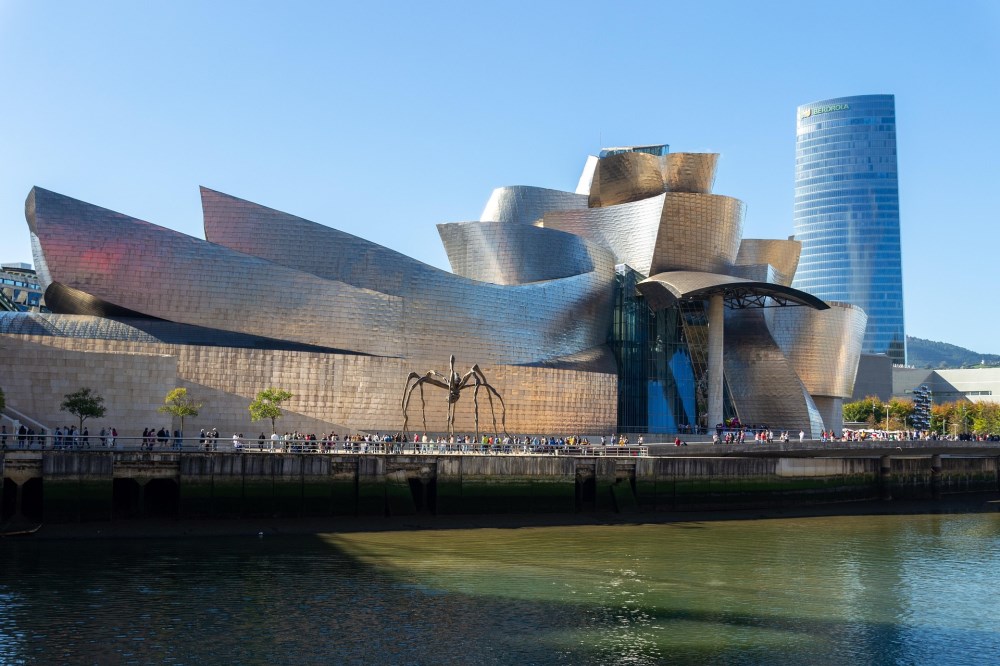
The Guggenheim Bilbao represents Gehry's most influential work and perhaps the most successful example of architecture-led urban regeneration in the late twentieth century. Commissioned to help revitalize a declining industrial city on Spain's northern coast, the museum opened in 1997 to unprecedented response. The building's titanium and limestone surfaces sweep along the Nervión River, creating sculptural forms that shift appearance with changing light and viewing angles. Gehry employed CATIA software to coordinate the complex geometries, demonstrating how digital tools could enable new formal possibilities while maintaining structural integrity and budget control.
The project's impact extended far beyond aesthetics. The museum brings Bilbao hundreds of millions annually in tourism revenue, spurring what urbanists termed the "Bilbao effect." Cities worldwide began commissioning signature buildings from prominent architects, hoping to replicate the economic transformation. Philip Johnson called it "the greatest building of our time", an assessment that captured widespread professional consensus.
The Bilbao project matters because it proved architecture could serve as economic engine, cultural symbol, and formal innovation simultaneously. It established the template for how cities approach cultural infrastructure and demonstrated that radical architectural expression could attract mass audiences rather than alienating them.
Walt Disney Concert Hall
Los Angeles, California, USA
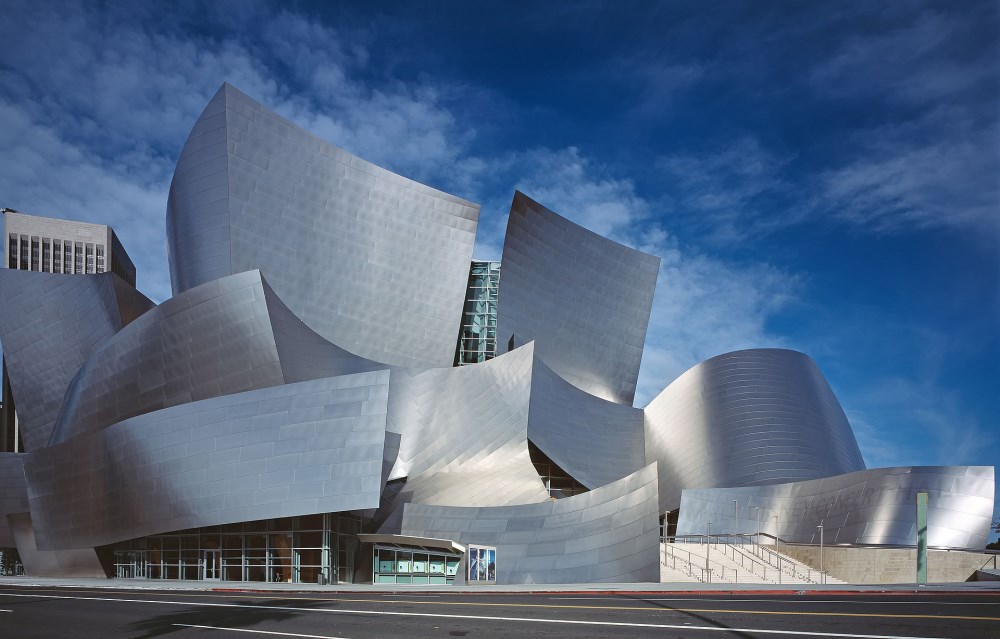
Commissioned in the late 1980s but delayed by funding challenges, Walt Disney Concert Hall opened in 2003 as Gehry's most significant contribution to his adopted city. The project demonstrates his ability to balance sculptural ambition with exacting functional requirements. The building's stainless steel exterior creates a composition of curved surfaces rising above Grand Avenue in downtown Los Angeles. Inside, Douglas fir paneling wraps the auditorium in warm tones, with seating arranged in a vineyard configuration that places audience members close to performers. Gehry collaborated with acoustician Yasuhisa Toyota to achieve sound quality that earned immediate praise from musicians and critics.
This project matters because it solved architecture's perpetual challenge: creating a building that performs beautifully in multiple registers. The exterior serves as civic landmark and urban focal point. The interior delivers world-class acoustics. The building anchored downtown Los Angeles's cultural renaissance. Gehry called it "a living room for the city," and its success validated his approach of treating concert halls as both instruments and monuments.
The Disney Hall also represents Gehry's mature period, when his formal vocabulary had evolved from the deconstructed aesthetic of his early work to more refined, integrated compositions. The building proves that his architectural language could serve civic institutions with complex programmatic demands.
Vitra Design Museum
Weil am Rhein, Germany
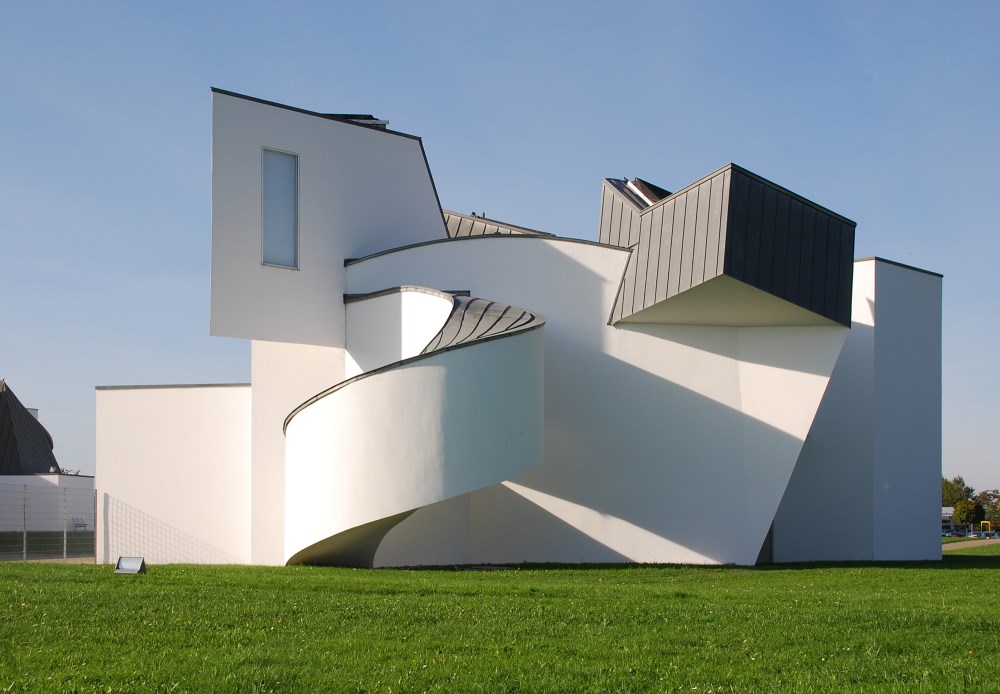 Image Credit: Wladyslaw, CC BY-SA 3.0
Gehry's first European commission, the Vitra Design Museum marked his emergence as an international architect. The building features geometric forms clad in white plaster and zinc, creating a sculptural composition that houses exhibitions, design collections, and administrative offices. It demonstrated that Gehry's architectural language could translate across cultural contexts. European critics and clients had questioned whether his Los Angeles-based aesthetic would resonate beyond Southern California. The Vitra Museum's success opened doors throughout Europe and established precedent for his later work in Spain, France, and Germany.
The building also represents a transitional moment in Gehry's formal development. The geometric vocabulary here differs from both his earlier deconstructed work and his later curvilinear compositions, showing an architect willing to evolve his approach while maintaining consistent philosophical commitments. The Vitra campus became a pilgrimage site for design professionals, cementing Gehry's influence on younger generations.
Fondation Louis Vuitton
Paris, France
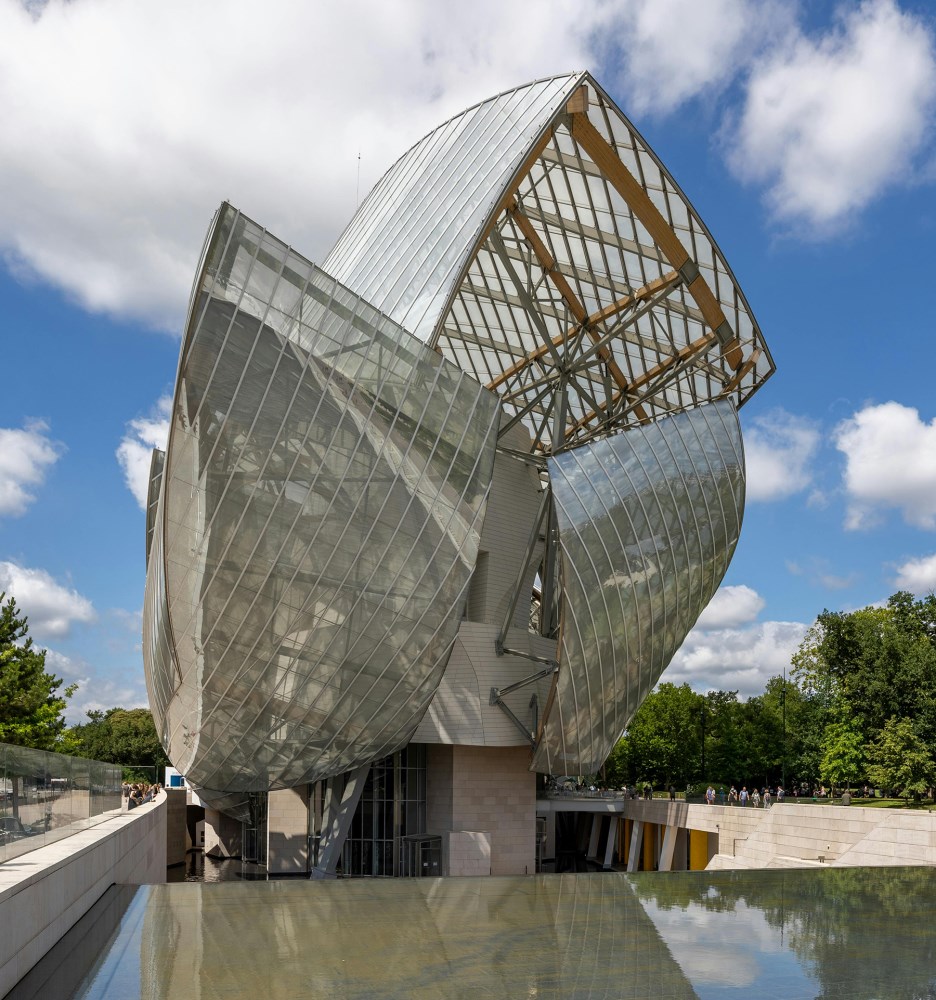 Image Credit: Igor Passchier
Opening in 2014, the Fondation Louis Vuitton represents Gehry's late-career exploration of glass and transparency. Twelve curved glass "sails" drift above a forested park, housing galleries and a concert hall. The structure responds to light and weather conditions, creating ever-changing visual effects. This project shows an architect in his mid-eighties continuing to push his formal vocabulary in new directions. After decades of metal cladding, Gehry embraced glass as primary material, requiring new structural solutions and construction techniques. The building demonstrates that his interest lay in exploring architectural possibility rather than repeating successful formulas.
The Fondation also illustrates Gehry's ability to work within sensitive contexts. Situated in the Bois de Boulogne, the design needed to respect Parisian architectural culture while maintaining his distinctive voice. The glass walls allow views straight through the building to the landscape, showing that his bold forms could connect with surroundings rather than dominate them.
Redefining What Buildings Could Be
Gehry spent seven decades proving what buildings could become. The answers arrived in titanium curves along a Spanish river, in steel petals rising above downtown Los Angeles, in glass sails floating over a Parisian park. He gave architects permission to sketch wildly and then find ways to build those sketches. Cities learned that a single museum could rewrite an economy. Students discovered that software meant for fighter jets could serve imagination. The profession saw that sculpture and shelter could live in the same structure. His buildings stand as evidence. Architecture reaches further when it dares to reach higher, and Gehry spent a lifetime showing how far that could go.
--
 BIMsmith is the leading free cloud platform for architects, designers, and building professionals to research, select, and download building product data. Search, discover, compare, and download free Revit families on BIMsmith Market, or build complete, data-rich Revit wall, floor, ceiling, and roof systems faster with the BIMsmith Forge Revit configurator.
Comments