

Note: This article was written in collaboration between BIMsmith and Cambria, a family-owned, American-made producer of natural quartz surfaces for kitchens, baths, and beyond.
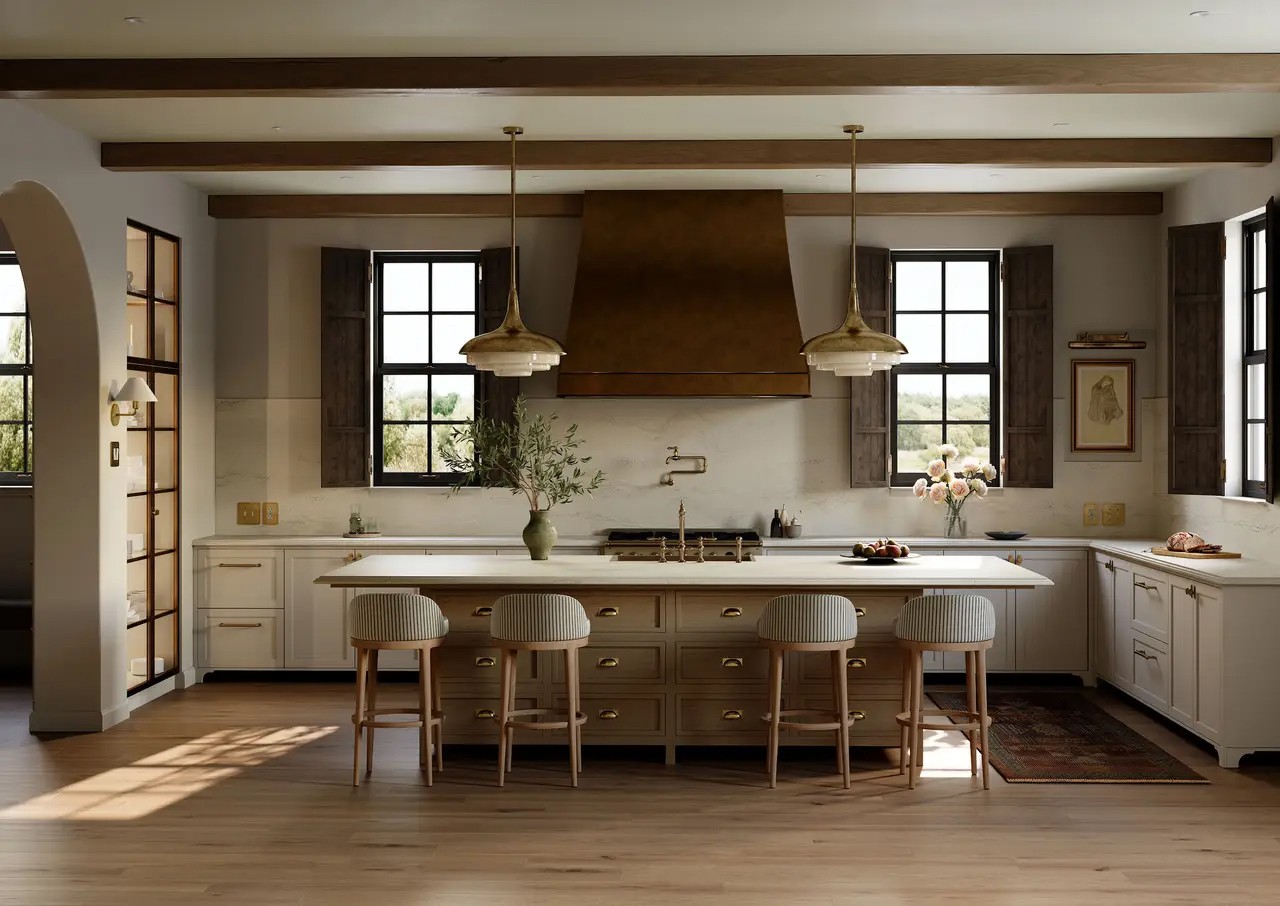
The National Kitchen & Bath Association released its 2026 Kitchen Trends Report this year, drawing on feedback from 634 industry professionals across North America, and two findings in particular are worth pulling out. Organic and earthy aesthetics are no longer an emerging idea circling the edges of kitchen design. They've become mainstream, showing up in specification decisions as often as they show up in mood boards. The other theme is material sophistication, which has moved from a talking point at trade shows to an expectation clients bring into the first design meeting.
That shift has been building for a while, and most designers can feel it even without the data in front of them. The cool, pristine, perfected interiors that dominated the last decade have been giving way to something warmer, more layered, more obviously lived-in. Creams, taupes, and earthy browns are taking gray's old spot on the palette. Depth, texture, and a bit of natural imperfection are doing the work that flawless surfaces used to do. Luxury hasn't disappeared from the conversation, but it's stopped being about perfection and started being about how a space actually feels to live in.
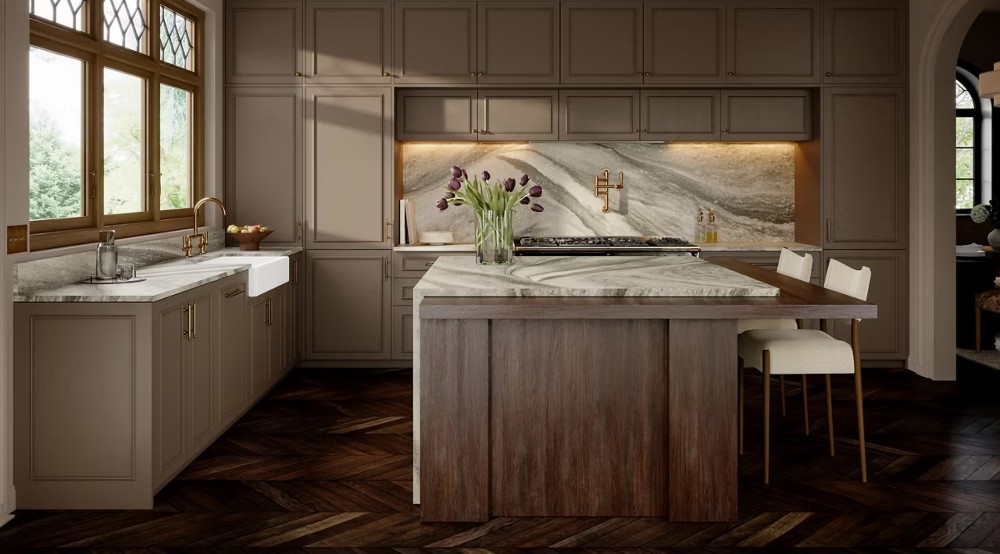
Cambria design shown: St. Loxley
Material manufacturers are responding in kind. Cambria's newest release seems like a direct answer to what the NKBA data describes. Four natural quartz designs -Quintessa™, Merivale™, St. Loxley™, and Wyncrest™ - arrive alongside a proprietary finish that delivers tactility. Together, they're surfaces built to look organic and feel lived-in, without giving up the performance quartz has always been chosen for.
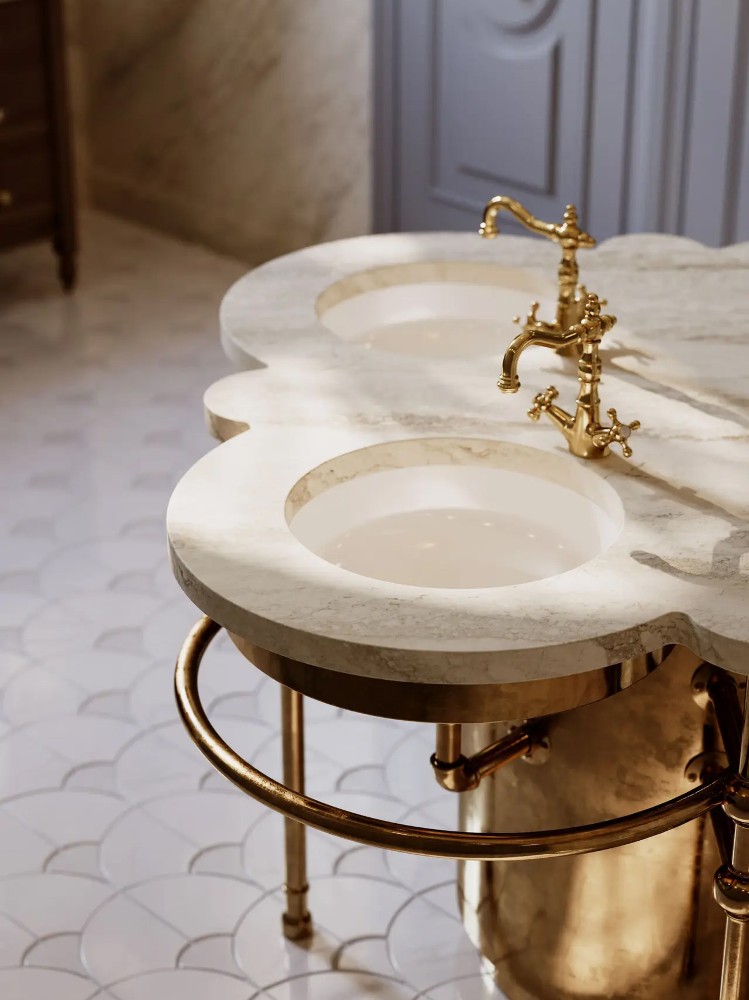
Cambria design shown: Quintessa
Living Inspired
That's the harder design problem underneath the trend, and Cambria's four new designs each handle it a little differently. A surface can look textured without being durable, or durable without ever reading as anything but manufactured. Cambria's approach starts with a set of four designs that feel collected, the way an actual home accumulates its character over years rather than all at once. Each one has an unmistakable personality, and together they carry the idea that a well-designed home is built slowly, through choices layered on top of each other, instead of matching everything from a single catalog. That's why each design works as comfortably next to an inherited piece of furniture as it does with something bought last month.
Quintessa

Quintessa is full of character, in the best sense. A soft white base, left mostly open, carries diagonal sable veins that split into finer, cracked details as they move across the slab. The effect gives the surface a depth and movement that a flatter, more uniform pattern wouldn't have. It feels intentional rather than busy, sits well against wood in almost any tone, and moves comfortably between a traditional kitchen and a stripped-back modern one. It's the design to reach for when a project needs a strong focal point, anywhere the material itself is meant to set the tone for family life happening around it.
Merivale

Merivale chooses simplicity, on purpose. A warm, creamy field carries soft gold veining that moves without a strong directional pattern, which means it gets out of the way and lets the rest of the room lead. There's no gray anywhere in it, which was a deliberate choice. Anyone who's specified Cambria's Macbeth before will recognize the resemblance; Merivale reads as its warmer counterpart. It's natural and organic enough to feel crafted without ever tipping into visual noise, and becomes a quiet backdrop that suits the everyday rhythms of a busy household.
St. Loxley

St. Loxley is the earthiest of the group, crafted from soft browns, neutral greens, and hazy grays moving in loose, quartzite-inspired waves that lean further into nature. It's the design most connected to the wellness-driven mood running through a lot of current briefs, a natural, textured material that brings a sense of the outdoors into a space without resorting to anything literal. Pair it with green cabinetry and the whole thing gets bolder; keep it against white or timber and it settles right down into something quieter and more grounding. It's a natural fit for family spaces meant for gathering rather than showing off.
Wyncrest

Wyncrest makes the strongest statement of the four. It shares a warm alabaster base with Cambria's Kenwood, then builds outward with sweeping diagonal movement picked out in the brand's proprietary champagne brass alloy, giving the surface a distinctive shimmer. The veining shifts visibly depending on the light in the room, catching differently at nine in the morning than it does at dusk.
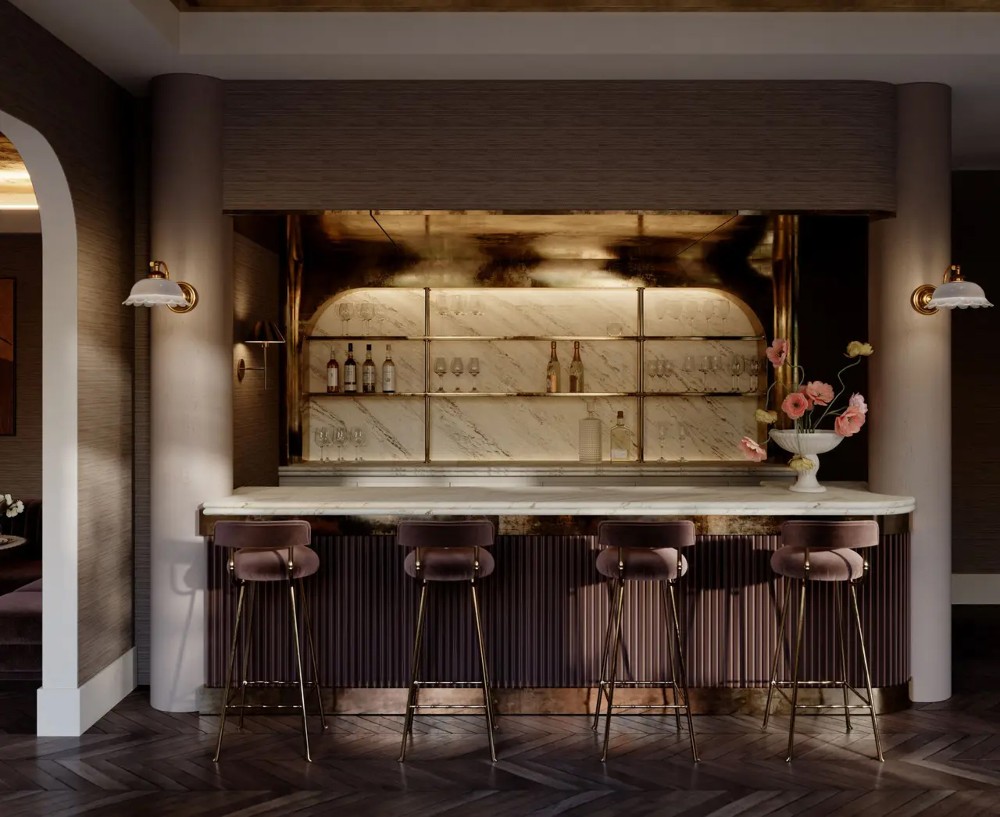
Cambria design shown: Wyncrest
Storied Stone
All four new designs come in Cambria's Jumbo slab size, 132 by 65.5 inches, in 2cm and 3cm thicknesses, which provides enough continuous stone to run a pattern across a full island or a floor-to-ceiling backsplash without a seam cutting the design in half. When a material is doing more than simply covering a surface, having enough of it in one piece allows the pattern, movement, and texture to read as intended.
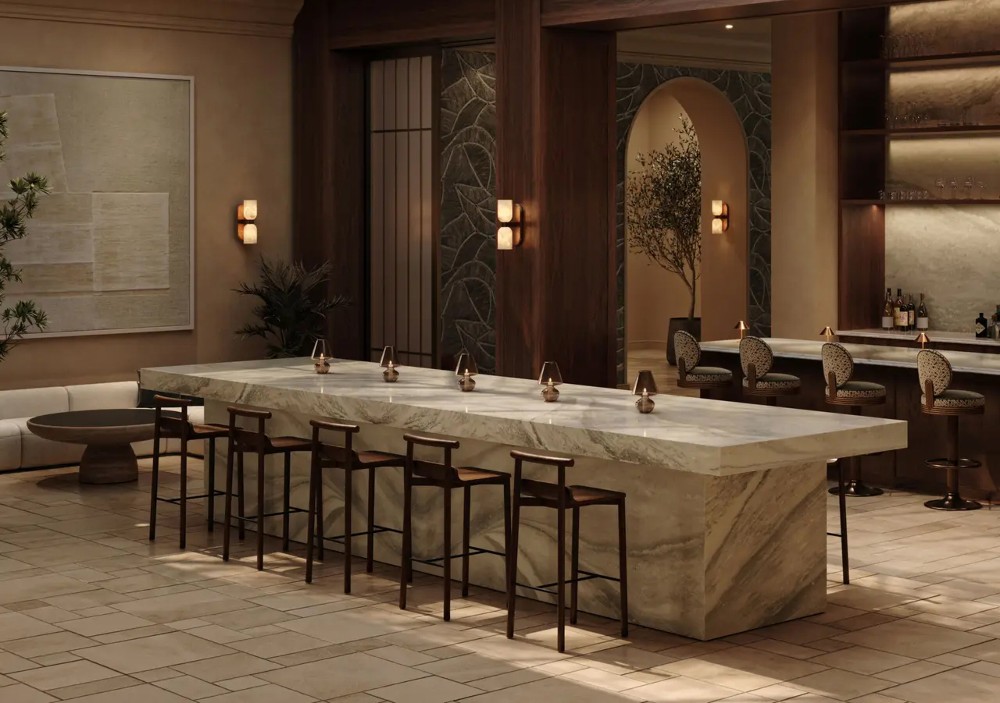
Cambria design shown: St. Loxley
The four designs are available in Cambria Satin™, the brand's proprietary finish, alongside the existing polished option. Cambria Satin has a soft, subtle texture that reduces glare and adds visual depth. It also speaks to the growing interest in surfaces that are as tactile as they are visual.
Personal by Design
One more theme from the NKBA report is worth mentioning, which is personalized style and expression. It's cited as one of the strongest forces shaping kitchen design over the next three years and it shows up in how Cambria's four new designs were built. None of them is trying to be the whole room on its own. Instead, they're built to work alongside the wood, the cabinetry, the hardware, and the art a family already owns or is planning to collect over time.
That's a departure from an older way of thinking about luxury surfaces, where the stone was meant to be the statement and everything else was meant to defer to it. These four designs are just as happy to defer themselves, to sit underneath a family's actual life rather than above it, which is precisely what a personalization-driven brief actually calls for.
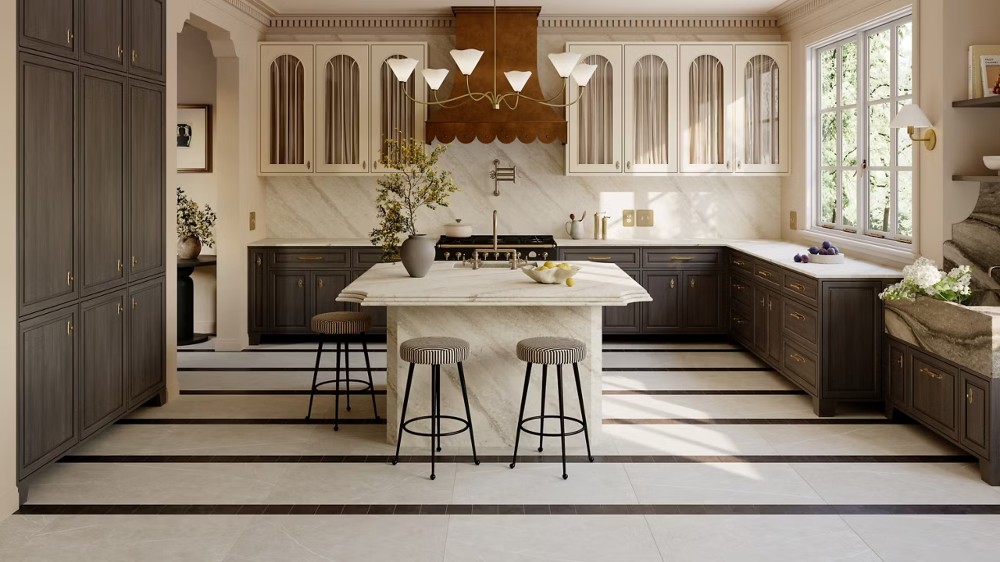
Cambria design shown: Quintessa
Crafted for Generations
There's no single moment when a home becomes done. It just keeps being added to, one choice at a time, for as long as someone's living in it. Quintessa, Merivale, St. Loxley, and Wyncrest are designed to anchor a kitchen or bath now while leaving enough room for the rest of the home to evolve around them. These natural quartz designs can belong to a particular moment without becoming defined by it.
Quintessa, Merivale, St. Loxley, and Wyncrest are available now in Polished and Cambria Satin finishes. Cambria's natural quartz Revit files are available on BIMsmith.
--
 BIMsmith is the leading free cloud platform for architects, designers, and building professionals to research, select, and download building product data. Search, discover, compare, and download free Revit families on BIMsmith Market, or build complete, data-rich Revit wall, floor, ceiling, and roof systems faster with the BIMsmith Forge Revit configurator.


Comments