

Curved forms have never really left interior design. They move in and out of focus, sometimes expressive, sometimes restrained, but always present. From the fluid lines of Art Nouveau to the sculptural seating of postwar modernism, curves have consistently reappeared in moments when interiors shift toward comfort and human experience.
That shift is happening again. Contemporary residential spaces are becoming softer, less rigid, more attuned to how people actually move, gather, and rest. Research supports what many designers sense intuitively: people tend to respond more positively to curved environments than to sharp, angular ones, showing increased emotional comfort and reduced stress levels.
Antoni Gaudí famously said: "The straight line belongs to men, the curved one to God." It is an instinct that contemporary residential design is, once again, taking seriously.
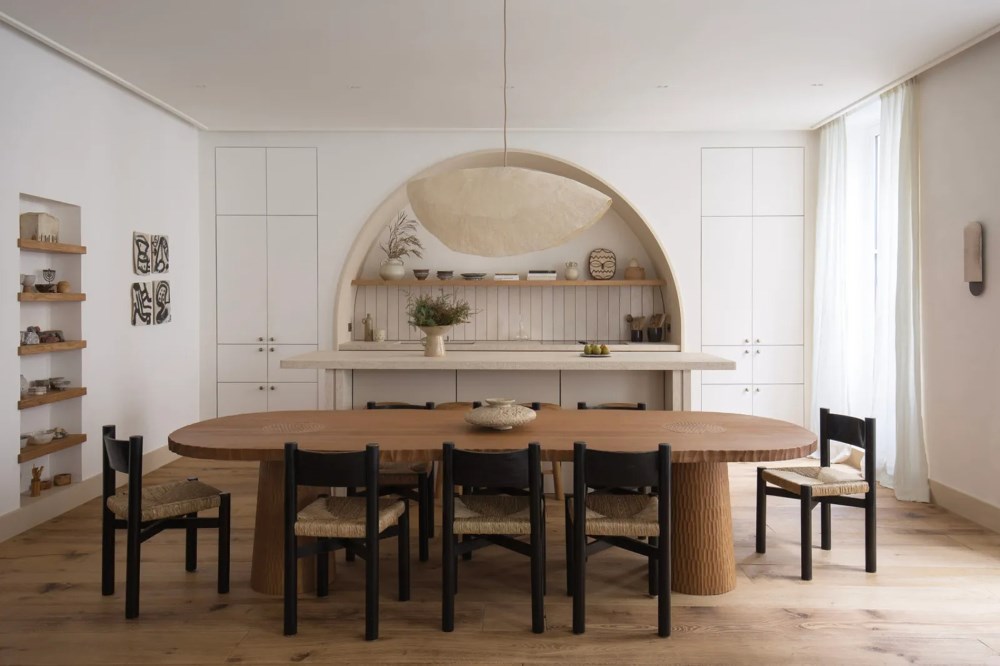
Peugot House of Silence by Natan Gil Arquitetura - Photography by estudiony18
From Cold Minimalism to Warm Restraint
Minimalism over the past decade leaned heavily on precision. Clean lines, sharp junctions, controlled palettes. Spaces felt deliberate, sometimes to the point of severity. What is emerging now feels quieter. The discipline remains, but the geometry has softened. Edges are more organic, materials carry more weight, and rooms feel more settled.

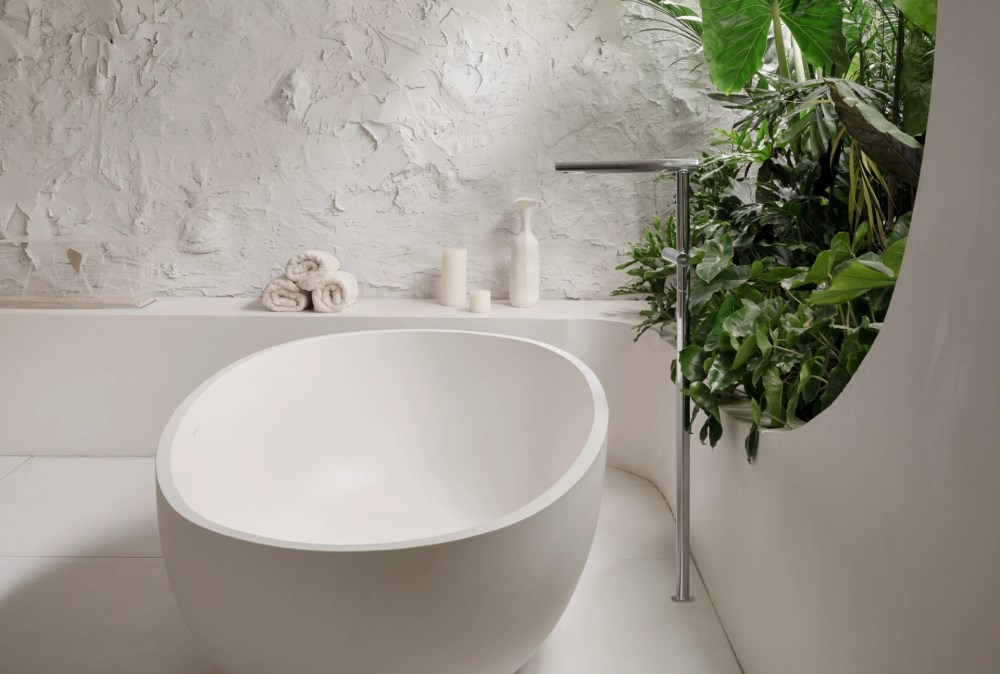
Villa Petricor by CO-LAB Design Office - Photography by César Béjar
This evolution aligns closely with biophilic design principles. Natural environments rarely produce hard corners, and when interiors begin to echo that logic through curved forms, the psychological effect becomes noticeable. Organic forms and other natural elements have been shown to reduce stress and promote calm.
In practice, this often shows up as a balancing act. Organic shapes can be introduced lightly or pursued with intent, layered across furniture, lighting, and architecture in ways that range from subtle to immersive.
Furniture
Furniture is where most projects begin to explore curves. It carries less risk than architectural changes and allows for precise control over how much softness enters a space. Seating leads this shift. A curved sofa changes how a room functions almost immediately. It draws people inward, creating a natural conversational arc. In larger living rooms, it allows the layout to float, freeing the walls and giving the space more depth.
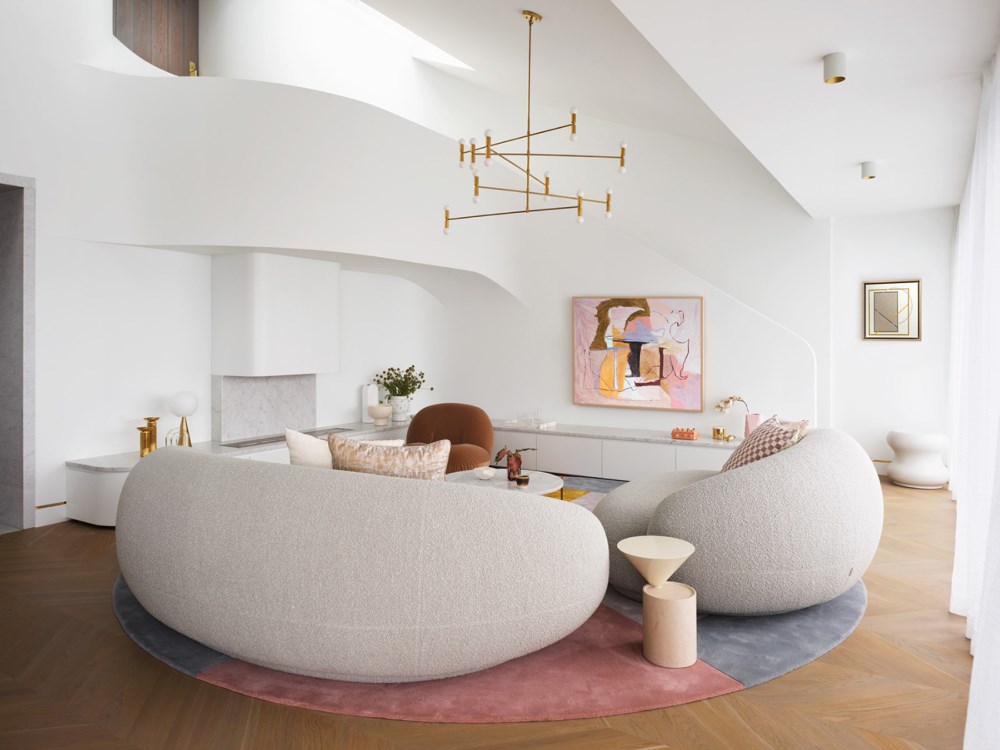
Walsh Bay Penthouse by Greg Natale - Photography by Anna Kucera
Dining rooms and kitchens have followed a similar path. Round and oval tables already removed hierarchy. Now, curved chairs and kitchen countertops reinforce a more relaxed dynamic. The room feels less formal, even when the materials remain refined. In open-plan homes, this softness helps transition between kitchen and living zones without relying on partitions.
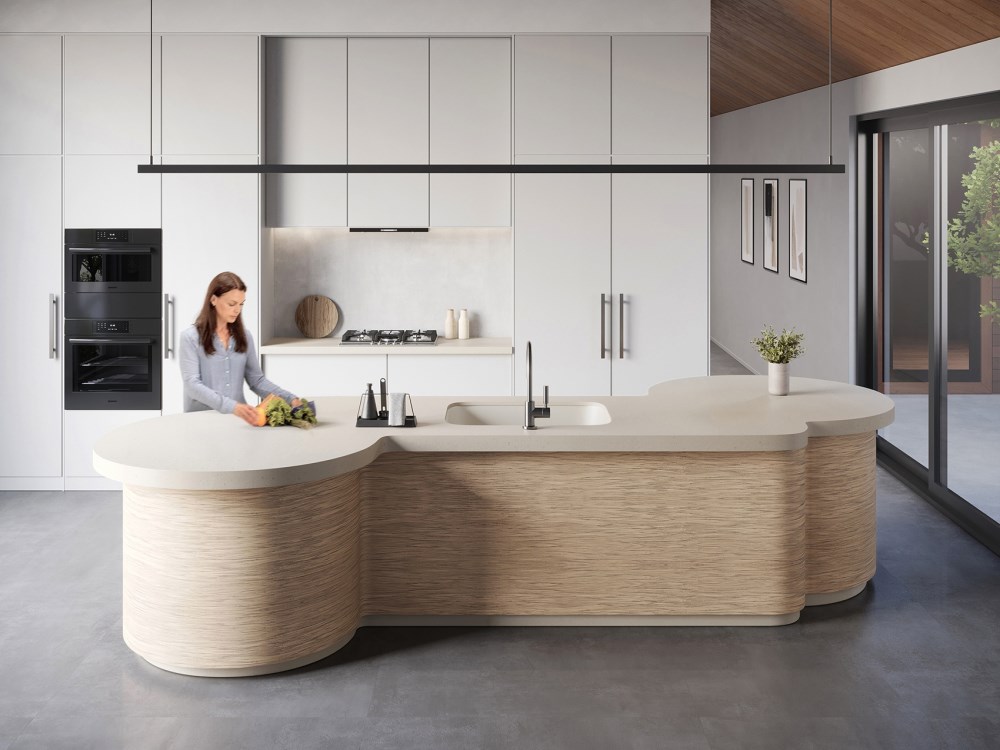
Organic Kitchen Island Design by Durasein - Image Credit: https://durasein.com
Bedrooms are quieter but equally interesting. A curved headboard alters the proportion of a wall in a subtle way. It introduces a focal point that feels integrated rather than applied. The effect becomes more pronounced when paired with softer finishes or indirect lighting.
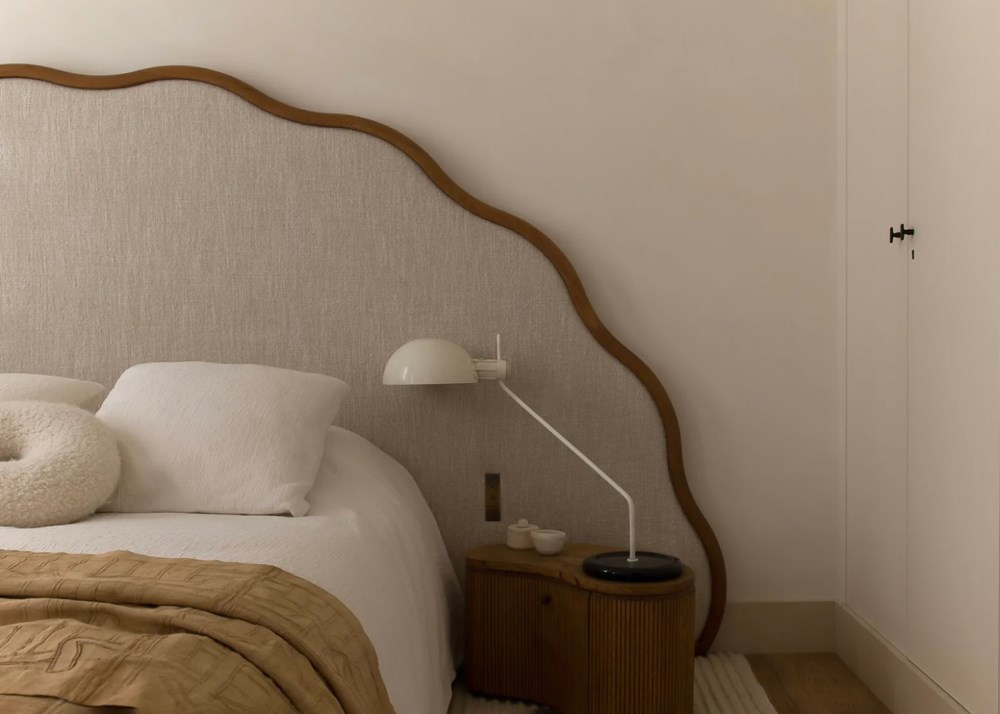
Bonne Nouvelle by Emmanuelle Simon - Photography by Damien de Medeiros
Smaller pieces often carry the most flexibility. A kidney-shaped coffee table or a rounded bedside can soften a room that is otherwise structured and linear. These moments of contrast tend to feel more intentional.
Across all of these applications, one pattern holds. Curves support spaces designed for gathering, resting, and slowing down. They are less effective in areas driven purely by efficiency or storage.
Lighting
For years, the dominant trend in lighting leaned toward geometric precision: clean spheres, angular pendants, linear strips. What is emerging now is something looser and more sculptural.
Curved and scalloped silhouettes are appearing across price points and categories. Blown glass pendants with organic, irregular forms bring handcraft into a category that had trended toward uniformity.
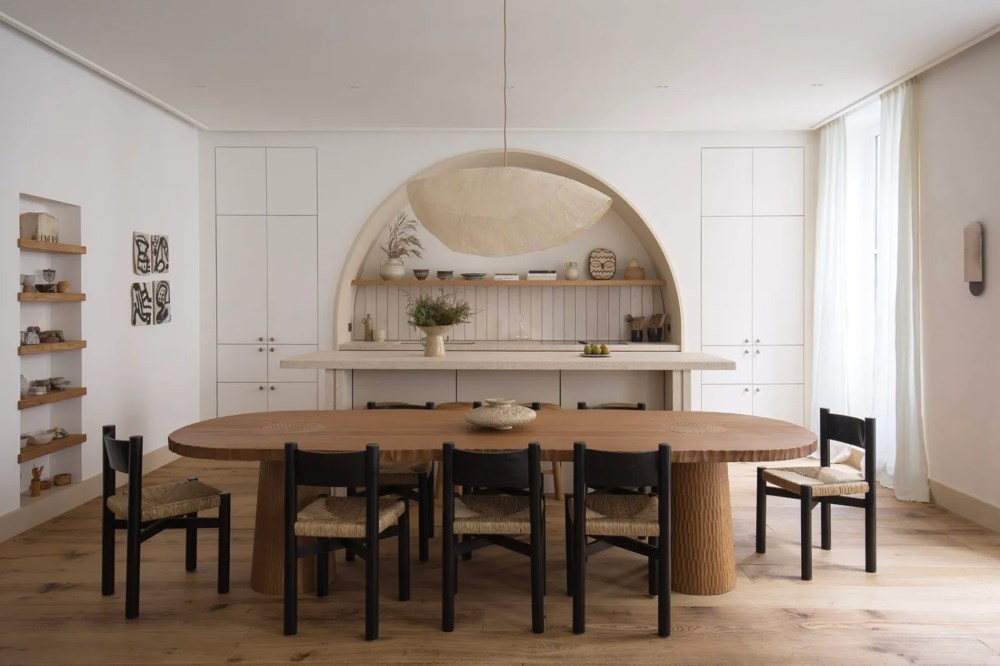
Bonne Nouvelle by Emmanuelle Simon - Photography by Damien de Medeiros
Asymmetric sconces introduce movement without structural intervention. The underlying logic is consistent: curved fixtures scatter light at varying angles, creating gradients and soft shadows that animate a room through the day. In spaces where the architecture has begun to curve, this matters particularly. A rounded ceiling or arched wall invites a fixture that can respond to it.
Fixtures are also increasingly being treated as daytime sculptures, objects whose visual presence when switched off carries as much weight as the light they emit when switched on. Organic, flowing forms are well suited to this role.
Openings
Few architectural moves have generated as much attention as the return of the arched doorway. Its reappearance in contemporary residential interiors is less a historical revival than a recognition of what the arch actually does to movement and perception. An arched opening draws the eye upward, and frames the room beyond with a softness that makes the transition feel gradual rather than abrupt.
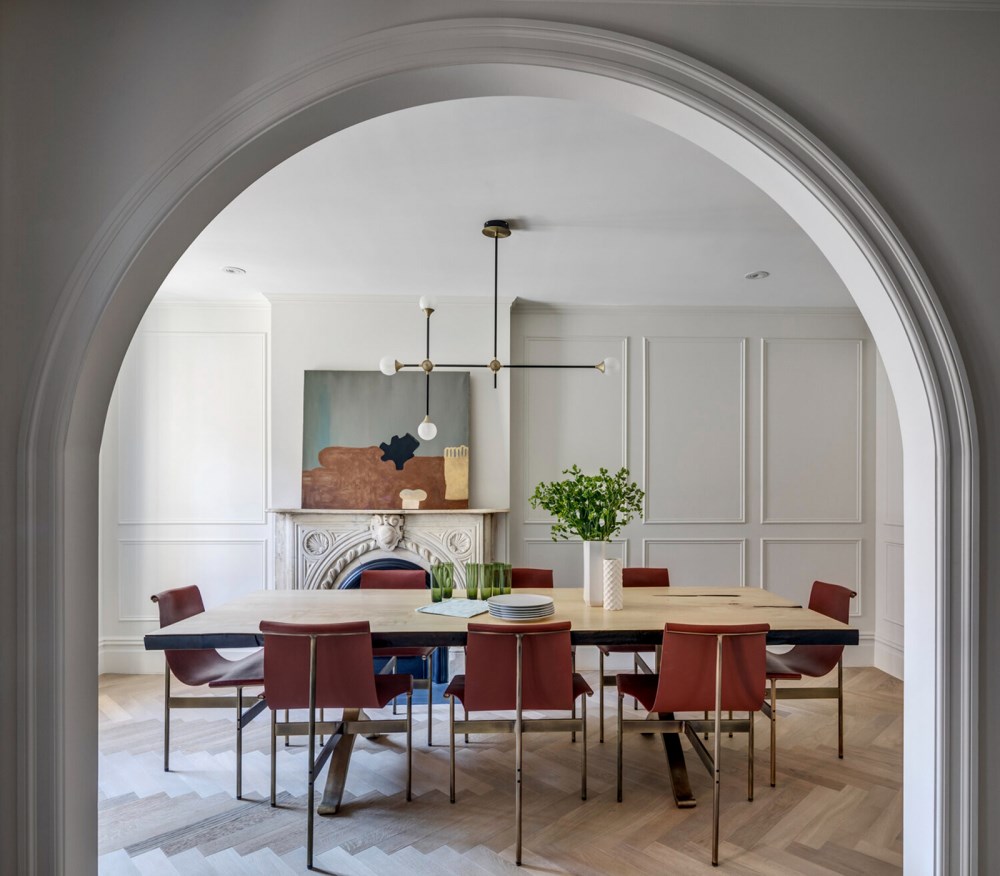
Arch House by Baao Architects - Photography by Francis Dzikowski and OTTO
These transitions are appearing across the home, from kitchens to hallways to bedrooms, often finished in polished plaster for a seamlessly sculptural result or a warm wood for a more articulated, material-led expression.
Rounded windows are following the same logic, interrupting the rectangularity of a wall and making rooms feel taller and more considered without increasing glazing area.
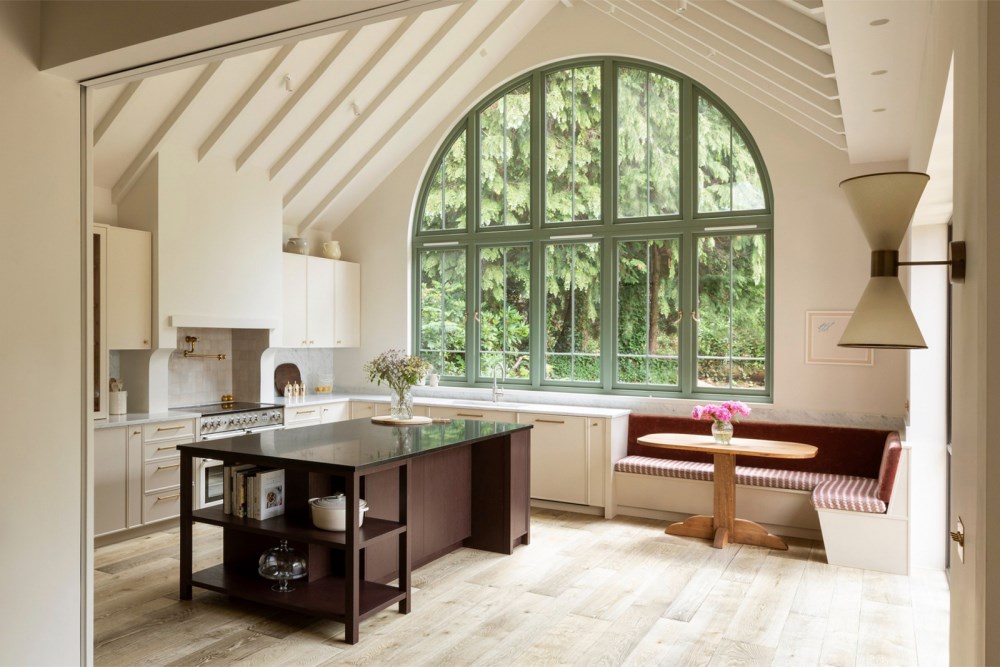
Highgate II by Studio Tashima - Image Credit: www.studiotashima.com
Walls
Curved walls represent a deeper level of commitment. They reshape both movement and perception. A flat wall reflects sound directly, while a curved surface disperses it. The difference is subtle at first, then increasingly noticeable. Rooms feel quieter, more contained. In open-plan homes, this can improve acoustic comfort in a meaningful way.
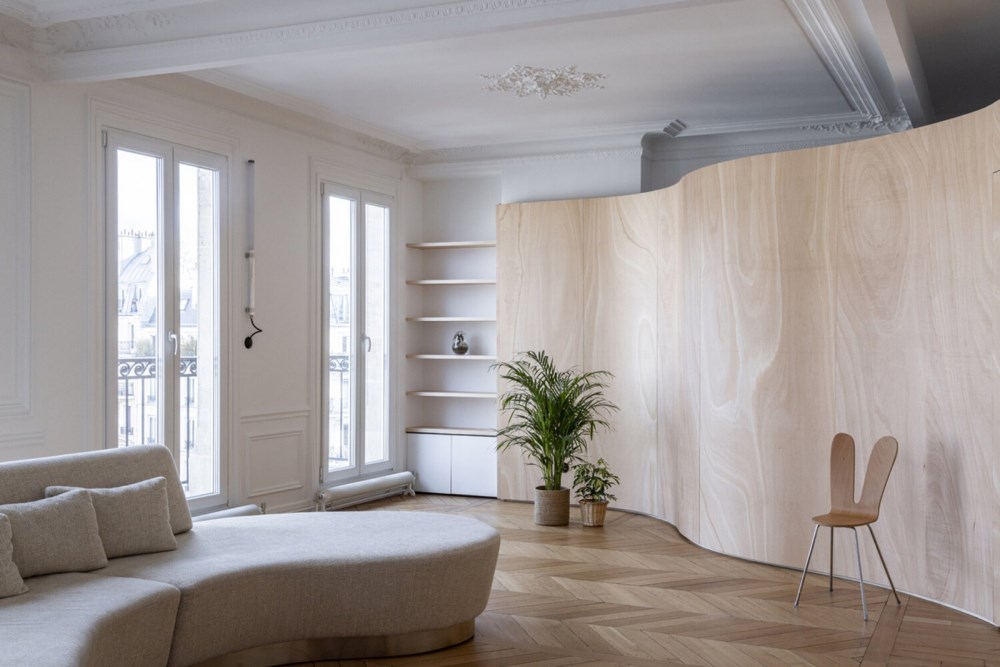
Wood Ribbon by Toledano Architects - Photography by Salem Mostefaoui
Spatially, curves alter how dimensions are perceived. A concave wall draws people inward, creating a natural gathering point. Light behaves differently as well, moving gradually across the surface instead of breaking sharply.
That said, this approach requires precision. Poor execution becomes visible quickly. Inconsistent radii or uneven finishes read clearly, especially in natural light. Budget and craftsmanship need to align with the ambition of the design. For many projects, a single curved wall is enough. It introduces the idea without overwhelming the space.
Curves in Commercial Spaces
The same design logic that is transforming residential interiors is finding its way into commercial spaces, and for many of the same reasons. Hospitality, wellness, and retail environments have been among the earliest adopters, because the connection between spatial comfort and occupant experience is more immediately measurable in those contexts.
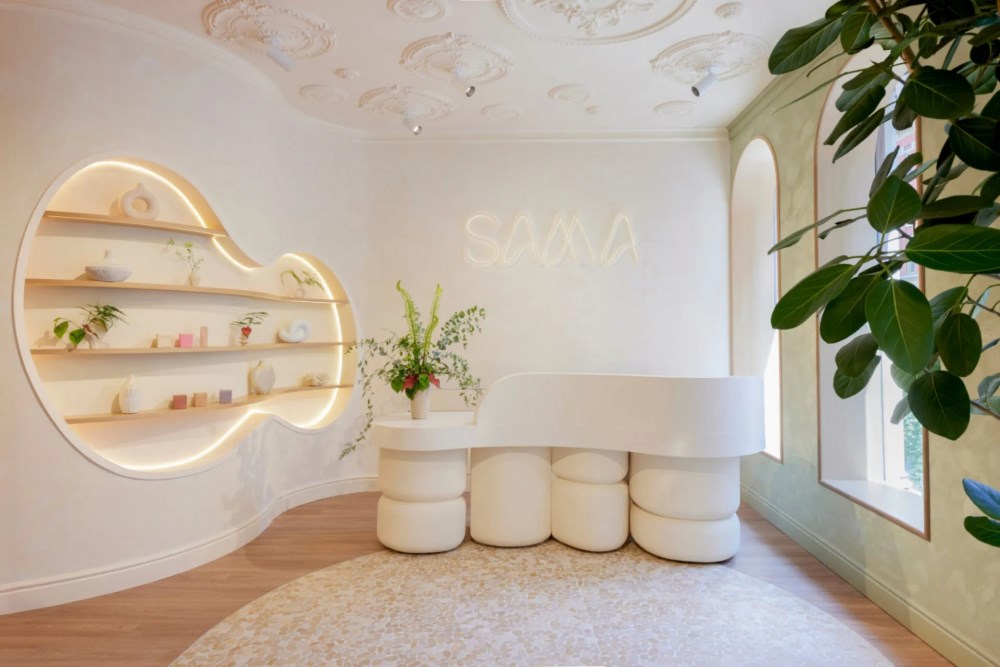
Sama by Ringo Studio - Photography by Anna Morgowicz
Curved banquettes in restaurants pull diners inward and encourage longer, more relaxed visits, while rounded reception desks in hotels and offices remove the formality and implicit barrier of a straight edge. Workplace design is also responding, with breakout areas and informal meeting zones increasingly specified with rounded seating and soft architectural forms, reflecting an understanding that the geometry of a room shapes how people behave within it.
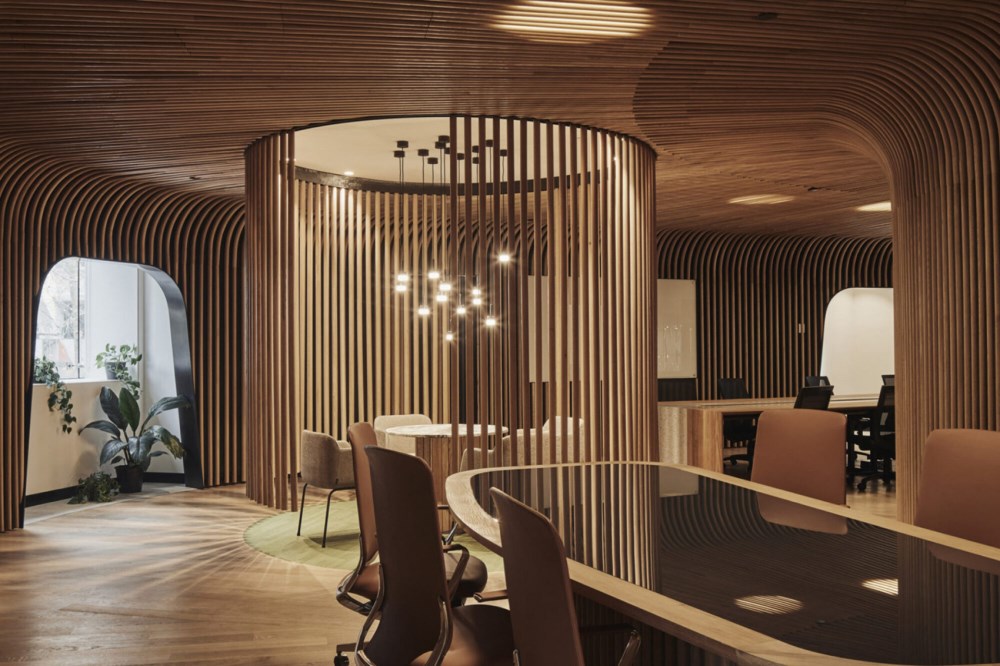
Sculptform by Woods Bagot - Image Credit: www.woodsbagot.com
The commercial case for curves is, in the end, the same as the residential one. People respond to them without being able to fully explain why. Designers who understand the psychology behind that response are better placed to defend these choices in briefs and client conversations, and to deploy them with intention rather than simply following the aesthetic of the moment.
Material and Environmental Considerations
Curved forms ask more of a project than rectilinear ones in terms of fabrication, finishing, and on-site precision. A straight line tolerates minor inconsistencies, but a curve does not. The radius needs to remain consistent, transitions need to feel resolved, and the surface needs to read as intentional from every angle.
This is where cost increases, and where the level of craft involved becomes visible in the result. Surfaces that wrap or bend catch light differently, which can either enhance the form or expose its weaknesses. Early coordination between design intent and construction capability makes a significant difference here. When the detailing is resolved properly and the workmanship follows through, curved elements tend to age well and hold their presence in a space over time.
Softness With Purpose
Curves have always been part of how interiors are made liveable. The current interest in organic geometry is less a departure from what came before than a return to something that was always there, expressed now through a wider range of materials, scales, and applications. Used with intention, organic forms have a way of making a space feel exactly as it should, without drawing attention to how it got there.
--
 Swatchbox is a premier sample fulfillment service for building product manufacturers. With proprietary software designed by insiders of the design community, Swatchbox helps manufacturers improve product sales and brand affinity by delivering material samples to the design community with speed, intelligence, and style. Learn more and join Swatchbox at www.swatchbox.com.


Comments