

Note: This article was written in collaboration between BIMsmith and PABCO Roofing Products, a family-owned company that manufactures premium asphalt roofing shingles.
There are good reasons asphalt shingles cover four out of five US homes, according to the Asphalt Roofing Manufacturers Association. They suit a wide range of roof shapes, come in plenty of colors and textures, stay affordable, and generally go on without structural changes. Asphalt has one soft spot, though, and the sun finds it every summer.
The International Institute of Building Enclosure Consultants (IIBEC) reports that black shingles can reach 160°F and hold 140°F for more than five hours, with about 90 percent of the heat passing into the attic arriving by infrared radiation. That heat warms the ceiling and the rooms below, and it ages the shingle too. Sustained heat hardens the filled-coating asphalt that keeps the roof waterproof, and severe hardening generally leads to premature failure.
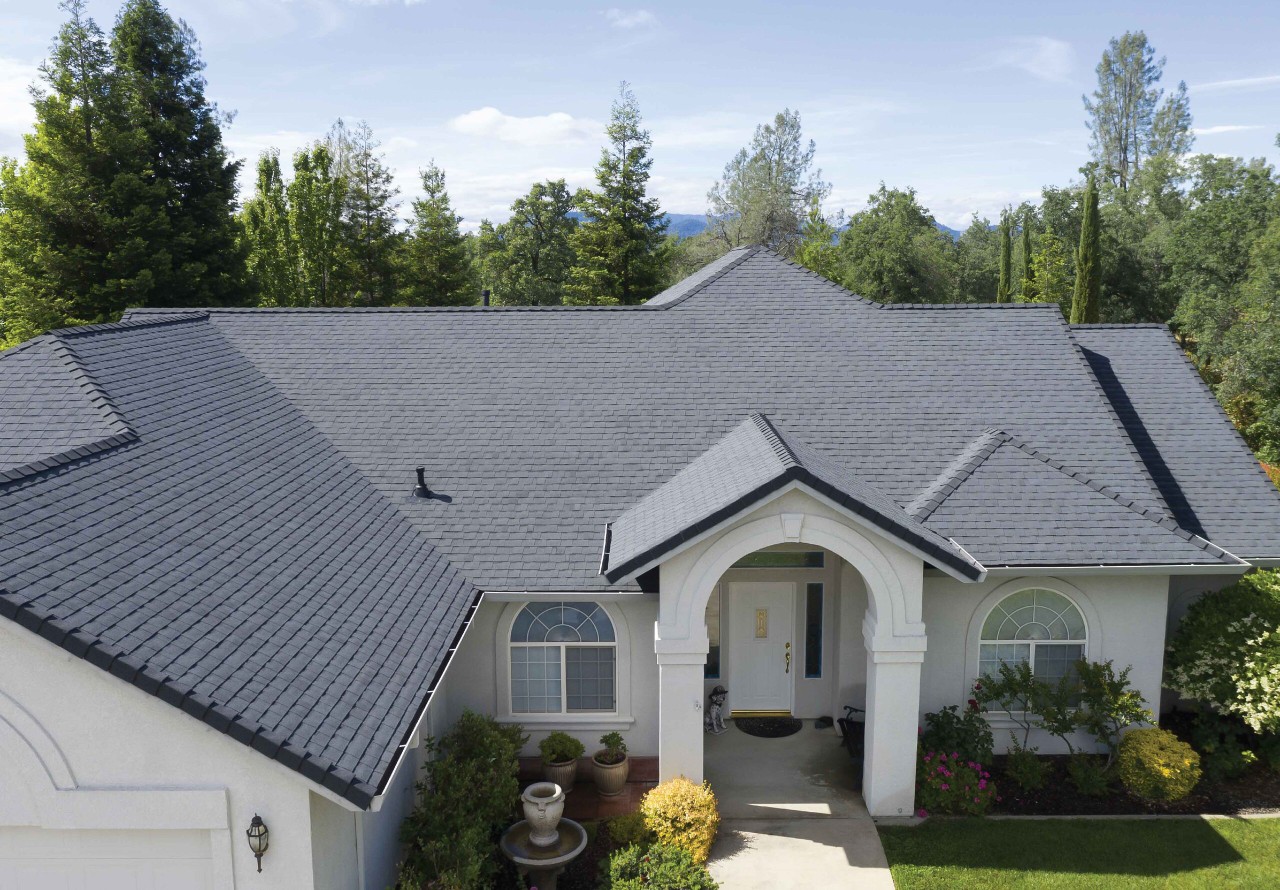
A large share of the sun’s energy reaches a roof as near-infrared light, which the eye can’t see. Solar-reflective shingles are designed to send more of it back instead of absorbing it. PABCO Roofing Products, a California-based, privately owned manufacturer, builds its Premier Radiance line around this idea, using specially engineered pigments in the surface granules to reflect more near-infrared energy. Color alone won’t tell you how a shingle handles the sun: a pigment can look dark and still reflect a meaningful amount of near-infrared, which is how Cool Black, one of Premier Radiance’s four colors, carries a cool roof rating.
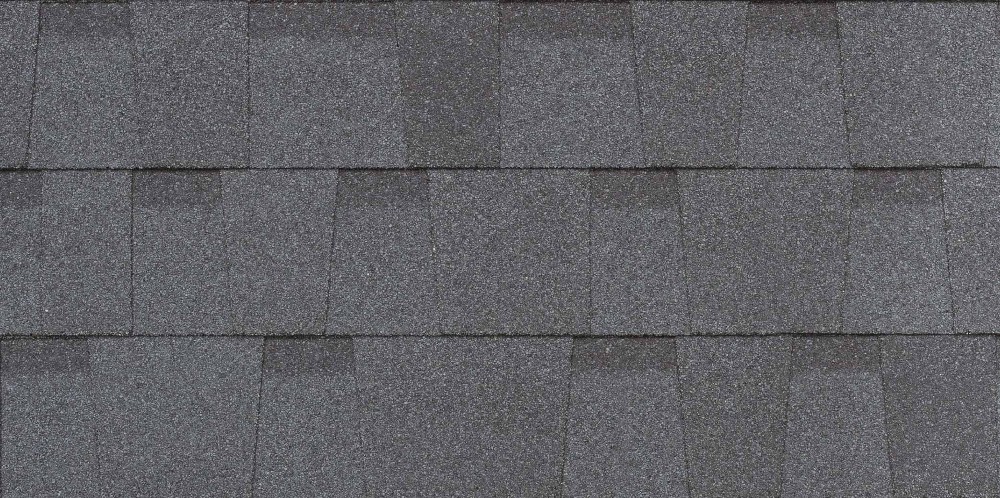
Premier Radiance Solar Reflective Shingles in Cool Black by PABCO Roofing Products
Reflecting is only half the picture. Thermal emittance describes how readily a surface releases the heat it absorbs. Asphalt shingles tend to score high on that, so solar reflectance is usually where standard and solar-reflective products part ways. Actual performance still depends on the individual product and its measured values.
Reading the Numbers
The Cool Roof Rating Council (CRRC) runs the product rating program, and it rests on two properties. Solar reflectance is the share of incoming solar energy a surface reflects. Thermal emittance is how readily it releases absorbed heat. The Solar Reflectance Index (SRI) combines the two to estimate how hot a surface runs compared with standard reference surfaces. It is an index rather than a percentage, and it can fall below 0 or rise above 100.
When comparing products, check whether a published figure is an initial or an aged value. Reflectance changes as a roof weathers, so the difference matters for long-term performance and for code compliance. Ratings also belong to a specific product and color, so a familiar color name doesn’t establish that a shingle is rated. Premier Radiance comes in Cool Pewter Gray, Cool Weathered Wood, Cool Oakwood and Cool Black, and each has its own CRRC product ID. Match the exact product and color to its CRRC listing, then check the measured values against what the project requires.
Those values are what you take to the code. California is the best-known driver. Title 24, Part 6, the state’s Building Energy Efficiency Standards, includes cool roof provisions that depend on climate zone, roof slope, building type and compliance method, and the 2025 edition took effect on January 1, 2026, so check which edition governs the project. Los Angeles County has its own Title 31 Green Building Standards Code, and the county and the City of Los Angeles are separate jurisdictions. PABCO lists all four Premier Radiance colors as meeting both Title 24, Part 6 and Title 31. Other jurisdictions have cool roof provisions of their own, so check the current local code for the performance values and documentation it asks for. CRRC product IDs and published ratings give a project team something solid to document against, and the team remains responsible for confirming that the selected product meets the provisions in force.
Beyond the Single Roof
The benefits reach past a single building. The US Environmental Protection Agency ties urban heat islands to higher electricity demand at peak times, more air pollution and greenhouse gas emissions, heat-related illness and death, and poorer water quality. Reflective roofs can lower roof-surface temperatures and, depending on the assembly and climate, indoor temperatures and cooling demand. Buildings without air conditioning may stay cooler too. Across a city, more reflective roofs and other surfaces raise overall albedo, which can contribute to lower outdoor temperatures, though the effect depends on local conditions and how widely reflective surfaces are adopted.
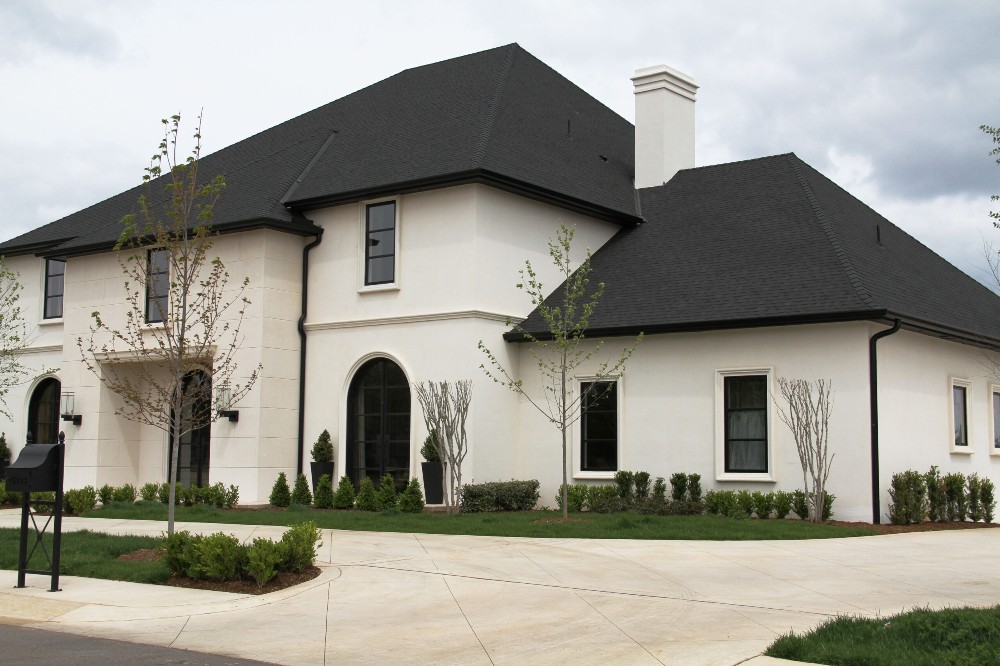
On any one building, the result depends on climate, insulation, attic ventilation and shade. Reflective shingles are one piece of how a project manages heat, at the scale of the building and of the city.
Specifying with Confidence
Before specifying solar-reflective shingles, confirm the exact product, color and CRRC listing, and whether the figures you’re citing are initial or aged. Compare the documented performance with the requirements for the project’s location, building type and roof slope, and review the manufacturer’s current warranty terms and installation requirements.
Samples matter when color is part of the design. PABCO recommends looking at two or three full-size shingles, since printed colors can differ from the real thing. It helps most when the roof has to coordinate with cladding, trim or other exterior finishes. Asphalt will stay the default roof for most homes, and the sun will keep testing it. A rated cool shingle gives architects a way to specify against that heat with numbers they can document.
To explore Premier Radiance in more detail, including available colors and technical data, visit PABCORoofing.com. PABCO's shingle roofing Revit files are available on BIMsmith.
--
 BIMsmith is the leading free cloud platform for architects, designers, and building professionals to research, select, and download building product data. Search, discover, compare, and download free Revit families on BIMsmith Market, or build complete, data-rich Revit wall, floor, ceiling, and roof systems faster with the BIMsmith Forge Revit configurator.


Comments